From Harvard to MIT: Where did the 2026 Nobel laureates study?
French chemist Louis Pasteur said in 1854 that “chance favours only the prepared mind.” This year’s Nobel laureates, across six categories, show that a
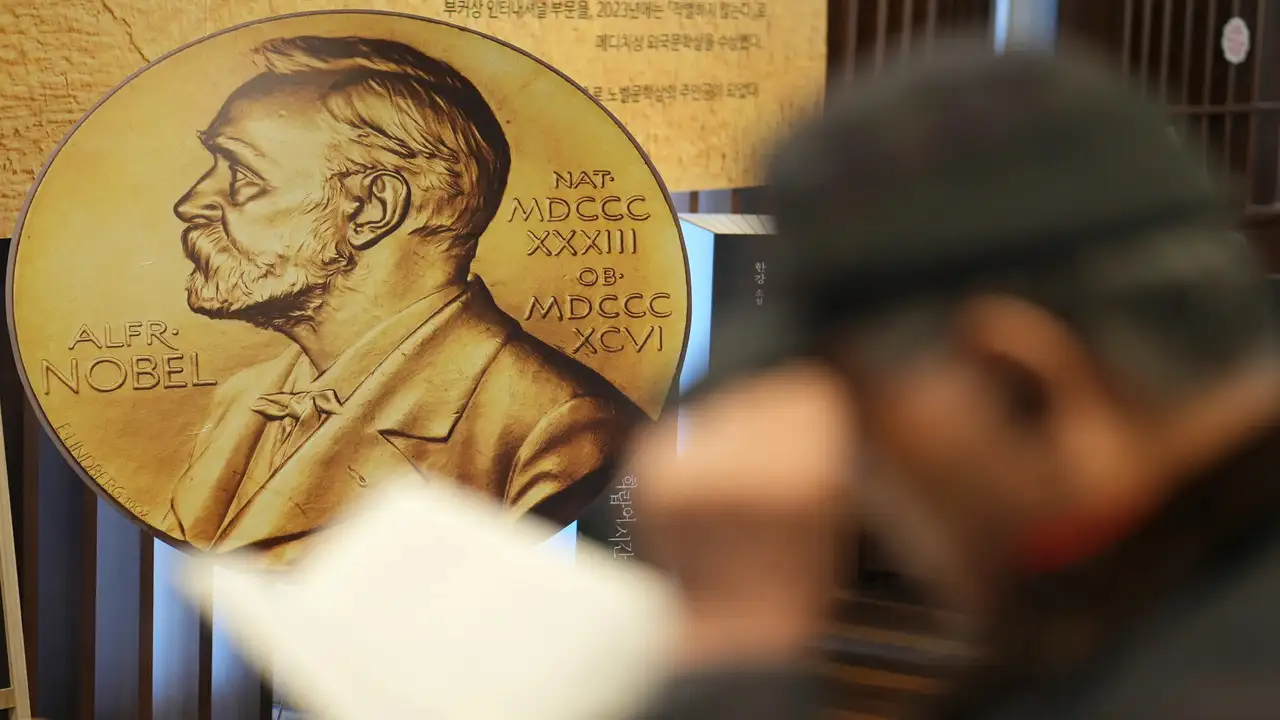
French chemist Louis Pasteur said in 1854 that “chance favours only the prepared mind.” This year’s Nobel laureates, across six categories, show that a prize is the last entry in a record that began in a university decades earlier.Physics: From Leuven to the Antarctic iceFrancis Halzen was recognised for his work on the IceCube Neutrino Observatory, which uses Antarctic ice to detect high-energy neutrinos and investigate distant astrophysical sources. Born in Belgium, he completed his master’s degree in physics and mathematics in 1966 and his doctorate in physics in 1969 at KU Leuven. He then worked at CERN, the European Organization for Nuclear Research, and joined the University of Wisconsin–Madison in 1972. He was the Gregory Breit Professor and Vilas Research Professor there when the award was announced.Chemistry: A French patience and a Japanese persistenceHenri B. Kagan and Kenso Soai were honoured for showing how chemical reactions can amplify an imbalance between mirror-image molecules, which helps produce molecules with specific structures.Kagan graduated from the École Nationale Supérieure de Chimie de Paris in 1954 and completed his doctorate at the Collège de France in 1960. He joined the academic staff at what became Université Paris-Sud in 1967 and became a professor in 1973. He is professor emeritus at Université Paris-Saclay. His doctorate is now 66 years old, which is a reminder that the Nobel committee is rarely in a hurry.Soai took his bachelor’s degree in chemistry from the University of Tokyo in 1974, followed by a master’s degree in 1976 and a doctorate in 1979. He joined Tokyo University of Science in 1981, became an associate professor in 1986 and a full professor in 1991. He is now professor emeritus there. Few career ladders are as visible as this one, with each rung dated.Medicine: A technique built across three countries’ institutionsKarl Deisseroth, Peter Hegemann and Georg Nagel won for discoveries that let scientists use light-sensitive proteins to control nerve-cell activity. The technique, optogenetics, has changed research into the brain and nervous system.Deisseroth, an American neuroscientist, graduated from Harvard University in biochemical sciences in 1992. He earned a doctorate in neuroscience in 1998 and a medical degree in 2000, both from Stanford University, where he set up his laboratory in 2004. He is a professor of bioengineering and of psychiatry and behavioural sciences there.Hegemann studied chemistry at the University of Münster and biochemistry at Ludwig Maximilian University of Munich. He completed his doctorate at the Max Planck Institute of Biochemistry in 1984 and later became a professor of experimental biophysics at Humboldt University of Berlin.Nagel studied biology and biophysics at the University of Konstanz and completed his doctorate at Goethe University Frankfurt in 1988. He did postdoctoral research at Yale University and Rockefeller University before returning to Germany. He holds a professorship in molecular plant physiology at the University of Würzburg and continues there as a senior professor.Literature: The laureate who left, then came backCanadian poet and classicist Anne Carson was honoured for writing that brings classical traditions into dialogue with contemporary literature, blending poetry, prose and translation. She enrolled at the University of Toronto’s St Michael’s College in 1968. She briefly left university, then returned to study Greek poetry and earned a bachelor’s degree in 1974, a master’s in 1975 and a doctorate in classics in 1981. Among this year’s profiles, hers is the only one that records a break in study. That training shows in works such as Eros the Bittersweet and Autobiography of Red. She later taught at McGill University and the University of Michigan.Peace: From Natal to Harvard LawSouth African jurist Navanethem ‘Navi’ Pillay was recognised for promoting peace and international law through decades of work on human rights and international justice. Born in Durban in 1941, she earned a bachelor’s degree in 1963 and a law degree in 1965 from the University of Natal. She went on to complete a master’s in law at Harvard Law School in 1982 and a Doctor of Juridical Science degree in 1988. She served as a judge of South Africa’s High Court, as president of the International Criminal Tribunal for Rwanda and as United Nations High Commissioner for Human Rights from 2008 to 2014.Economics: MIT, twice overRobert E. Hall and Michael Woodford were recognised for research connecting individual economic decisions with wider economic fluctuations, which helps explain how policy affects inflation, spending and employment.Hall earned his bachelor’s degree in economics at the University of California, Berkeley, and his doctorate at the Massachusetts Institute of Technology (MIT) in 1967. He joined Stanford University in 1978 and is a professor of economics there and a senior fellow at the Hoover Institution.Woodford earned his bachelor’s degree at the University of Chicago, a law degree at Yale University and a doctorate in economics at MIT in 1983. After appointments at several universities, he returned to Columbia University in 2004. He is the John Bates Clark Professor of Political Economy there.Get the latest Education News and Live updates. Download the TOI app.
Topics in this story
Gathered from external sources. Rights to this text belong to whoever originally published it.