McMahon has a chance to lock in charter school opportunities
Before federal dollars go out the door, the Education Department should return to the question Congress intended it to ask in 1997.
Recent primary elections delivered a reminder of how temporary good policy can be. A bevy of candidates competing for congressional seats oppose providing public support for expansive education opportunities outside traditional education, including the 35 year-old reform called charter schools, which has historically enjoyed bi-partisan congressional support.
And in an age where student proficiency is widely understood to be in crisis, the nation can ill-afford to neglect any opportunity to improve it.
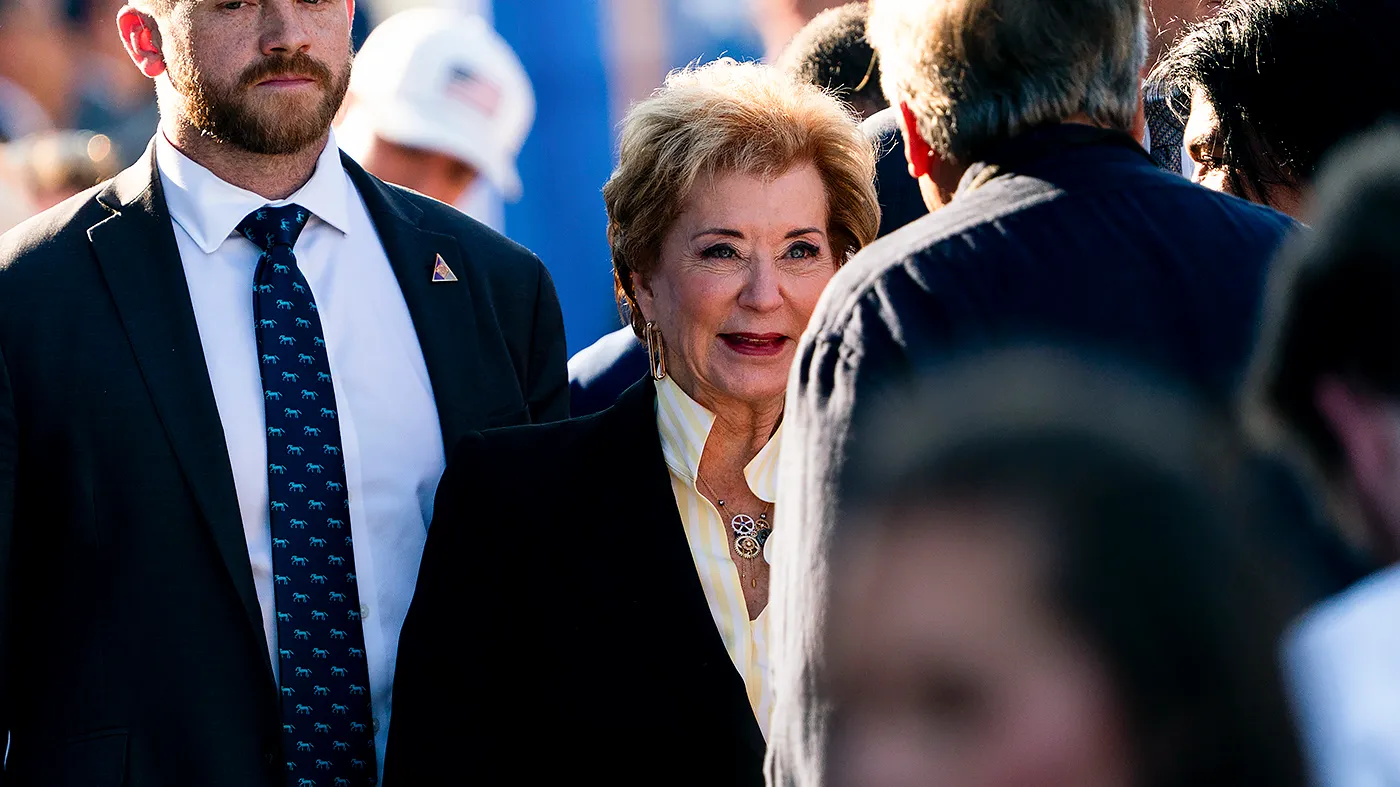
That is where Education Secretary Linda McMahon, working with Congress, has an opportunity to lock in efforts to improve student achievement. A new state-by-state scorecard reveals that states with strong charter school laws not only improve achievement but are responsible for the majority of the new and growing innovative public schools that chartering codifies in state law.
Understanding that opportunity, the Congress created in 1997 an initiative to incentivize states passing laws that give teachers, parents, and community leaders the freedom to build and run their own public schools.
Sponsored by the late Rep. Frank Riggs (R-Calif.) in the House and Sen. Joe Lieberman (D-Conn.) in the Senate, it was signed into law by President Bill Clinton. It created Public Charter School Grant Program at a time when more than two dozen states had already enacted laws making charter schools possible.
Federal start-up funding was supposed to add momentum by rewarding states that encouraged the creation of charters and gave them a level of independence and freedom to operate. And it worked that way for a while, until overzealous lawmakers, regulators and even some charter school advocates backed changes, and the competition for limited dollars became more about meeting various regulatory benchmarks than supporting operational freedom.
For example, Connecticut, which ranks at the bottom of the scorecard, received $24.5 million in 2022. Although those funds did pass through to one charter school, the state also funded an agency whose leadership is hostile to charter schools opening and denies charter schools equitable funding.
California received the largest grant in 2024, despite having passed a law that restricts charter schools to district approvals. Rhode Island, which earns a D-minus on the scorecard and ranks 45th nationally, has a statutory cap on new charter schools and one of the most centralized approval processes in the country.
Although great leaders can change the trajectory of non-entitlement-related education programs more easily with funding decisions, equality of public support for public charter schools should not be subject to political winds.
Since she has been in leadership, Secretary Linda McMahon’s department has made decisions more aligned to the law’s intent. Major awards in fiscal 2025 went to states that have maintained and even improved their strong charter school laws over time, such as Ohio, North Carolina, and Iowa.
But here’s the rub: These decisions are based on who is in charge and on regulators, not on the original intent of the law. Without codifying the law’s original intent, the states and the schools themselves are subjected to choices that a future secretary or future legislative majority could reverse without changing a single word of the law.
Meanwhile, three pro-charter members of Congress have all introduced bills this year to isolate and favor certain kinds of programs as part of the overall charter school grant program. Unfortunately, they are undermining their own intended result — more and better charter school laws at the state level that foster more and better education opportunities for kids.
That is why the principles of the original law need to become a requirement, not a choice, ensuring that Washington is not telling states how to spend their funds, but giving them a clear pathway to receive funds if they demonstrate their law meets the proven measures of what makes a great law.
My organization’s national charter law ranking and scorecard is a great instruction manual that can help build the right standard directly into how the charter school grant competition is scored and structured. It identifies what a strong charter law actually looks like — independent authorizers, real operational autonomy, funding that follows students and room for good schools to grow. State by state, it points out what is still missing.
Before federal dollars go out the door, the Education Department should return to the question Congress intended it to ask in 1997: Does this state’s law actually let charter schools be charter schools? The scorecard provides the answer, but Congress needs to ensure the principles are codified.
In addition to executing in this way, McMahon can use her bully pulpit to champion states that have done the hard work of building strong charter laws. She can also press those that haven’t, starting with her home state, to remove the barriers keeping schools from opening and growing, and make sure Washington rewards freedom rather than bureaucracy.
Jeanne Allen is founder and CEO of the Center for Education Reform and author of “The Education Avengers: Why and How A New Class of Heroes Is Fighting America’s Biggest Battle.”
Topics in this story
Gathered from external sources. Rights to this text belong to whoever originally published it.