International students fear midterms won’t help pro-Palestinian activists targeted by Trump
The Trump administration is showing no signs of backing away from its crackdown on international college students as partisan division over support for Palestine heats up ahead of the midterm elections. Pro-Palestinian students targeted for immigration enforcement by the administration are on a rollercoaster as anti-Muslim rhetoric ramps up even as Democrats become more…
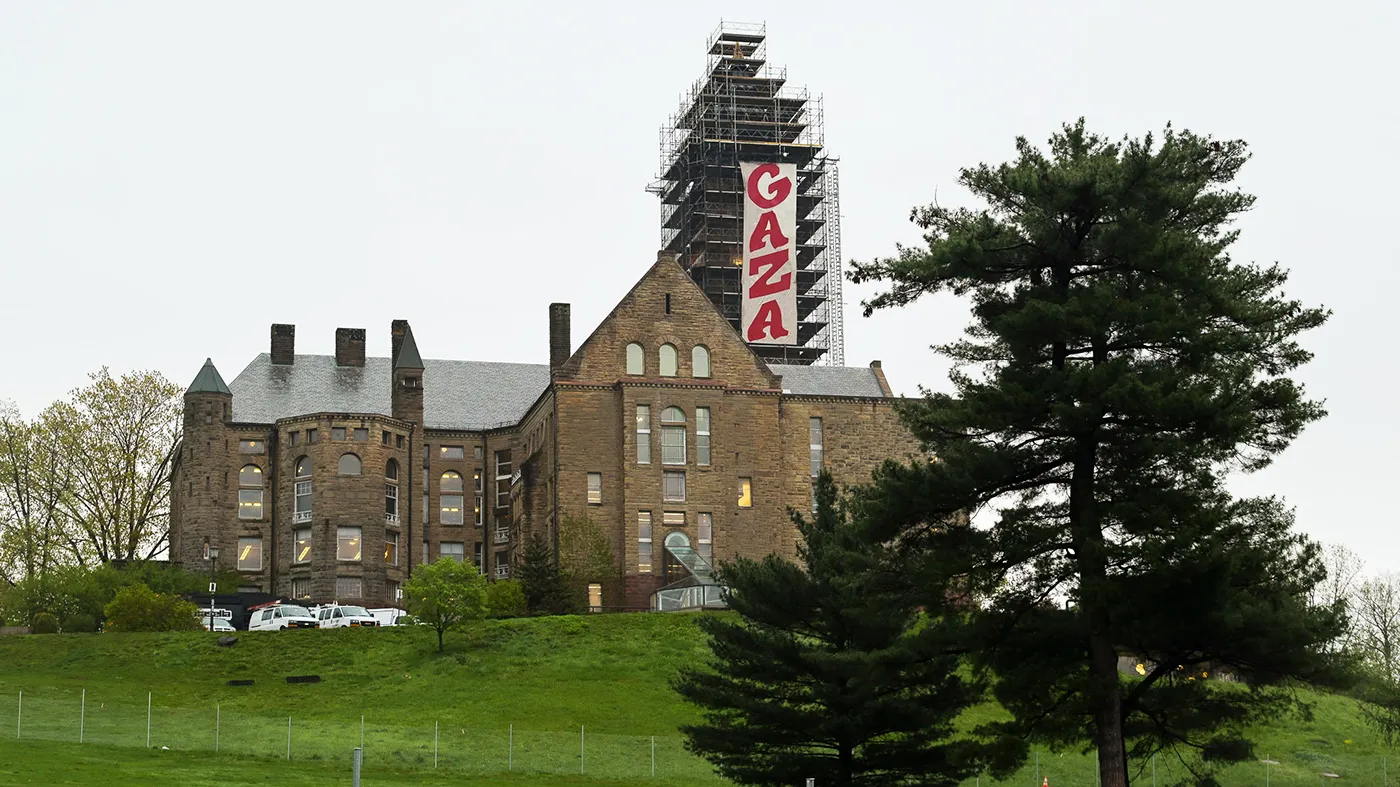
The Trump administration is showing no signs of backing away from its crackdown on international college students as partisan division over support for Palestine heats up ahead of the midterm elections.
Pro-Palestinian students targeted for immigration enforcement by the administration are on a rollercoaster as anti-Muslim rhetoric ramps up even as Democrats become more vocal in support of their cause.
“I see a lot of, again, creating panic around Muslims and Islam and Sharia law and ‘Muslims are here to take over and impose their Sharia law’ and all of this nonsense,” said Shaimaa Zayan, operation managers of the Council on American-Islamic Relations’ chapter in Texas, where Republicans have leaned into anti-Muslim messaging .
Meanwhile, Democrats are increasingly willing to temper their support of Israel in favor of drawing attention to the plight of Palestinians.
Darializa Avila Chevalier, who won her New York primary for what is considered a safe Democratic House seat, is an alumna of Columbia University and was previously arrested during a protest for Palestine.
Rep. Alexandria Ocasio-Cortez (D-N.Y.) recently said she wouldn’t listen to Ed Sheeran after Macklemore was kicked off his tour for pro-Palestinian messaging during a concert, adding the situation shows “how just a handful of stadium owners and the elite can prevent discussion of an entire massive issue, in this case, the genocide in Gaza.”
And Michigan Democratic Senate nominee Abdul El-Sayed told The New York Times he does not “believe in ethno-states, and I certainly don’t believe that our country is responsible to sustain ethno-states.”
“We’re seeing politicians who feel like it is really important to include Palestine as part of their campaign, and their supporters are also recognizing the importance of that. And I think it’s just showing how the tides are shifting with what candidates feel like they need to talk about as they seek elections,” said Sabiya Ahamed, a staff attorney at Palestine Legal.
But even if Democrats retake one or both chambers of Congress, it could be difficult to give foreign students the type of security they want to feel like they can speak freely without the risk of deportation.
“The midterms won’t matter because immigration is an executive function, and even if the Democrats control the House and the Senate, the Trump administration can still put international students who speak out into immigration proceedings and try to deport them,” said Stephen Yale-Loehr, a retired immigration law professor at Cornell University.
“There may be a little more controversy. There could be some oversight hearings as to whether that is appropriate or not. But, technically, the Congress cannot forbid the Trump administration from going after international students,” Yale-Loehr added.
But that doesn’t mean pro-Palestinian activists will be sitting the midterms out.
“Speaking about Texas, definitely new leadership … whether from the GOP or the Democrats … we hope and we pray that the new leadership and the new elected officials will put Texas first,” said Zayan.
The picture has not been all doom and gloom for foreign students as the Trump administration has seen some setbacks in court.
A federal judge in California in August ruled the president unconstitutionally went after international students for their support of Palestine in a case brought by The Stanford Daily.
“In the United States, free speech, including the freedom to criticize the government and its leaders, is not a sign of our democracy’s fragility. It is evidence of its strength,” said U.S. District Judge Noël Wise
“That strength is diminished when members of our society — citizens and noncitizens alike — must self-censor and ‘behave’ or suffer the government’s retaliation,” she continued.
In another case brought by academic groups, a judge ruled the Trump administration violated the First Amendment by arresting and deporting noncitizen students and faculty members for pro-Palestinian advocacy. The administration has appealed the case.
The White House has argued it legally has the right to deport individuals Secretary of State Marco Rubio sees as a threat to the foreign policy of the nation.
The Hill has reached out to the Department of Homeland Security for comment.
Pro-Palestinian students are still fighting a string of legal battles following the Trump administration’s crusade last spring against activists who spoke out in support or participated in the college protests that roiled campuses in 2024.
Columbia alum Mahmoud Khalil, one of the most prominent activists and the first to be arrested by the Trump administration, is appealing to the Supreme Court after a circuit court stated a federal judge had no right to order his release from Immigration and Customs Enforcement (ICE) detention.
Yaa’kub Ira Vijandre, a former DACA recipient based in Dallas, has been in ICE custody for almost a year after his lawyers say he was arrested for his pro-Palestinian activism on social media.
His attorneys told The Hill they are skeptical his case will be handled fairly by conservatives appointed to the bench.
“That is something that, from our standpoint, reminds us that the solution to the administration’s attack on free speech is not ultimately going to come through the American court system. It’s going to come through the population standing up and mobilizing and fighting by exercising its free speech to defend its own free speech rights,” said Chris Godshall-Bennett, a partner at Lee & Godshall-Bennet and one of the lawyers for Vijandre.
Salah Sarsour, the president of the largest mosque in Wisconsin, was arrested by ICE, with the Trump administration alleging he lied on his application to become a green card holder and is suspected of funding terrorist organizations. His lawyers deny the allegations and say the government went after Sarsour for giving a pro-Palestinian speech to the community.
Tala Alfoqaha, one of those attorneys, said while case wins such as the one by The Stanford Daily are helpful for their cause, the Trump administration is using all the tactics it can to make it difficult for activists.
“What we’re seeing is the Trump administration is weaponizing immigration laws. It’s weaponizing procedural rules of when and how the people who are being targeted can challenge their targeting on constitutional grounds, and when and how those claims can even be heard,” Alfoqaha said.
“I think that’s what makes this policy of the Trump administration so dangerous, and that’s what makes these decisions important as well, is for judges to recognize what … is happening. And I think we’re increasingly seeing that, but there’s still a lot left to fight for here,” she added.
Topics in this story
Gathered from external sources. Rights to this text belong to whoever originally published it.