The school choice decision putting Democratic governors on the clock
Democratic governors face an end-of-year deadline to join the nation’s first federal school choice program, a decision that could bring massive amounts of money to their states but opponents fear could severely undermine public schools. Thirty-one states have opted into the GOP-passed initiative, but so far, that number includes only two blue ones: Colorado and…
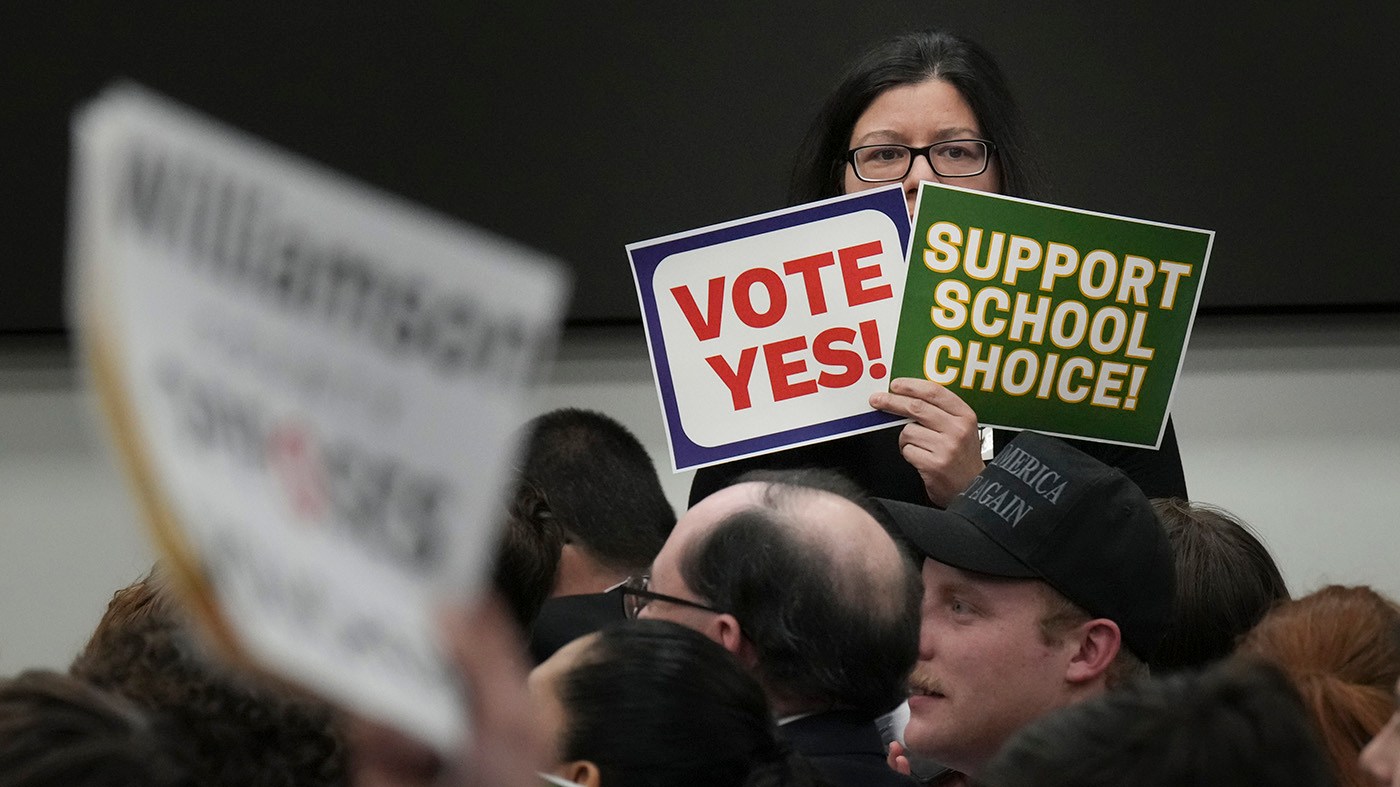
Democratic governors face an end-of-year deadline to join the nation’s first federal school choice program , a decision that could bring massive amounts of money to their states but opponents fear could severely undermine public schools.
Thirty-one states have opted into the GOP-passed initiative, but so far, that number includes only two blue ones: Colorado and New York.
The program, officially called the Education Freedom Tax Credit, was passed in the One Big Beautiful Bill Act last year. It allows people to donate $1,700 to a scholarship-granting organization that awards money to students for private-school tuition and some public school expenses in exchange for a dollar-to-dollar federal tax credit.
Students from households with an income of less than 300 percent of the area’s gross medium income are eligible, but governors must opt in to the program by the beginning of next year for children in their state to receive the scholarships.
The Trump administration projects the program will grow to $26 billion by 2030, and supporters think more Democratic-run states will sign on after Election Day.
“You have very strong Democrat contributors and political actors who don’t like any kind of educational choice and are standing up against it. The teachers’ unions loom large on this point. It’s a pretty tall order to ask a governor who is reliant upon those donors and those political activists to opt in to participate before the election has run its course,” said Leslie Hiner, senior adviser for legal policy at EdChoice.
“I wouldn’t even ask any other governor to elect to participate until after the November election,” she added.
So far only one governor, Democrat Tina Kotek of Oregon, has said her state would definitely not opt in.
“At this point, I simply cannot trust that any education policy coming from Trump’s White House is in the best interest of Oregon’s kids and our public education system,” she said.
Public school students are able to use the scholarships for activities such as tutoring and before- and after-school programming.
But opponents say the benefits do not outweigh the risks to public schools.
“It is designed in a way where I think it’s very likely to deliver a lot more money to wealthy areas than to poor areas,” said Jon Valant, director of the Brown Center on Education Policy, adding he is worried about the “enormous amount of waste, fraud and abuse” the system could produce.
“I don’t think there’s any accountability for outcomes anywhere in here, or really even any attempt to measure outcomes,” Valant added. “Typically, in the education policy world, when we’re thinking about policy, we’re also thinking about ‘Is this actually leading to students learning more and can we measure and figure out what’s working and what’s not working?’ And that’s just not part of this.”
The program has also seen harsh reviews from teachers unions, many of which support and endorse Democratic candidates.
“The National Education Association is telling everyone that states should not opt in to the federal voucher scheme … it’s a Trojan horse,” said Princess Moss, president of the association, the largest teachers union in the country.
“To every governor out there, and especially our governors of blue states: You really need to take a hard look at what this scheme would do to your state. There’s no state power to shape the program, and it will add an administrative burden to the states,” Moss added.
But not everyone on the left agrees with the doom and gloom.
Democrats for Education Reform, a group that supports school choice, says 64 percent of voters want their governor to opt in to the tax credit. Twenty-one percent are opposed and 14 percent are unsure, the organization says.
New York Gov. Kathy Hochul (D) said after reviewing Treasury Department regulations released this month that she believes the program will “bring millions of additional dollars to New York students and families without taking a single dollar from public schools or our state or local budgets.”
“I’m not going to leave money on the table when it could help our kids,” she added.
While other Democratic states said they were waiting for the rules to come out of the Treasury Department, no state other than New York has made a decision on the matter since the beginning of October.
“I’ll leave the opponents with the words of Governor Hochul, who said that she engaged directly with New York state business leaders, who have committed to using this tax credit to support public school students and their academic needs, and so she is convinced,” said Ashling Preston, director of federal affairs at the American Federation of Children.
“Again, this is somebody who supports public schools, who supports public school students. We recognize that the majority of children in this country are educated in our nation’s public schools, and there are a multitude of ways that those children are going to be able to benefit,” she added.
Topics in this story
Gathered from external sources. Rights to this text belong to whoever originally published it.