Texas universities purge core courses as political pressure takes its toll
Public universities in Texas have dropped hundreds of courses from their core curricula — or altogether — amid rising political pressure over the last two years. Texas A&M University has removed 350 core listings across its system, many dealing with gender, race and other popular GOP targets. The University of Houston has nixed 133 classes…
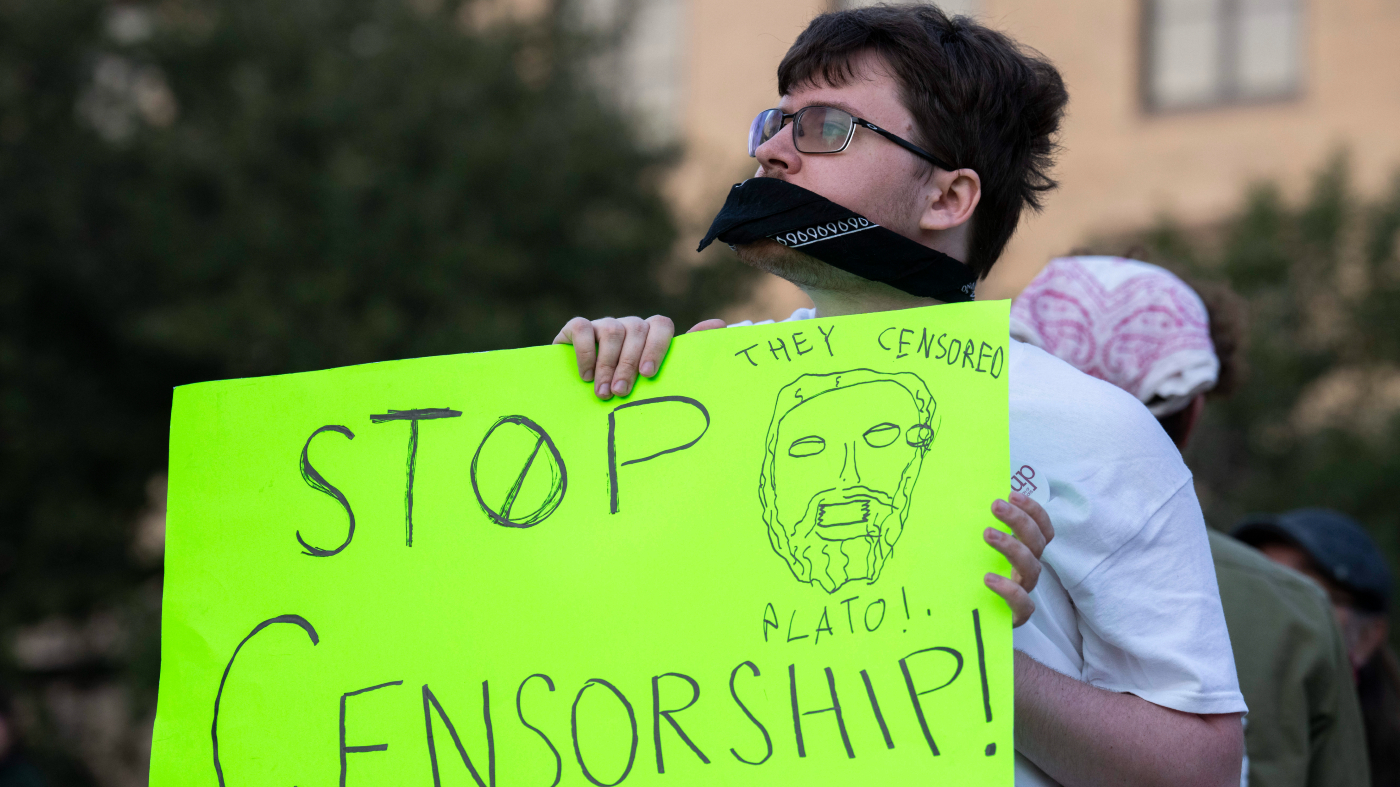
Public universities in Texas have dropped hundreds of courses from their core curricula — or altogether — amid rising political pressure over the last two years.
Texas A&M University has removed 350 core listings across its system, many dealing with gender, race and other popular GOP targets. The University of Houston has nixed 133 classes from its core curricula, and the University of Texas, Austin, has dropped 113.
Professors say students are missing out on subjects relevant to their future careers, and some educators are moving on to private schools, where political winds are less fierce.
Students are required to take a select number of core classes in college in order to graduate. They typically choose from an array of courses to satisfy this requirement, but public universities are increasingly making optional selections that focus on women’s students, LGBTQ issues, climate change and other left-leaning concepts, leading to the possibility of less student interest in the topics.
While these efforts have been ongoing in multiple red states, colleges in Texas are on the front lines as Gov. Greg Abbott (R) is able to appoint the members of the Texas Higher Education Coordinating Board, which oversees all public universities in the state.
Universities also must take into consideration a new law known as SB 37, passed last year, that says core classes at public universities need to cover “foundational” concepts for entering the workforce and civic life.
The combination of the conservative board, the new law and threatening remarks from state lawmakers has led universities to take a proactive approach on removing courses aligned with traditional liberal values, despite no official directive to do so.
And while the majority of changes have been to core curricula, some classes and indeed entire degrees are simply no longer being offered.
Texas A&M announced early this year it was eliminating its entire women’s and gender studies degree program. Texas State University completely removed a course called LGBTQ+ Communication Studies after backlash.
Asked for comment, Texas A&M pointed The Hill toward an email to faculty and staff in which it said the recommended changes to its core classes were the result of a review committee that was made up over 20 faculty members, administrators, community leaders and industry representatives.
Jerry Strawser, the interim provost and executive vice president of the university, said the remaining classes were, “as required by law,” able to prepare students for civic life and are foundational to a “sound postsecondary education.”
In December, the Texas Tech University System issued a memorandum saying it will be closing academic programs “centered on” sexual orientation and gender identity after going through a review process to make sure the university “complies with state and federal law.”
In response, the American Association of University Professors (AAUP) filed a federal lawsuit against Texas Tech, arguing First and 14 th Amendment violations.
“It’s important to note that there is no law in Texas that forbids the teaching of particular content in higher ed classrooms,” said Andrew Martin, a professor of drawing and painting and president of the Texas Tech AAUP chapter.
“We are hopeful that there will be court decisions that will restore our ability to teach the curriculum as dictated by our expertise, rather than by a political agenda,” Martin added.
Texas Tech did not immediately respond to The Hill’s request for comment.
The political nature of the fight means interested parties are keeping a close eye on November’s elections, as Democrats try yet again to shift Texas from red to blue.
In a late August poll , Democrat Gina Hinojosa trailed Abbott in the gubernatorial race by 7 points. Texas has not had a Democratic governor in over 25 years, and Abbott is seeking his fourth term.
“I have hope that we could get things changed if we do see a change in Texas politics, including the governor seat and especially the lieutenant governor seat, then we could see some definite changes happen,” said Teresa Klein, president of the Texas AAUP-AFT Conference. “The rollbacks that we’ve seen in curriculum surrounding DEI [diversity, equity and inclusion] and other topics, I think that we can always reverse things. The pendulum can always swing back, but will it be easy? No, but will we fight to do that? Sure.”
The turbulent situation at public universities has led some professors to flee to private ones.
Martin Peterson, now a professor of philosophy at Southern Methodist University, left his job at Texas A&M, where he was the chair of the Academic Freedom Council, after he said the school told him he could not teach Plato in his philosophy class.
“The culture is very different. I can really breathe fresh air again. I don’t have to worry about what elected leaders think or do not think about certain issues. You can talk about climate change. You can talk about slavery. You can talk about Plato. So, I’m very very happy that I managed to find a way out, so to speak,” Peterson told The Hill.
What remains to be seen is if students will also seek greener pastures amid the fight.
The Federal Reserve Bank of Dallas has found that enrollment numbers at Texas universities is steady up through 2024, but students have recently joined faculty in protests against the class changes.
“As students become more aware, and I think some of them are already quite aware, that the education they’re going to get in our system is going to be significantly lacking in aspects of how the world actually works, and it’s not going to be taught according to the expertise of the faculty … As more students become aware of that, I think it’ll have a drastic effect,” said Martin, the Texas Tech professor.
Topics in this story
Gathered from external sources. Rights to this text belong to whoever originally published it.