Trump administration ready to deploy ‘secret weapon’ against higher education
The Trump administration has an ace up its sleeve in its long-running fight with higher education with a shift that could cost universities millions of dollars and their access to federal student aid. The administration is targeting college accreditation, a status schools must earn to access federal funding, with changes coming next year to how…
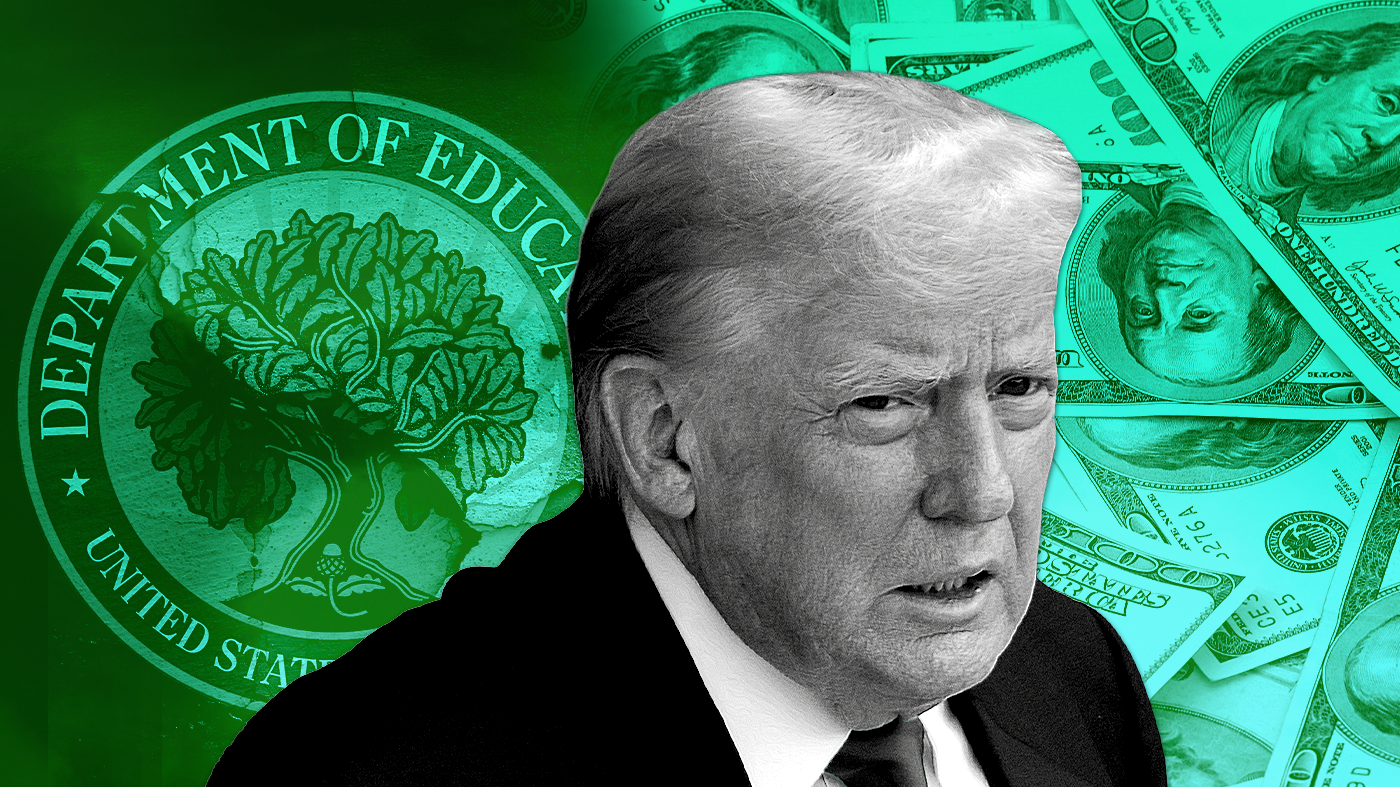
The Trump administration has an ace up its sleeve in its long-running fight with higher education with a shift that could cost universities millions of dollars and their access to federal student aid.
The administration is targeting college accreditation, a status schools must earn to access federal funding, with changes coming next year to how accreditors evaluate institutions.
One of the changes, evaluations on so-called intellectual diversity, has raised alarm over fears of academic freedom violations, especially as President Trump and Republicans have long accused U.S. colleges of liberal bias.
The final rules will direct accreditors to “evaluate policies at institutions that prioritize intellectual diversity and the free exchange of ideas at colleges and universities, ensuring that students are exposed to a range of viewpoints,” according to the Education Department.
But what that means in practice is up in the air.
“The regulations, for the first time, introduce these new values into the regulatory process involving academic freedom, intellectual diversity. It gets into institutional policies and compliance with federal and state law, and how the department ultimately ends up interpreting and enforcing these pieces is going to matter a ton,” said Antoinette Flores, vice president of federal policy and government affairs at the Council for Higher Education Accreditation.
“But there is a risk that accreditation becomes a mechanism for federal influence over institutional decisions, institutional policies that have traditionally been within the in the purview of colleges and universities,” Flores added.
It would not be the first time the Trump White House has sought to use accreditation to try to get colleges in line.
Trump had said on the campaign trail that accreditation could be his “secret weapon” against universities.
“ The time has come to reclaim our once great educational institutions from the radical left,” he said in 2023. “Our secret weapon will be the college accreditation system. “
Last year, the administration declared Columbia University was in violation of federal antidiscrimination laws and recommended its accreditor take away its status , which it ultimately declined to do.
Columbia losing its accreditation and access to federal student aid would have made the university inaccessible to most students due to its high price tag.
“Essentially, the administration can force institutions into doing a host of things through the accreditor. The accreditor here essentially functions as an intermediary, and so that’s why I say that this regulation is overly expansive. It goes into areas that just simply do not have anything to do with accreditation,” said Jeremy Bauer-Wolf, investigations manager on the Higher Education program at New America, a left-leaning think tank.
When reached for comment, the Education Department pointed to a study from Northwestern University in 2025 that found 88 percent of students pretended to have more progressive views in hopes to succeed academically.
“The Department’s new accreditation regulations are a commonsense step toward restoring intellectual diversity by ensuring accreditors evaluate whether institutions are creating an environment where differing perspectives can be debated openly and fairly,” said Ellen Keast, communications director for the under secretary at the Education Department.
“The regulations do not mandate any specific policies, nor do they give the Department any authority to police speech. Instead, they reinforce a fundamental principle: truth emerges through rigorous debate, not enforced consensus. Our goal is to promote a culture of open inquiry and academic freedom, where ideas rise or fall on their merits,” she added.
Other administration attempts to influence colleges, such as attempts to block their funding or access to international students, have been halted by the courts, and the final accreditation rules could be on the chopping block as well.
There are two ways the rules could be challenged, through the courts and Congress.
“There’s, of course, always legal challenges, so you have to show standing for that. But there’s potential that some of the accrediting agencies could say that they are being harmed in some way by some of the standards,” said Edward Conroy, director of policy and stakeholder organizer at the Alliance for Higher Education. “Institutions maybe could challenge them as well, but standing gets a little bit murkier there.”
The changes, if not successfully challenged, will go into effect in July.
“There’s a very short timeline to get to July, and for accrediting agencies, they have to go through their processes for changing their standards, and so, I think they are looking at them now,” Flores said.
“I think in a lot of cases, because these concepts are so broad, and there is a lack of clarity of what the Department of Education is looking for on a lot of these concepts, they’re kind of guessing in the dark,” she added.
Topics in this story
Gathered from external sources. Rights to this text belong to whoever originally published it.