Colleges must help America keep the promise it makes to its military
As the U.S. military reaches record recruitment numbers, higher education institutions must improve their support systems to fulfill the promise of opportunity for service members and veterans.
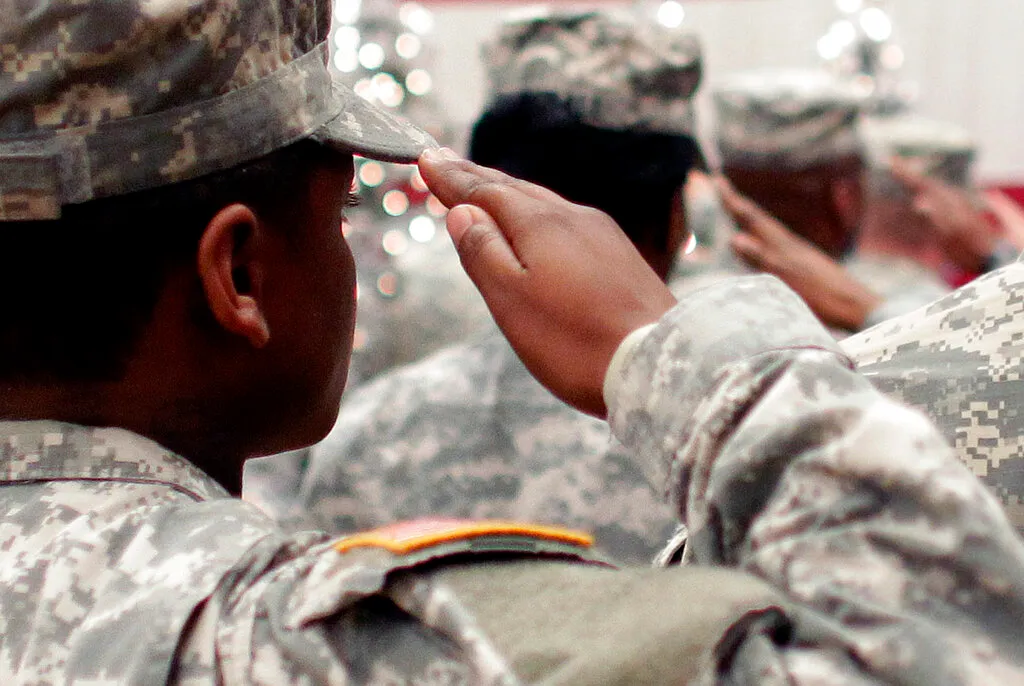
The U.S. military is in the middle of its best recruiting run in more than a decade. The Navy announced this summer that it signed 45,000 new sailors, hitting its goal three months ahead of schedule, and the Army reached its target of more than 61,500 soldiers four months early. Congress has authorized the force to grow by roughly 26,100 troops this fiscal year.
Hundreds of thousands of Americans are volunteering to put their lives on the line, and the country is promising each of them that service will open doors long after they take off the uniform. Higher education is where much of that promise is supposed to be kept. Too often it is not.
More than half of our military say education benefits are a primary reason they join, yet only about three in 10 veterans hold a bachelor’s degree. Colleges and universities are critical partners in national security. The military’s ability to recruit and retain talent depends, in part, on a credible promise of opportunity after their service. Higher education must do more to help the nation hold up its end of the bargain.
I know the value of college firsthand. I earned my master’s degree in organizational leadership from National University while serving as an Air Force officer overseeing missions abroad. That education changed how I lead and what I can offer the service. That was possible because my university was built for students like me. My courses ran for four weeks at a time and started year-round. Since they were entirely online, I could easily pick up my education wherever the Air Force sent me next.
Many of my fellow service members are not so fortunate. Most campuses still operate on a garrison schedule designed for teenagers arriving straight from high school. The traditional academic calendar is built around a student who can commit to 16 uninterrupted weeks, twice a year, for four years. Troops navigating deployment cycles do not live on that calendar. Neither do reservists, military spouses, or veterans who work full-time while they study.
The mismatch runs deeper than scheduling, however. Service members and veterans often arrive on campus with the visible and invisible wounds of military service, from post-traumatic stress disorder and traumatic injury to service-connected physical disabilities. Nearly half of the country’s student veterans receive mental health care through the Department of Veterans Affairs. And yet the federal program that aims to place Veterans Affairs clinicians on college campuses delivers on-site clinical care at just 54 institutions nationwide .
But clinical care is only part of what these students need. Many service members also live with what researchers call moral injury . Distinct from post-traumatic stress disorder, this is the lasting distress that can follow experiences in service, particularly combat, that conflict with a person’s sense of right and wrong.
I have seen how the weight of service follows people into the classroom, and the faculty at my university took the time to know me on a personal level before they knew me as a student. That trust made it easier to ask for help and to stay enrolled when the work got hard. Colleges that encourage those relationships can reach veterans whom other institutions too often overlook.
Then there is the question of how colleges translate military service into credit hours. A soldier who helped keep a 700-person battalion fueled, fed, and equipped or a sailor who helped maintain a nuclear reactor has demonstrated skills that most undergraduates won’t develop until well after graduation, if at all. But many institutions award little or no credit for military training and career experience, forcing service members to pay for and sit through material they have already mastered. Offering credit for prior learning can shorten the path to a degree, save students time and money, and show veterans that the skills and knowledge they gained through service still matter in civilian life.
Finally, colleges should do a better job connecting military and veteran students to their post-graduation lives. A degree is meant to be a path to a career. Veterans need advisors who can translate their military experience for civilian employers, connect them with industry partnerships, and map their training and education to high-demand fields. Programs and services that pair education benefits with career services and wellness support approach the transitions between the military, college and the workforce as part of one continuous mission rather than a series of disconnected handoffs.
Recruiting runs on word of mouth and relationships . When a veteran leaves college without a degree, that story gets told around a kitchen table where a sibling or cousin is weighing whether to enlist. The country is making a promise to the record number of Americans signing up to serve. Higher education must help keep it.
Philip “Flip” West is a National University and UCLA Alumni . His views do not necessarily reflect those of the Department of War.
Topics in this story
Gathered from external sources. Rights to this text belong to whoever originally published it.