"Same kid, same brain": A 12-year-old was on 7 medicines and struggling at school; doctor says his handwriting changed after treatment
News News: A 12-year-old boy who had been diagnosed with ADHD and was taking multiple medicines became the subject of a case shared by US physician and author Ma.
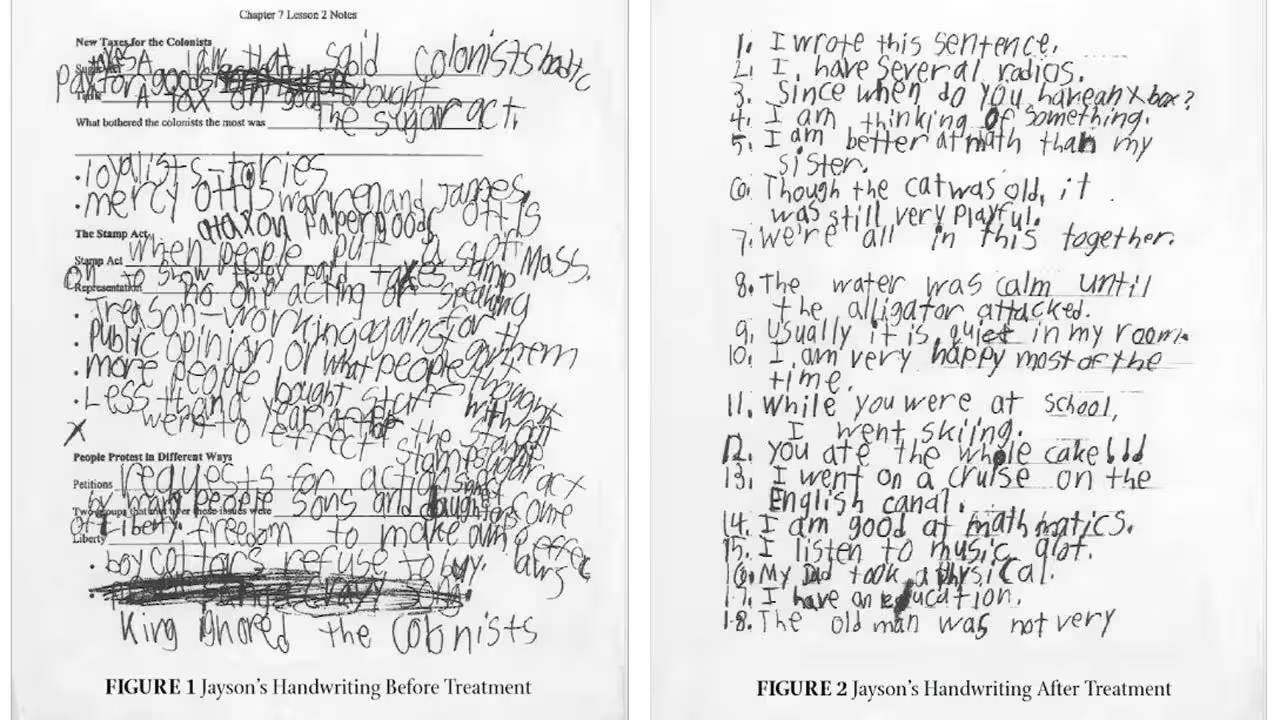
A 12-year-old boy who had been diagnosed with ADHD and was taking multiple medicines became the subject of a case shared by US physician and author Mark Hyman on X. According to Hyman, the child had previously seen several specialists and was dealing with behavioural difficulties as well as asthma, headaches, stomachaches and insomnia.Hyman said the boy had been prescribed seven different medicines by the age of 12 and had even been removed from kindergarten because of disruptive behaviour. In an account shared on social media, the doctor said he decided to look beyond the child's behavioural symptoms and investigate several other aspects of his health.“Nobody connected the dots”According to Hyman's account, the boy had been diagnosed with ADHD and treated with stimulant medication for years. However, the doctor said the child's other symptoms were being addressed separately by different specialists.“I did a full workup instead of writing another prescription,” Hyman wrote.He said his assessment identified several issues, including nutritional deficiencies, gastrointestinal problems and exposure to lead. Hyman also claimed that the child had elevated gluten antibodies, a reaction to dairy and fungal overgrowth.The doctor said the boy's diet consisted largely of processed food and that he had never eaten vegetables.What happened after dietary changes?Hyman said his approach involved removing gluten, dairy, sugar and processed foods from the child's diet. He also described using probiotics and treatments for what he characterised as fungal overgrowth and lead exposure, alongside supplements including magnesium, zinc and fish oil.Two months later, Hyman said, the boy's mother returned with a striking update.“No more symptoms. No more meds. No more behavioral issues,” he wrote.Hyman also highlighted an unexpected change: the child's handwriting.According to the physician, handwriting that had previously been difficult to read had become much clearer.“Same kid, same brain, two months apart,” Hyman wrote.What does the handwriting change mean?Hyman said the experience influenced his later book The UltraMind Solution. He interpreted the improvement as evidence of a connection between the child's physical health and brain function.However, an individual case cannot establish that ADHD is caused by gut problems, nutritional deficiencies or diet. ADHD is a recognised neurodevelopmental disorder, and symptoms can have multiple contributing factors. Changes in diet or supplements should not be used to stop prescribed medication without medical supervision.Hyman's account is therefore best understood as his interpretation of one patient's experience rather than evidence that dietary or gut-focused treatment can replace established ADHD care.Why the case has attracted attentionThe story has particular relevance for parents because children with ADHD may also experience sleep difficulties, anxiety, gastrointestinal complaints or other health concerns. A child's overall health can be important when evaluating behavioural and learning difficulties.At the same time, treating those concerns does not necessarily mean that the underlying ADHD diagnosis is incorrect.Hyman concluded his post by arguing that doctors should look beyond the brain when assessing children with complex symptoms. His account has since drawn attention because of the dramatic change he described, particularly the transformation in the child's handwriting.For parents and educators, however, the broader lesson is more measured: behavioural and academic difficulties deserve a comprehensive assessment, while medical treatment decisions should be based on evidence and made with qualified healthcare professionals.Get the latest Education News and Live updates. Download the TOI app.
Topics in this story
Gathered from external sources. Rights to this text belong to whoever originally published it.