It’s up to the Supreme Court to save academic freedom in the US
Never in American history has academic freedom been under such pressure.
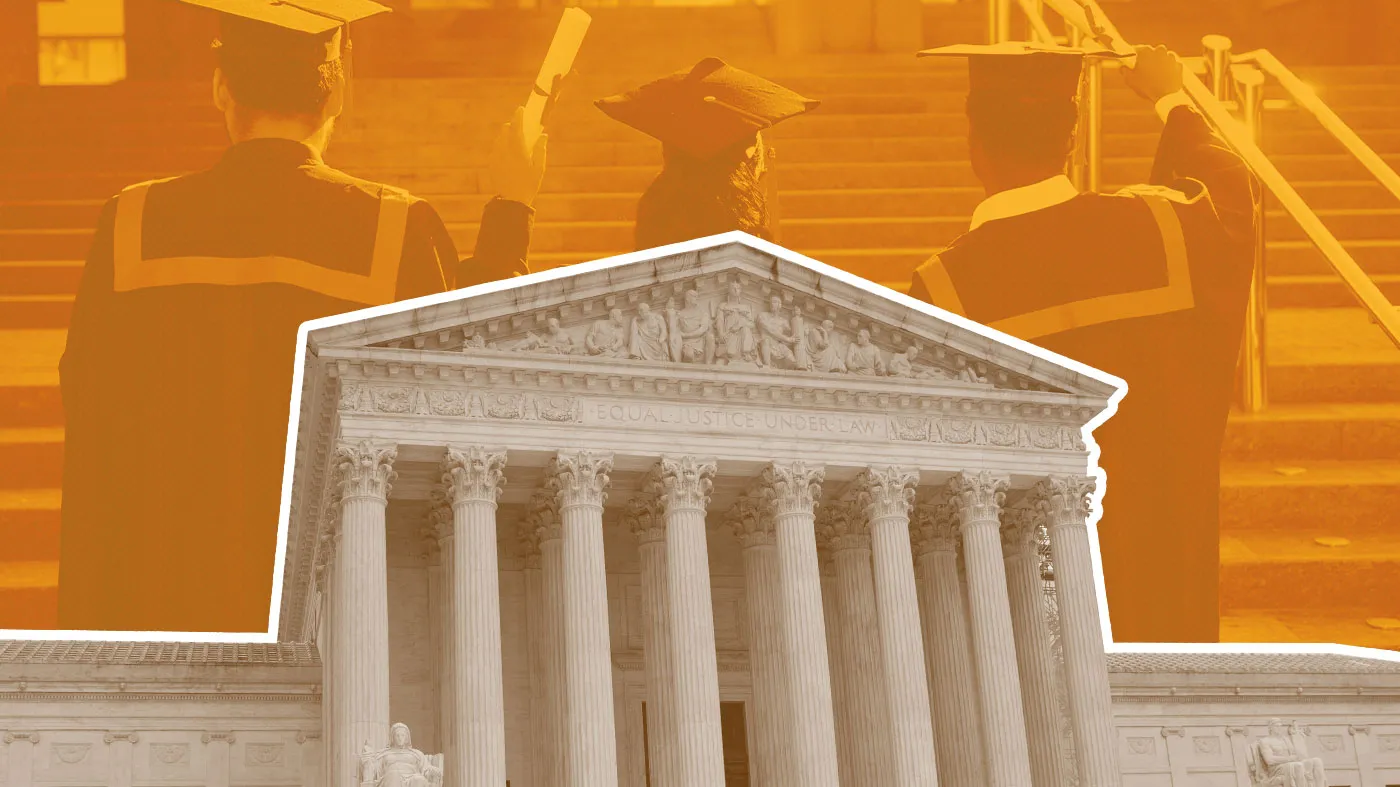
The Trump administration has used every tool at its disposal to bring universities to heel and enlist them as ideological allies. At the same time, states like Alabama, Florida and Texas have enacted laws or adopted policies designed to prohibit faculty in public universities from teaching about race and gender or advocating particular viewpoints.
In some places, courts have stepped into the breach. In others, they have given their blessing to restrictions on academic freedom.
A particularly egregious example of the latter occurred in August 2025, when Federal District Judge R. David Proctor refused to stop an Alabama law that prohibits schools — including public colleges and universities — from requiring students “to assent to eight ‘divisive concepts.’” related to “race, color, religion, sex, ethnicity, or national origin.”
Proctor wrote, “When teaching students in the classroom, university professors are not speaking as private citizens. … [T]he Professors’ in-class instruction constitutes government speech [and] can be taken as directly and deliberately representative of the school.”
In Florida, by comparison, a federal district court enjoined the state from enforcing its anti-woke law that prohibited teachers in its public universities from promoting “certain viewpoints relating to race, color, sex and national origin,” a decision affirmed on appeal in July in the 11th Circuit Court of Appeals.
Florida has appealed that decision to the U.S. Supreme Court . The court should take the case and use it as a vehicle to establish that academic freedom, in public and private colleges and universities that receive federal funds, is constitutionally protected.
Although some defenders of academic freedom might hope that the court will not take the case and will leave the appeals court decision undisturbed, I believe the time has come to bring academic freedom under the umbrella of the First Amendment.
The high court has gestured in that direction in several cases going back to the middle of the 20th century. In 1957, it sided with a Marxist economist who had refused to answer questions from New Hampshire’s attorney general about a lecture he delivered at the University of New Hampshire.
Writing for a plurality of the Supreme Court, Chief Justice Earl Warren said “that there unquestionably was an invasion of petitioner’s liberties in the areas of academic freedom and political expression. … To impose any straitjacket upon the intellectual leaders in our colleges and universities would imperil the future of our nation.”
But the court based its ruling on the grounds that the economist’s due process, not his First Amendment, rights had been violated.
Ten years later, the court struck down loyalty oaths for faculty members in the New York State University System on the grounds that the law authorizing such oaths was unconstitutionally vague. Here again Its decision did not give constitutional protection to academic freedom in all cases. However, Justice William Brennan noted, “Our Nation is deeply committed to safeguarding academic freedom, which is of transcendent value to all of us, and not merely to the teachers concerned.”
In its Oct. 5 appeal to the Supreme Court, Florida said it wanted the court to resolve the question of whether “public university professors have a special status under the First Amendment, such that the speech they express in the course of their official duties, unlike the official duty speech of all of the public employees, is protected by the First Amendment from regulation by their employer, the state.”
Florida noted that lower courts have disagreed about what the answer to that question should be, with some aligning their decisions with the Eleventh Circuit and others “holding that speech by state employees from the classroom lecturer is government speech,” subject to regulation and direction by state legislatures.
It is time for the Supreme Court to make Warren and Brennan’s views the law of the land.
However, even if the court does ground academic freedom in the First Amendment, that doesn’t mean that academic freedom is the same as free speech . It is not.
We protect free speech because we value the expression of opinions no matter how outrageous they are. In contrast, academic freedom protects only speech dedicated to the pursuit of truth. It protects the robust exchange of views in the classroom and in scholarship because it is indispensable to that pursuit.
As my colleague Adam Sitze argues , “The scholar encounters truth as a peremptory, non-negotiable and undebatable force. … To coerce someone into saying what they know isn’t true isn’t just a violation of liberty. It’s absurd. It violates the basic integrity of the intellect.”
That’s exactly what Alabama, Florida and Texas have set out to do.
Such a violation, the Supreme Court needs to say, is never acceptable. It is the very thing that the protections accorded in the First Amendment are designed to prohibit.
Austin Sarat is the William Nelson Cromwell Professor of Jurisprudence and Political Science at Amherst College.
Topics in this story
Gathered from external sources. Rights to this text belong to whoever originally published it.