MI5 false evidence in neo-Nazi spy case a serious failure, says intelligence watchdog
Lord Leveson says MI5 lying to multiple courts was as "serious as anything" he has dealt with.
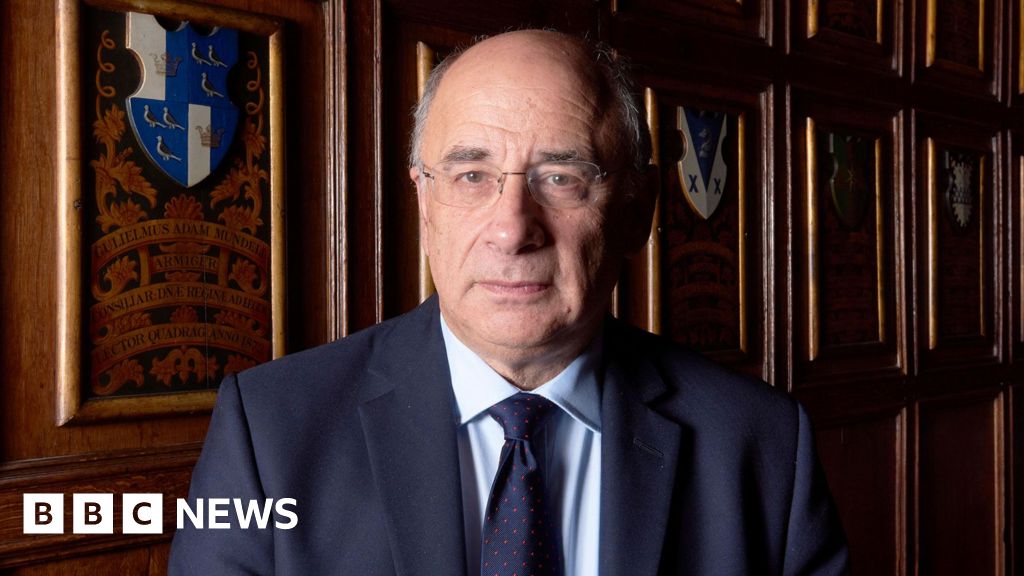
The man responsible for overseeing the conduct of the UK's intelligence services has said that MI5 lying to multiple courts while defending a violent neo-Nazi spy is as "serious as anything" he has ever dealt with.
"Oversight depends on candour," said investigatory powers commissioner Lord Leveson. "Failings of candour undermine the entire basis of oversight and accountability."
His office, the Investigatory Powers Commissioner's Office (IPCO), investigated how MI5 gave false evidence to three courts concerning the abusive informant known as agent X, as first exposed by the BBC.
IPCO's report, released earlier this year, found one senior officer lied repeatedly while another misled his own colleagues and lied about what he was told.
It also criticised other senior spies and found "serious and systemic failures in MI5's conduct" throughout the case.
MI5 said it accepted the report's findings "without reservation" last month . The High Court is due to decide soon on what action, if any, to take against the agency or its staff.
In comments to mark the publication of his annual report on Thursday, Lord Leveson said the "case of agent X is as serious as anything I have dealt with as commissioner".
"False evidence was given to the High Court and the Investigatory Powers Tribunal, and the prime minister directed me to find out how that happened.
"My investigation has now concluded and found that both IPCO and the courts were misled."
The IPCO investigation examined how MI5 gave false evidence to three courts about having kept to its core secrecy policy - known as 'neither confirm nor deny' (NCND) - about the agent status of the violent neo-Nazi informant.
He coercively controlled his partner, known by the alias Beth, and attacked her with a machete. MI5 then helped him go abroad to continue intelligence work while he was under police investigation.
The government took the BBC to court in 2022 in a failed attempt to block our investigation into X, but won him legal anonymity. Beth then sued MI5 at the Investigatory Powers Tribunal, and in 2024 she sought a review of a ruling at the High Court.
MI5 claimed it had maintained NCND and, consequently, the courts allowed it to keep information secret from Beth and everyone else, leaving her at a serious disadvantage.
But what MI5 said was untrue. It had in fact disclosed the man's agent status in phone calls to me, as it tried to persuade me not to investigate him in 2020.
A senior MI5 officer had tried to cover up for the man, falsely saying he was not an abusive misogynist nor a real extremist. He even wanted me to meet the agent. In doing so, he repeatedly departed from the NCND policy.
That officer was found to have repeatedly lied by the IPCO investigation. He has resigned from MI5 since the BBC exposed what happened.
How I exposed MI5's lie about its violent abusive agent
MI5 agent used secret status to terrorise girlfriend
The IPCO also oversees and regulates MI6 and GCHQ, as well covert powers and agent-running by police forces and other agencies.
Its annual report revealed that errors by MI5 involving agents increased from four in 2017 to 21 in 2025. In the same period, errors by MI6 decreased from 10 to three.
It also criticised the National Crime Agency (NCA) for failings in how it managed a juvenile criminal informant, meaning a child under 18 who was being used by the agency.
It found that the NCA did not inform Lord Leveson of the fact it was running a child informant within the required time period, and a senior NCA officer wrongly extended the authorisation well beyond what is legal.
It also found a failure to record the circumstances which would justify the absence of an "appropriate adult", and that the child was "tasked to engage in criminal conduct" without the protection of a valid legal authorisation.
Lord Leveson said the agency's conduct fell "well short of what the law requires" and said he had written to its director general.
He also expressed concern with GCHQ, saying it "still cannot tell me what has happened to removable media that may hold sensitive data, years after I first raised it with them".
The report revealed the spy agency now estimates there are "thousands" of memory cards, hard drives and other portable media items it can neither find nor account for. The report stated that "these items are utilised extensively and are an essential component of some of GCHQ's operating processes".
"We remain very concerned about this issue and are disappointed with the time it has taken GCHQ to investigate", said Lord Leveson.
MI5 court evidence based on lies, report says
MI5 accepts it gave evidence based on lies in neo-Nazi spy case
MI5 misled watchdog about neo-Nazi spy case
Topics in this story
Gathered from external sources. Rights to this text belong to whoever originally published it.