School start times under scrutiny amid permanent daylight saving time debate
School start times have taken center stage in the fight surrounding permanent daylight saving time. Senators concerned about kids walking to school in the dark are holding the line against legislation — passed by the House and vocally backed by President Trump — that would halt the semiannual clock-changing. And while those who want permanent…
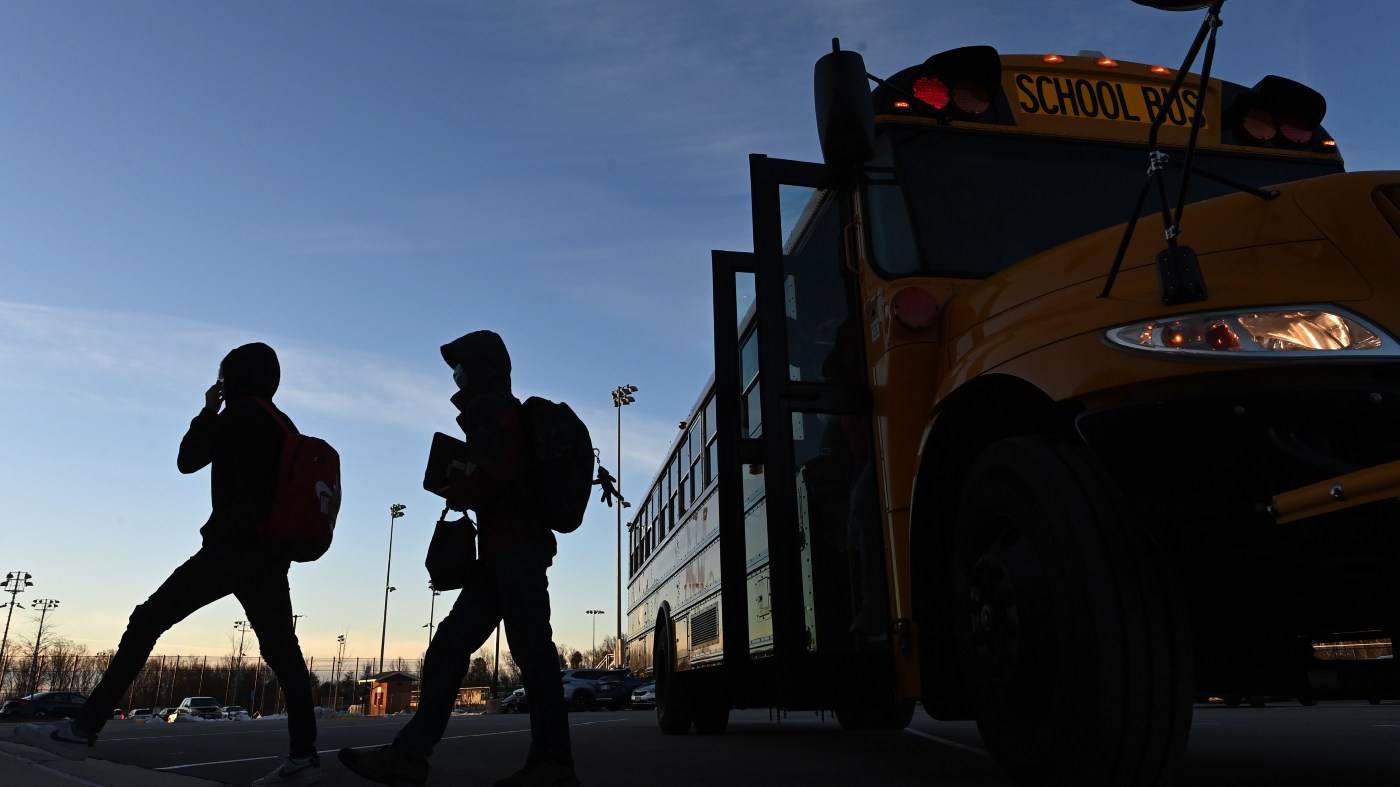
School start times have taken center stage in the fight surrounding permanent daylight saving time .
Senators concerned about kids walking to school in the dark are holding the line against legislation — passed by the House and vocally backed by President Trump — that would halt the semiannual clock-changing.
And while those who want permanent daylight saving time (DST) say schools should just start later, school officials and even some advocates for pushing class times back acknowledge a large number of obstacles prevent hearing that first bell even an hour later.
“I think it gets lost that schools already start incredibly early, and kids are already going to school in the dark. … It’s a huge problem,” said Terra Ziporyn Snider, executive director and co-founder of Start School Later. “If we went to permanent daylight saving time, then even more students would be going to school in the dark unless the schools change their start times.”
“It boils down to a lack of political will, and it’s enormously, enormously difficult to run schools at times that are safe and allow kids to get healthy sleep. And so, this idea that we might have to move them even later is a daunting prospect. We do know that it can be done when it needs to be done, and maybe a switch to DST would wake people up and make them realize that this matters,” she added.
While the average high school start time is a little after 8 a.m., many schools start around 7:30 a.m. In Florida, some start around 7 a.m.
With permanent daylight saving time, some areas of the country wouldn’t see sunrise until after 9 a.m.
“No one likes changing the clock, me included, but Congress has enacted permanent Daylight Savings Time multiple times before and repealed it each time once Americans experienced absurdly late sunrises in the winter. Arkansans don’t want their kids going to school in the pitch dark, and I’ll always put Arkansas first,” Sen. Tom Cotton (R-Ark.) wrote on social media, after he was personally targeted by Trump for his opposition to permanent DST.
The president posted on Truth Social for his followers to pressure Cotton into voting for the Sunshine Protection Act of 2025, going as far as to post the senator’s personal phone number.
But Cotton is not the only opposition, with many Republicans and Democrats in the Senate against the legislation despite a 308-117 vote in the House.
“I’m from a northern clime,” Senate Majority Leader John Thune (R-S.D.) said. “I voted against it in committee.”
Even now, many students are already going to school before the sun is up.
“We’re a rural area. A lot of times, or most times during the year, our kids are catching the bus when it’s still dark outside,” said Dennis Willingham, superintendent at the Walker County Board of Education in Alabama.
Willingham said staff members are “trained to make sure that our kids are safe, to make sure that they know how to be safe on our bus stops.”
The early start times, highlighted by the current fight, fly in the face of studies showing the benefits of starting later, particularly for high schoolers.
A Centers for Disease Control and Prevention review of 38 studies regarding school start times found that in schools that begin at 8:30 or later, students get better sleep, academic performance increases, attendance goes up and students engage in less risky behavior.
But parents’ work schedules, after-school activities and surrounding school times all play a factor in making a later start time exceedingly difficult.
“Extracurricular and the cocurricular athletics are part of the educational experience. That’s all part of it. And so, you always have to struggle with the other schools in the area to make sure that their end times are somewhat similar to what yours is, because you don’t want to be ending school, say at 4 o’clock, and the other school is ending at 2 o’clock, and they’re trying to come to your school for a basketball game or a volleyball game, and you’re still getting out of school,” said Clayton Lavercombe, freshman principal at Springboro High School in Ohio.
One school official previously told The Hill their school recently made their start times even earlier because students were missing too much class for sports.
Extracurricular activities are also used by parents as a place for their kids to go after school while they finish work.
An earlier start time would move childcare needs to the morning, completely flipping the current system and making it harder for educators with children as well.
“Nobody can just solve with a flick of a switch or a turn of a page, if you will. There’s a lot of ramifications for changing the start time,” said Lavercombe.
Topics in this story
Gathered from external sources. Rights to this text belong to whoever originally published it.