3 classes after Supreme Court’s admissions ruling: What the data show
Research indicates that following the Supreme Court’s end of race-conscious admissions, there has been a slight nationwide increase in first-year students reporting their race or ethnicity as unknown, complicating the assessment of shifting enrollment patterns.
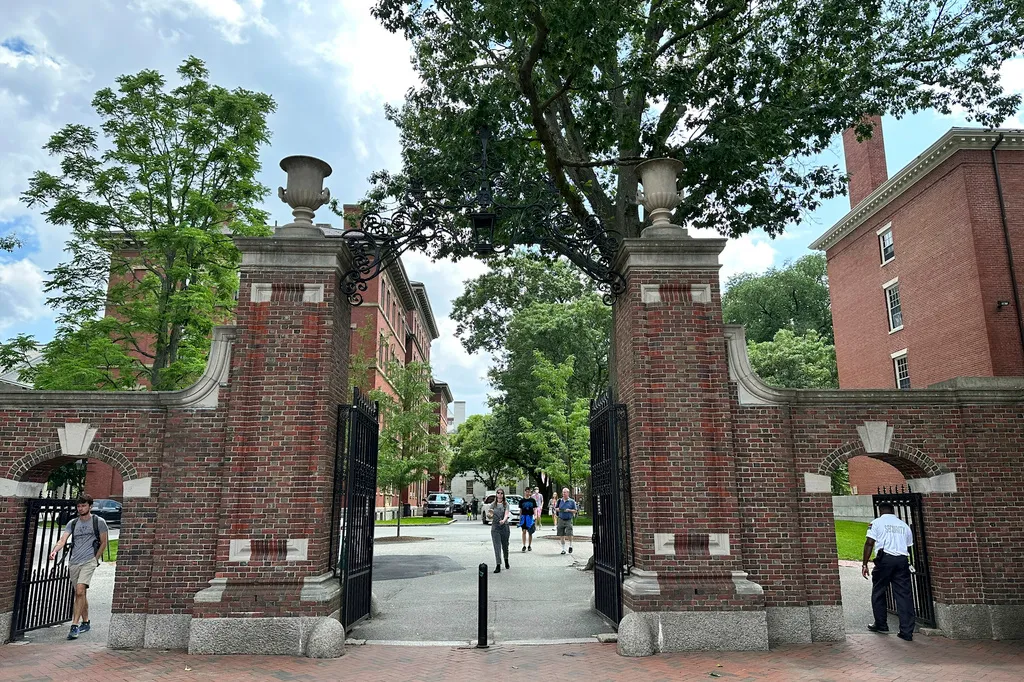
This fall, colleges are welcoming the third class admitted since the Supreme Court ended race-conscious admissions. Yet just as the effects of that decision are coming into view, part of the picture is becoming harder to see.
New research finds that, nationally, the share of first-year students whose race or ethnicity was reported as “unknown” rose from 3.3 percent before the ruling to 4 percent in 2024, with larger increases at Ivy Plus institutions and Historically Black Colleges and Universities. Although the overall increase was modest, it complicates efforts to understand how the admissions landscape is changing and whether opportunity is expanding or narrowing.
Much of the public discussion has focused on enrollment changes at a small group of highly selective colleges. Lumina Foundation partnered with admissions researcher James Murphy at Class Action on two reports released this year that offer a broader view of what is happening across higher education. The first traces enrollment changes across more than 3,000 institutions. The second, released in June, examines the increase in first-year students whose race or ethnicity was recorded as unknown and what it means for interpreting those changes.
Murphy examined federal data from more than 3,000 institutions and more than 3.5 million first-time enrollments to compare the 2024 entering class with the average of 2022 and 2023.
At Ivy Plus institutions, the share of underrepresented students of color fell by 4.33 percentage points — nearly 19 percent. Black enrollment fell by 25 percent, and Hispanic enrollment fell by about 15 percent. At state flagship universities, enrollment of underrepresented students of color increased by 8 percent. White and Asian American enrollment remained relatively flat across most institutional groups, although Asian American enrollment increased at Ivy Plus institutions.
Murphy describes these patterns as a “cascade effect,” in which declines at the most selective institutions coincide with increases at less selective institutions. The data do not tell us where any individual student would have enrolled before the ruling. They do raise an important question: If highly qualified students increasingly attend institutions with lower completion rates or weaker post-graduation earnings than institutions they might otherwise have attended, what will that mean for their long-term outcomes?
Known Unknowns shifts the question from where students enrolled to how clearly we can understand who enrolled. Across all institutions, the share of first-year students whose race was reported as unknown increased from 3.3 percent before the ruling to 4 percent in 2024. More than 95 percent of first-year students still had a reported race or ethnicity, but the increase was uneven. At Ivy Plus institutions, non-reporting rose from 3.2 percent to 5.8 percent. At Historically Black Colleges and Universities, it rose from 3.2 percent to 4.9 percent. Public four-year institutions and state flagships saw the smallest increases. Only about a quarter of all institutions saw non-reporting rise by more than 1 percentage point.
The report also looks beyond enrollment. Among 115 colleges and universities with data on applications, admissions and enrollment, non-reporting among applicants increased by 0.7 percentage points, essentially the same increase seen in enrollment nationally. In that smaller, nonrepresentative group, less selective institutions had the highest non-reporting rates before and after the ruling and the largest increase afterward. At the same time, non-reporters were admitted at somewhat higher rates than the applicant pool overall.
Those findings resist a simple explanation. Some students may believe that not reporting their race gives them an advantage. Others may be confused about what the ruling permits or uncertain about how colleges will use their information. The “unknown” category can also reflect changing identities, the limits of the categories offered, or errors in institutional reporting. The report found little to no correlation between increases in non-reporting and changes in the enrollment share of any particular racial or ethnic group. We therefore cannot assume who these students are or use the unknown category to revise the numbers for another group.
The Hechinger Report’s examination of admissions essays after the ruling offers a related glimpse into how students are navigating the change. Some students continued to write about how race shaped their experiences, while others chose not to emphasize that part of their backgrounds. Admission essays cannot explain the increase in unknowns, but the differences show students interpreting new and sometimes confusing signals about what to disclose.
Additional information will be important for understanding whether shifts in access lead to shifts in completion and economic mobility. Who enrolls, where they enroll, and who completes a credential are all critical to understanding the ruling’s longer-term effects.
Students, institutions and the professionals who support them are navigating a changed admissions environment. Guidance from the National Association for College Admission Counseling can help counselors and admissions professionals understand evolving admissions practices and help students make informed choices.
We still have only one year of complete national post-ruling enrollment data. Additional federal admissions data are expected and could eventually allow researchers to examine who applies, who is admitted and who enrolls, although it remains unclear when all of those data will become available.
As this school year unfolds, another entering class will add to a still-developing picture.
The next several years of data will tell us whether the patterns we’re seeing are temporary adjustments or lasting changes and, ultimately, whether changes in where students enroll translate into changes in who completes college and the economic opportunities that follow.
Jasmine Davis-Randolph, Ph.D., is the strategy officer for research at Lumina Foundation, an independent foundation that helps Americans keep learning beyond high school. James Murphy is a senior fellow at Class Action, which works to rebuild public trust through inclusion over exclusivity.
Topics in this story
Gathered from external sources. Rights to this text belong to whoever originally published it.