More public schools are closing. Will the midterms speed or slow the process?
Public school closures are accelerating across the country, and voters in several states have a chance to speed up or slow down the process Tuesday. Closures are largely determined by school board members and affected by a district’s funding situation, which itself is downstream from state legislatures and governors’ mansions. With school board seats up…
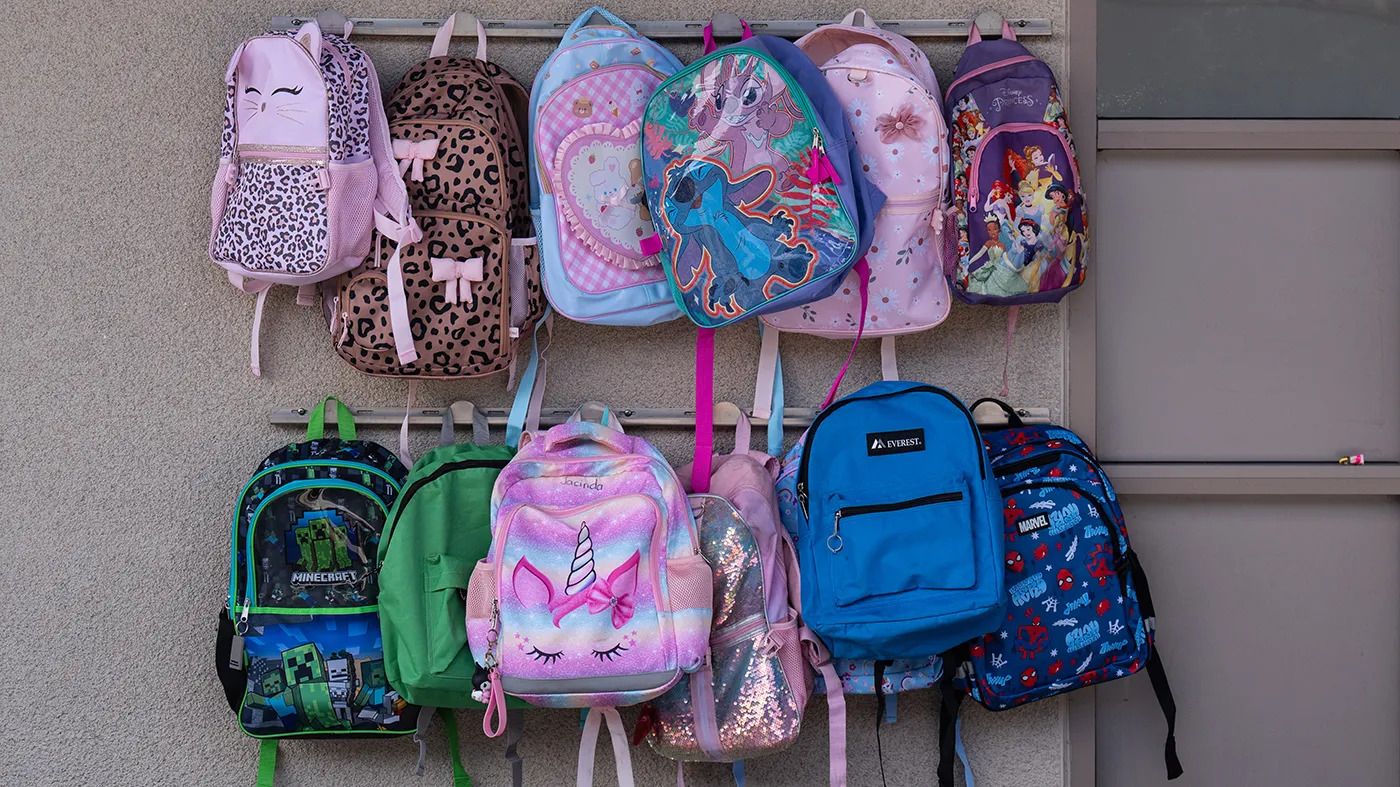
Public school closures are accelerating across the country, and voters in several states have a chance to speed up or slow down the process Tuesday.
Closures are largely determined by school board members and affected by a district’s funding situation, which itself is downstream from state legislatures and governors’ mansions.
With school board seats up for grabs and more than 12 states with ballot initiatives affecting school funding, these midterms could bring some relief to parents who are dissatisfied with plans to shut down more school buildings.
“This is one of the least popular things a district can do, and so it would be very difficult for a candidate to run on a pro-closure platform. On the other hand, you do have some candidates who have said, ‘We have steep, declining enrollment. We need to align the number of schools we have with the number of students we have. We need to shrink to match our circumstances,'” said Carrie Hahnel, a partner at Bellwether, an education research nonprofit.
“It’ll be interesting to see if there are communities that are sympathetic to that,” Hahnel added.
The enrollment crisis is a problem across the country, affecting major cities including Chicago, Los Angeles and Seattle.
Researchers found public schools lost 1.83 million students between the 2019-2020 school year and the 2023-2024 one, a shift fueled by the pandemic.
The National Center for Education Statistics projects public school enrollment will drop 7.5 percent from 2019 to 2031.
And there is not much districts can do about it, as most of the decline is from falling birth rates in the U.S., although some of it is also coming from shifts in education and greater participation in school choice programs.
Since enrollment is directly linked to funding, schools start to feel the pinch in their pockets pretty quickly.
Minneapolis Public Schools (MPS), a district that serves more than 29,000 students, tabled plans to talk about school closures until next year, after years of funding declines took away popular programs and fears of immigration enforcement have impacted enrollment.
That puts the issue squarely on the nine candidates who are running to join the school board.
“I think that’s something that gets lost sometimes in these closure discussions. There are enough students in the district to get up to operational efficiency, if that’s what you want to call it. This is not the same situation as you see out in rural areas, where schools have to close because of demographic shifts. MPS has opportunity,” school board candidate Ben Lattimore said in an interview with the Sahan Journal.
Some states do have programs that allow schools to retain a certain level of funding despite enrollment drops to give a brief reprieve for a few years, but they are not popular with lawmakers or sustainable in the long term.
“Some legislatures might come in and say, ‘We’ll do a one-year hold harmless or a two-year hold harmless that gives districts some time, potentially, or some reprieve in the short term.’ Those policies are expensive for legislatures,” said Marguerite Roza, director of the Edunomics Lab at Georgetown University.
While school boards ultimately vote on the issue, state guidance and politics affect their decisions.
“What will have a major impact on [school closures] are the changing politics and policies that could be the result of the midterm elections. And so, with 36 states electing governors this year, that has major implications for the school board makeup, for the makeup of chief school officers and what they have the power to do to help districts navigate this difficulty,” said Nithya Joseph, managing partner of policy and advocacy at TNTP, a nonprofit that works with schools to redesign education systems.
Gubernatorial races in numerous states have seen staunch stances on school choice, with Democratic opponents attacking their counterparts for sending money out of public schools at a time when the institutions are struggling.
Ohio Democratic governor hopeful Amy Acton’s campaign website says “public money should be for public schools” and that she wants to “reform” the “corrupt school voucher system” in the state.
Vivek Ramaswamy, her Republican opponent, has eagerly supported Ohio’s school choice program and says public schools need to improve outcomes for more funding.
“Well, I want to talk about outcomes, and then what we need to get those outcomes, we’ll talk about for funding,” Ramaswamy said, as reported by the Ohio Capital Journal . “But it’s a school debate, school policy debate — should not be an accounting debate.”
Gina Hinojosa, the Democratic candidate for governor in Texas, has run on a “save Texas public schools” platform against Republican Gov. Greg Abbott, who is seeking a fourth term.
“Gina rejects spending big money on school vouchers and expensive vendors. As Governor, Gina will end the voucher scam and ensure Texans’ taxpayer dollars go where they belong: into the neighborhood schools families depend on,” Hinojosa’s campaign website reads.
The state politics around funding and support for public schools could be an influential factor when districts decide whether to close buildings.
“Because while it’s a set of undesirable challenges that districts are facing, and that school closures and consolidations may be a reality in those sets of decisions, how those decisions are made are really impacted by the guidance that these state-level education leaders can really provide these districts as they’re navigating this tough time,” Joseph said.
In 2022, the Oakland Unified School District board in California approved a plan to close schools because of funding difficulties. That plan was reversed in 2023, when three new members were added to the school board.
But experts warn these victories are often short-lived.
“I would say to communities, ‘Be careful what you wish for,’ because it’s not like the financial pain goes away if you change the board member, and it’s the financial pain and the enrollment declines that are causing that response from the board that we may need to close schools,” Roza said.
School closures are a top issue again in the Oakland school board race, as the district still has a $38 million deficit.
There are ways some schools have avoided closures despite declining enrollment and funding, but it typically involves cutting programs or classes and making some positions, such as counselors, part time.
While school closures are more of a state and local issue, the federal government could make the situation harder by cutting back funding to states.
“If we have a Congress that continues to want to cut overall funding, well, some of those programs are still going to run even if the funding isn’t there,” said Noelle Ellerson Ng, chief advocacy and governance officer at the School Superintendents Association.
“So, then you’ll start to see state and local education agencies use their own dollars to cover that shortfall, and that’s where you might start to see more impact on funding that is available for keeping schools open or the like, because that money will come from the budget, and if it has to be reallocated to cover a shortfall elsewhere, they’re not going to be able to do it that way,” she added.
Topics in this story
Gathered from external sources. Rights to this text belong to whoever originally published it.