Will Trump’s new divide-and-conquer plan work against universities?
Every college and university should agree on one issue MacMahon did not explicitly address: the United States government should never condition research funding or other benefits on adherence to the political agenda of this or any other administration.
Last fall, the Trump administration offered a deal to nine of the nation’s top universities. They could either sign a 10-page compact accepting administration priorities and receive preferential access to federal funding, or they could decline and forgo federal benefits.
The administration hoped to extend the compact to all colleges and universities. Instead, its blatant attempt to dictate university policies helped convince all nine universities to refuse it.
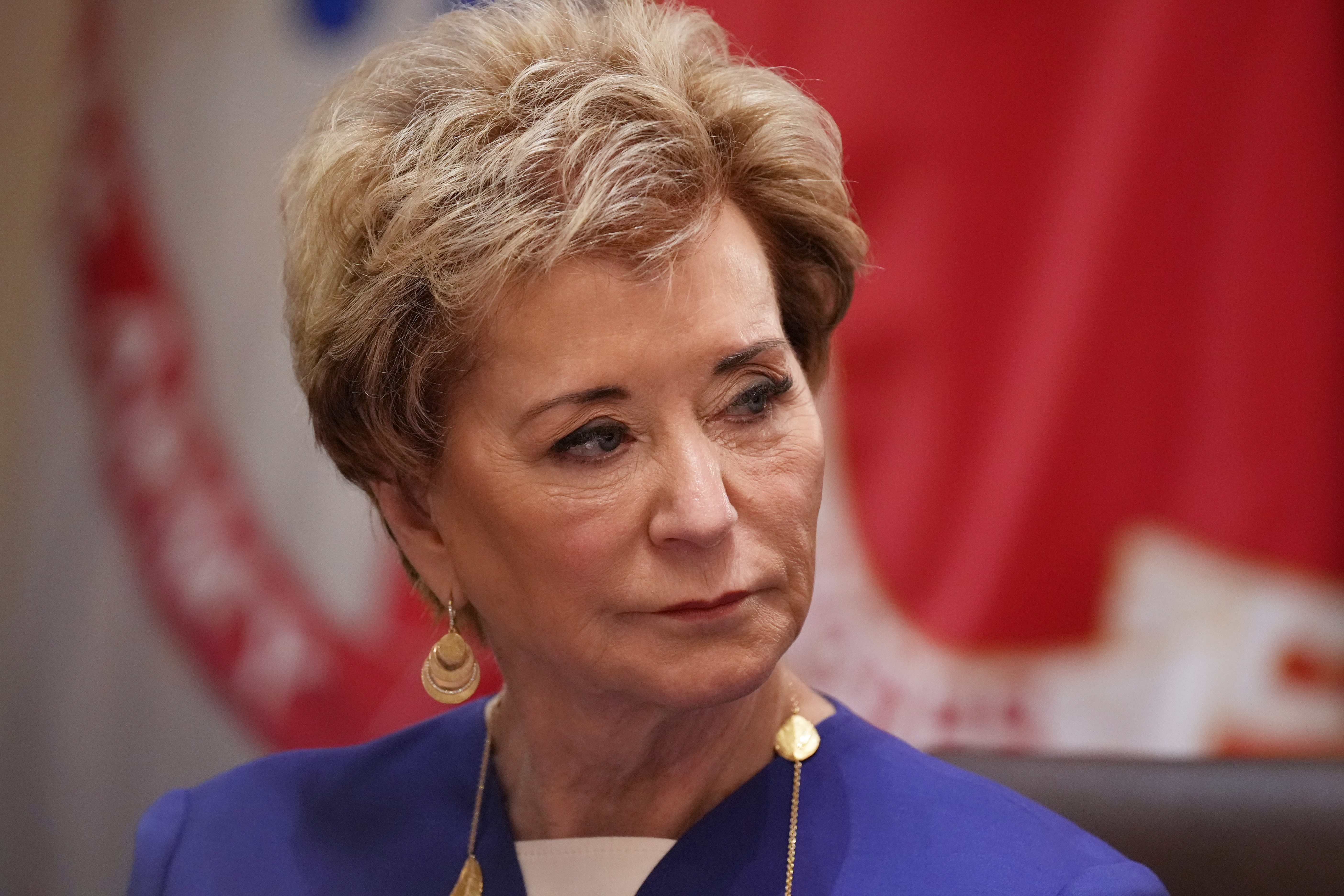
Today, the administration is trying a subtler approach. Last month, Education Secretary Linda MacMahon issued what she called a “ national call to action ” asking every college and university to explain how it will ensure merit-based admissions, promote viewpoint diversity, stop protests from disrupting classes, make education affordable, support workforce needs, end grade inflation, and resist foreign influence.
MacMahon’s call to action may get traction, we fear, because it invites colleges and universities to divide themselves into two groups, the cooperative and the recalcitrant.
Although MacMahon’s letter does not contain an explicit quid pro quo, a White House official acknowledged that institutions that implement reforms “could be more likely to be involved in discussions” about reshaping federal research funding. How subtle.
Accountability in MacMahon’s Department of Education apparently means political control. It seems likely that MacMahon’s new approach will increase the fragmentation of higher education, making it even more difficult for colleges and universities to resist the administration’s attacks on everything from merit-based research funding to universities’ tax-exempt status.
To develop its call to action, the administration consulted a range of higher education leaders. Barbara Snyder, president of the Association of American Universities, described the discussions as an “ olive branch .” Ted Mitchell, president of the American Council on Education, insisted that “unlike the compact, which was a gun-to-the-head ultimatum ,” MacMahon’s letter was “an invitation to a conversation.”
PEN America and the Alliance for Higher Education saw something more ominous — “a document designed to divide and weaken higher education.” And the American Federation of Teachers and the American Association of University Professors urged “organized resistance — not preemptive compliance” with what they viewed as another effort to undermine the ability of colleges and universities to govern themselves and impose the administration’s “far-right agenda” on them.
Most colleges and universities have so far remained noncommittal or silent. But the University of North Carolina system endorsed MacMahon’s approach and detailed its efforts to address her concerns, while all 40 presidents of Florida’s public colleges and universities signed a 30-page joint letter praising the call to action and answering its questions. Florida Education Commissioner Henry Mack demanded the state’s private universities respond as well.
Although Trump administration officials insist participation is voluntary, Mack made clear that in Florida, “institutions that ignore Secretary McMahon’s call to action, or that offer only empty rhetoric, should not be surprised by additional statutory requirements, tighter performance expectations, heightened scrutiny of licensure conditions or funding determinations calibrated to demonstrate seriousness.” McMahon praised Florida for “setting a bold example in answering our call to action — committing to commonsense reforms.”
In less than three weeks, a nominally voluntary federal invitation became, in the Sunshine State, a mandate backed by threats of state sanctions.
Florida may prove to be a model for others. Many red states have already passed legislation aligned with administration goals on diversity, equity and inclusion, faculty governance, curriculum, tenure and institutional authority. And the Heritage Foundation simultaneously offered states a blueprint in the form of model legislation for enacting administration priorities into law. Among other things, it would allow states to condition funding on compliance with prescribed policies on admissions, “identity-based activities,” viewpoint diversity and immigration enforcement. It would also subject universities to periodic “rights audits” and require review of academic programs for possible consolidation or elimination.
In short, MacMahon’s approach is generating what the original compact could not: a spectrum of responses, from enthusiastic endorsement to cautious engagement to silence, rather than nearly unanimous resistance.
Colleges and universities have until Dec. 31 to decide whether and how to respond. Between now and then, every institution that embraces MacMahon’s agenda provides an example federal and state officials can use to pressure those that object.
We believe that the questions MacMahon asks about existing policies are legitimate even if the answers she seeks are not. Universities should worry about affordability, grade inflation, academic rigor, free expression and foreign interference; they should enact reforms they independently decide are warranted. That makes her call to action hard to ignore and harder still to produce a shared response to it.
At a minimum, however, every college and university should agree on one issue MacMahon did not explicitly address: the U.S. government should never condition research funding or other benefits on adherence to the political agenda of this or any other administration.
David Wippman is emeritus president of Hamilton College. Glenn C. Altschuler is the Thomas and Dorothy Litwin Emeritus Professor of American Studies at Cornell University.
Topics in this story
Gathered from external sources. Rights to this text belong to whoever originally published it.