Parents are winning — and the Department of Education is leading the charge
The U.S. Department of Education and the Department of Justice have intensified enforcement of parental rights laws against school districts that hide student information from parents regarding gender identity and privacy violations.
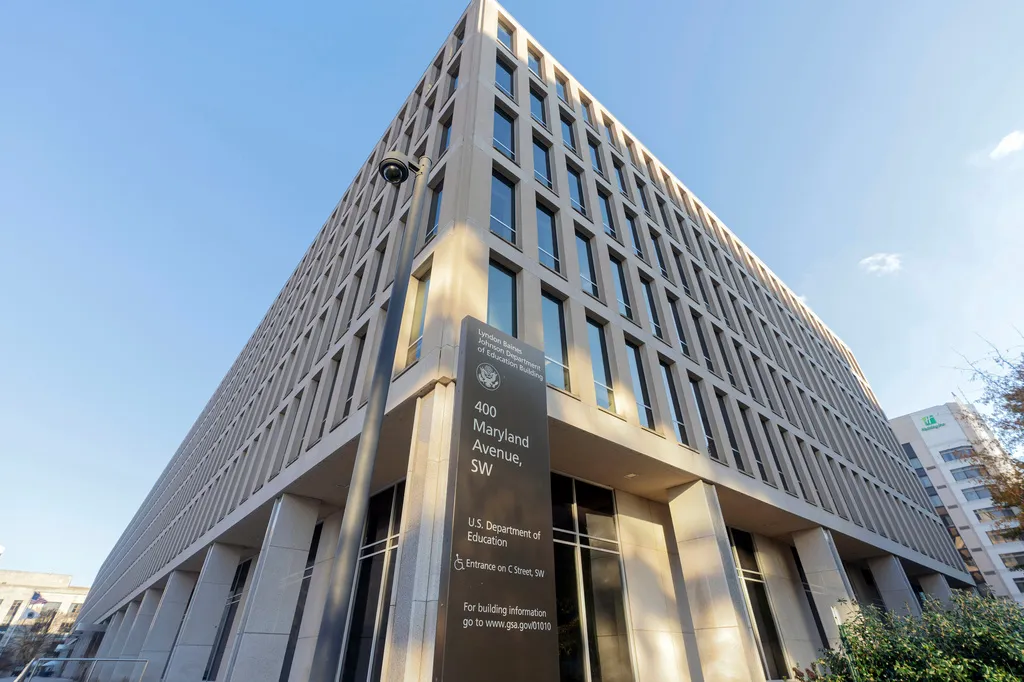
It’s back-to-school season. And this year, parents have a lot more to celebrate than just the excitement of fresh school supplies and predictable schedules.
Parents across America have been sidelined , silenced and shut out of their children’s education for too long. Records have been hidden. Administrators have stonewalled . Parents have been treated as obstacles rather than partners.
But today, the tide has turned — and the U.S. Department of Education deserves some credit for the pro-parent momentum.
This administration has done something commendable: It has taken existing federal parental rights laws — laws that sat unenforced for years while school districts brazenly ignored them — and enforced them with teeth. Something past administrations wouldn’t even consider, much less do. The result has been authentic investigations, real consequences and needed accountability. Finally, parents are being heard, and schools are taking notice.
In just one week surrounding National Parents’ Day on July 26, the department stood firmly with parents and held schools to account.
It launched a crackdown on school districts that have been facilitating students adopting new so-called gender identities at school (with different names and wrong-sex pronouns) — all while actively concealing it from their own parents.
It opened new parental rights investigations into Denver Public Schools in Colorado and Bethel School District in Washington for possible violations of the Protection of Pupil Rights Amendment of 1978.
It found that the Burlington Public Schools in Massachusetts violated the Protection of Pupil Rights Amendment when it forced students to take a “Youth Risk Behavior Survey” — a sexually explicit survey from which many parents had expressly opted their children out.
And it demanded that California and Washington explain their policies pressuring schools to hide student records and vital information from parents — policies so egregious they triggered the department’s first-ever statewide Family Educational Rights and Privacy Act of 1974 investigations.
That is not just a bureaucracy in motion. That is a Department of Education with a backbone.
And the department has taken specific and decisive enforcement actions to preserve parental rights. In partnership with the U.S. Department of Justice, it took enforcement action against Anne Arundel County, Md. schools after finding the district hid students’ transgender identity from parents by improperly classifying it as “confidential medical information.”
In Ann Arbor, Mich., the department determined the district’s policy directing employees to hide children’s transgender identity from parents likely violates the Family Educational Rights and Privacy Act and threatened enforcement. In Kansas City, Kan., a school district repeatedly refused to come into voluntary compliance with the law and stop hiding this same information. The Department of Education and Department of Justice therefore announced it would pursue judicial proceedings and the potential loss of federal funding.
The message is clear : The Family Educational Rights and Privacy Act is not an optional statute. It is the law. Districts that lie to parents and hide sensitive information about their child are on notice that federal enforcement action is coming — and fast.
Earlier this year, the U.S. Department of Education issued a finding against the California Department of Education, which has been hiding information from parents in what it calls “gender support plans.” California had also asked its student data management company to conceal name and pronoun changes from parents.
And at the beginning of summer, the red tape was cut. The Department of Education and Department of Justice formalized an interagency agreement to “expedite enforcement of our nation’s parental and civil rights laws.” In other words, enforcement of pro-parent laws is finally a priority.
This much-needed momentum is also being reinforced by the courts. In Mirabelli v. Bonta , the U.S. Supreme Court reaffirmed that it is parents, not government, who have “primary authority” over their children’s education and upbringing. And the U.S. Court of Appeals for the 9th Circuit quickly followed suit in June 2026, holding that California laws forbidding schools from notifying parents when their child socially transitions to a new gender identities at school likely violates parents’ constitutional rights.
Educational freedom is also being expanded. The One Big Beautiful Bill Act established a federal education tax credit scholarship program for the first time. The program provides for a dollar-for-dollar tax credit of up to $1,700 for individual donations to Scholarship Granting Organizations that provide K-12 student scholarships for low- and middle-income families.
Thirty-one states have already announced plans to opt in to this historic program, starting Jan. 1, 2027. Parents will be empowered to choose what is best for their children’s education, aligned with their family values and their children’s unique needs. These new scholarships will now be available to an estimated 90 percent of K-12 students nationwide.
This is what it looks like when the federal government stands with parents instead of against them. Preserving parental rights through enforcement. Protecting through policies that empower.
The message for school districts is simple: Hide information from parents, and your federal funding is at risk. The message to parents is even simpler: Keep fighting. We’re winning.
Kate Anderson serves as senior counsel and director of the Center for Parental Rights at Alliance Defending Freedom .
Topics in this story
Gathered from external sources. Rights to this text belong to whoever originally published it.