New student reading data offer bright spot on long road to literacy recovery in the US
Reading scores are starting to see an increase across the board after years of stagnation following COVID-19, a new study says, a hopeful sign in the long battle to improve literacy among U.S. students. Reading scores in grades K through 8 cut the gap from pre-pandemic levels by one-third in the past year, according to…
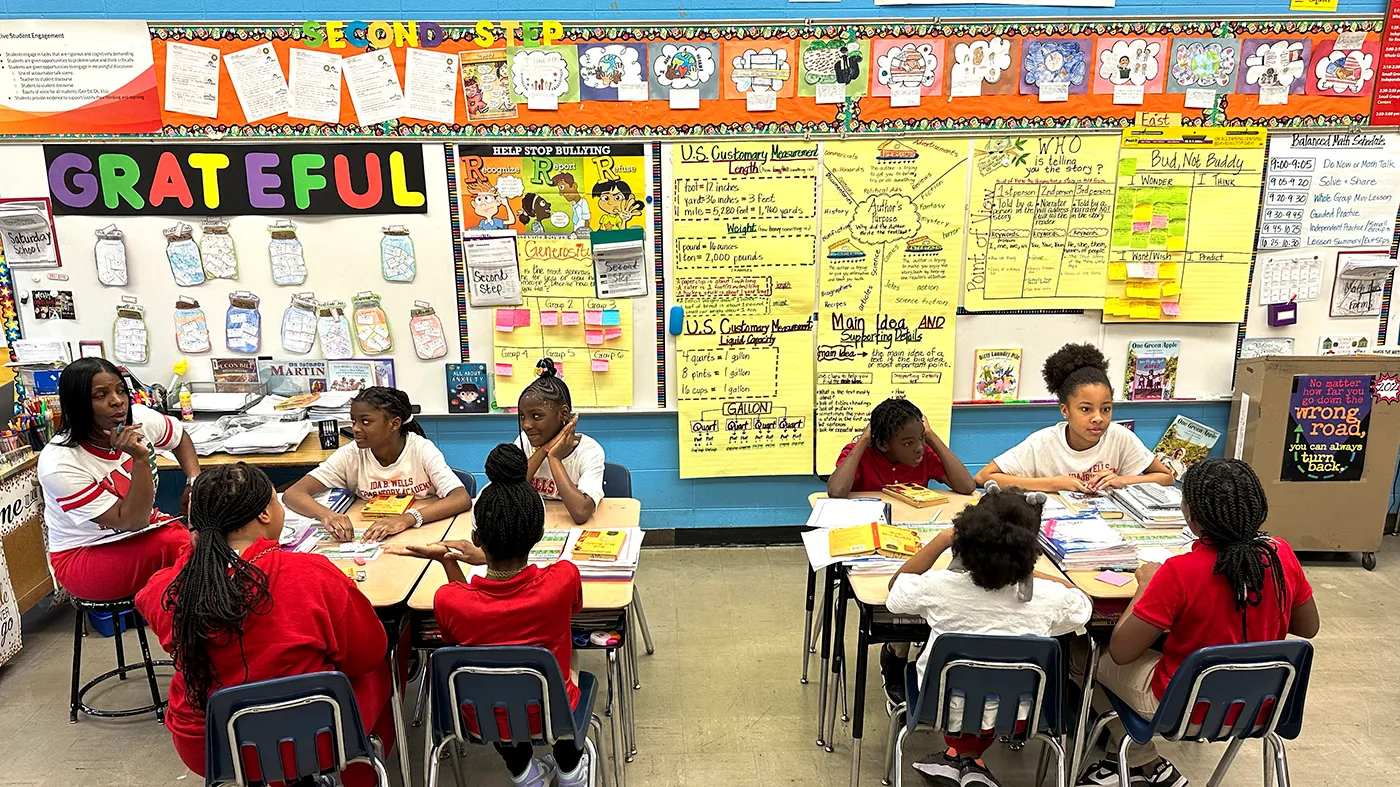
Reading scores are starting to see an increase across the board after years of stagnation following COVID-19, a new study says, a hopeful sign in the long battle to improve literacy among U.S. students.
Reading scores in grades K through 8 cut the gap from pre-pandemic levels by one-third in the past year, according to data from NWEA, an education research group. While an encouraging sign that experts think can be attributed to some new reading policies implemented at the state level, more progress is needed before students get back to pre-COVID success rates.
“The kind of improvements we saw from 2025 to 2026, so this last year in reading, really stood out because we had seen such stagnation for the four years previously. It seemed like schools were doing lots of things, schools were back in, kind of to normal, but we weren’t seeing that any kind of real road to recovery on average,” said Megan Kuhfeld, director of Growth Modeling and Analytics at NWEA.
The scores “just kind of dropped and then stagnated. So, the fact that we saw these kind of small improvements, but still meaningful improvements over the last year, was really encouraging,” Kuhfeld added.
Experts believe the improvements are a sign that efforts by states to implement the science of reading and add more literacy tutoring were not in vain.
Since the pandemic, around half of states have adopted laws or requirements for schools to align their literacy teaching with the science of reading , a practice that focuses on phonics, the ability of students to sound out words and understanding how letters sound together. It also has a greater emphasis on vocabulary and comprehension.
The standard that lawmakers are increasingly tossed to the wayside is the balanced literacy approach, where students are encouraged to use “cues” to understand what they are reading, placing a greater emphasis on whole words over individual sounds.
“This is likely a reflection of what some state lawmakers have done to pay attention to that subject specifically,” said Jonathan Butcher, acting director of the Center for Education Policy at the Heritage Foundation.
The NWEA data showed the biggest improvements in the past year were among Black students, Hispanic students and those in high-poverty areas, aligning with the groups that saw the biggest hits to their reading scores during the pandemic.
But experts caution that such hopeful scores have in the past been followed by fluctuation.
“We’ve seen this before, where there’s period of growth and then we see a decline,” said Weadé James, senior director for K-12 Education Policy at the Center for American Progress, noting all the efforts districts were able to undertake with the extra COVID-19 relief funding.
Without the continuation of that funding, James wonders “how states can continue a lot of these efforts that they started.”
According to the NWEA data, there is still a two-thirds gap between where students are now in reading and where they were before the pandemic.
And while getting above pre-coronavirus numbers would be a huge achievement, it doesn’t solve the U.S.’s long-running literacy decline.
Reading scores were on the rise from the 1990s up until 2013, when a switch the Education Scorecard May 2026 report described as a “learning recess” began. The report notes that the slowdown occurred during the rise in social media.
The Nation’s Report Card found only 14 percent of 13-year-olds read for fun every day in 2025, compared to 27 percent in 2012.
“On the nation’s report card, you find sometimes that these improvements don’t stick, and I think that’s because what content is taught is really important as well. And I think that if these reading gains are to persist, I think we’ve got to focus on what students are being taught, not just the skill, because they’re teaching the skill, but it’s got to be followed with content,” Butcher said.
The 2025 Program for International Assessment, an international assessment of students’ reading, science and math scores in different countries, showed 15-year-olds in the U.S. saw their reading scores fall 14 points since the test was last administered in 2022.
Along with the continuation of the science of reading, experts want to see other initiatives from states and school districts, such as more tutoring, early literacy screening and high-quality instruction for teachers.
“We need to make sure we don’t have a fragmented system, that literacy should really be looking at the entirety of a child’s schooling, and those standards should be aligned to ensure that we’re actually delivering the best quality instruction, and kids have the skills that they need when they do complete their studies,” said James.
Topics in this story
Gathered from external sources. Rights to this text belong to whoever originally published it.