What should teachers teach about the October 7 attacks?
After three years of listening to how we should teach October 7, what always strikes me is critics’ utter inability to accommodate the complexity of the conflict.
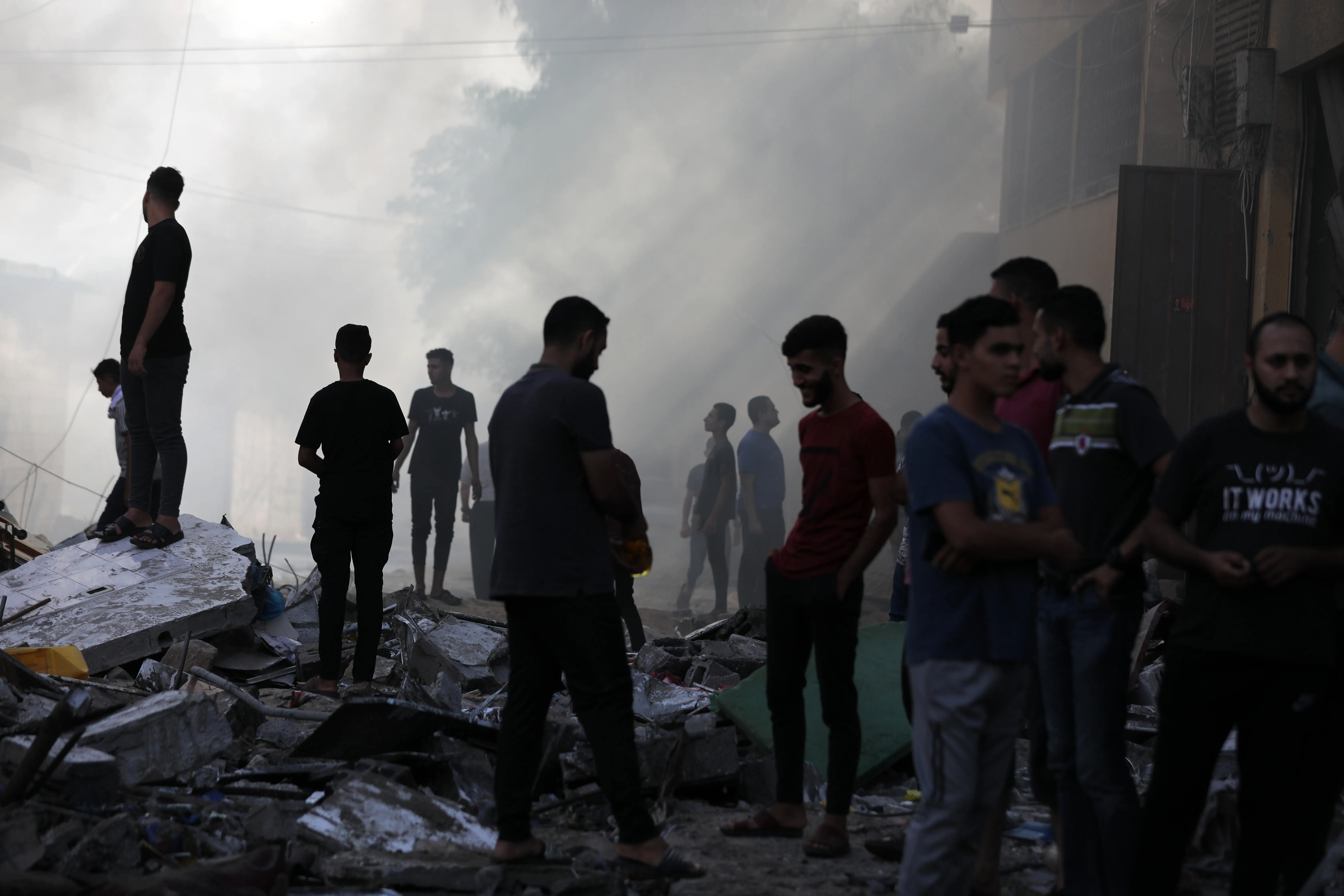
As we’ve approached the third anniversary of Hamas’s deadly October 7 attack on Israel , many are criticizing how K-12 teachers treat Israel and the events of the past three years.
A new Anti-Defamation League report titled “Antisemitism in U.S. Teachers Unions” accuses educators and their unions of being “biased against Jews, Zionists/Zionism or Israel” and of “promot[ing] materials that many Jewish members view as one-sided, inflammatory and at times overtly antisemitic.”
The House Committee on Education and Workforce launched a “Nationwide Investigation into Antisemitism in K-12 Schools,” alleging “open antisemitism in [K-12] classrooms and hallways,” often tied to Israel.
Conservative author Joel Kotkin blames California teachers in particular for the “progressive indoctrination” of students, which he condemns as “the kind of education perfected in Stalin’s Russia.” And Ben Austin of Education Civil Rights Now criticizes the “anti-Israel activism” he alleges teachers brought into Los Angeles Unified School District classrooms post-October 7, where, he says, it continues to “fester.”
How does a profession in which Jews are greatly overrepresented become riddled with alleged antisemitism? While there certainly is no shortage of unreasonable attacks on Israel, Israel’s defenders often take reasonable criticisms of Israel and portray them as unreasonable and antisemitic.
In fact, a JewishCurrents examination of the Anti-Defamation League’s “Audit of Antisemitic Incidents 2023,” which lists many items related to October 7, found more than a thousand items ADL classified as “antisemitic” when they were really just “cases of speech critical of Israel or Zionism.” Kotkin’s evidence of antisemitism, for instance, is largely a northern California school district’s ethnic studies curriculum that “teaches that Israeli ‘settler colonialism’ led to Palestinian ‘dispossession.’”
The way Israel’s defenders often vituperate against the “settler colony” label is typical of how critics of Israel are inaccurately characterized as unreasonable and antisemitic. For decades, the Zionists themselves used the word “colonization” to refer to their attempts to create a Jewish state in Palestine. It is fair; in 1922, Muslims outnumbered Jews in Palestine seven to one, but by 1948, Jewish settlers were in control.
After three years of listening to how we should teach October 7, what always strikes me is critics’ inability to accommodate the complexity of the conflict. It is true that, as Israel’s defenders say, Hamas’s murderous attacks on civilians were criminal and indefensible. It is also true that Israel’s long-running manhandling of Palestinians in the occupied territories inspired and provoked the attacks.
Under United Nations Security Council Resolution 446 , passed in 1979 and reaffirmed in 2016, “the policy and practices of Israel in establishing settlements in the Palestinian and other Arab territories occupied since 1967 have no legal validity.” In 2016, President Barack Obama, referring to Gaza and others, told the U.N. that “Israel must recognize that it cannot permanently occupy and settle Palestinian land.”
A 2023 study commissioned by the U.N. found that “the first six months of 2023 saw Israel advance record rates of settlement housing units … a total of almost 30,000 proposed … in the Israeli settlements in occupied Palestine.” A European Union report found similar numbers.
To the extent that Hamas assaulted Israeli Defense Force bases —the bases of an occupying army — they were attacking legitimate military targets. Yet when Israel’s supporters speak of October 7, they usually ignore those attacks and instead make misleading claims like “Hamas murdered more than 1,200 innocent men, women, and children.”
Neither side of this conflict has been telling the truth. Today, I’ll be teaching my students this reality, and laying out the various sides of the issue.
My students will learn about the horror of October 7 as well as the ensuing Gaza horror that was numerically far larger and went on for much longer.
They will learn how my parents and other Jews of that generation saw Israel as a sanctuary for a tortured people, and how for Palestinians this meant the “Nakba” or catastrophe, which Amnesty International describes as “the expulsion and displacement of more than 700,000 Palestinians from their homes, villages and cities during the one-year conflict that created Israel in 1948.”
I’ll point to the three widely used high school World History textbooks on the bookshelf of my classroom, and explain that not one even mentions the word “Nakba.”
I’ll listen to the things students say they’ve seen on social media about the conflict, and I’ll try to address them in an accurate manner.
After that, my students can make up their own minds.
Glenn Sacks teaches social studies at James Monroe High School in the Los Angeles Unified School District.
Topics in this story
Gathered from external sources. Rights to this text belong to whoever originally published it.