Jackson calls Supreme Court’s mail-in voting ruling a ‘Kafkaesque nightmare’
Ketanji Brown Jackson, the Supreme Court’s junior liberal justice, excoriated her colleagues for lifting a block on President Trump’s mail-in voting executive order on Monday, saying it “needlessly injects chaos” into this year’s elections. “It also lets another shoe drop in the Kafkaesque nightmare that our precedents have been steadily creating for certain plaintiffs who…
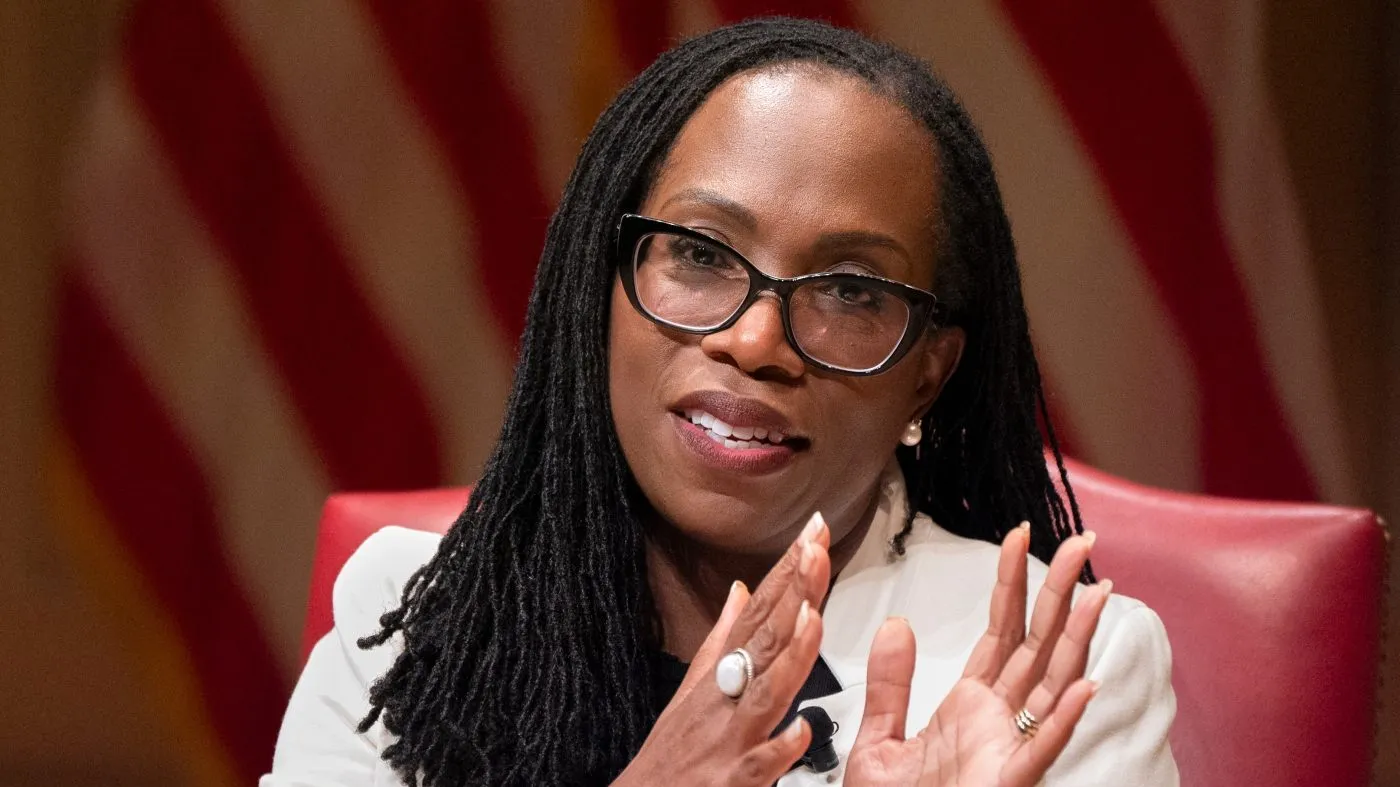
Ketanji Brown Jackson, the Supreme Court’s junior liberal justice, excoriated her colleagues for lifting a block on President Trump’s mail-in voting executive order on Monday, saying it “needlessly injects chaos” into this year’s elections.
“It also lets another shoe drop in the Kafkaesque nightmare that our precedents have been steadily creating for certain plaintiffs who seek to bring election-related challenges,” Jackson wrote .
She didn’t sign on to the dissent authored by Justice Sonia Sotomayor, which was joined by Elena Kagan, the third member of the court’s liberal wing. Instead, Jackson penned 23 pages of her own, saying the case wasn’t a “close call.”
Jackson said her colleagues lacked “situational awareness” in ruling that blue states needed to wait for the U.S. Postal Service to at least begin implementing Trump’s policy before challenging it. She called it a “catch-me-if-you-can” approach.
“When the Government’s obvious goal is to interfere with the Plaintiff States’ practices and prerogatives in a manner that the Constitution does not authorize, it is both a serious legal error and a grave misuse of our equitable emergency powers to let the Executive proceed even one step further,” Jackson wrote.
The Supreme Court’s emergency ruling enables Trump to move closer to implementing his March executive order targeting mail-in ballots in time for the midterms. But the decision is not a final ruling on the legality of the new requirements.
It follows a long series of cases in which Jackson has ruled against the administration on the Supreme Court’s emergency docket in forceful terms. In recent public appearances, she has accused her colleagues of having a “potentially corrosive” effect on the judiciary with their decisions.
Topics in this story
Gathered from external sources. Rights to this text belong to whoever originally published it.