Congress must now do its part on Medicare fraud
Vice President JD Vance urged Congress to codify recent healthcare fraud enforcement successes into permanent law to prevent future administrations from undoing the current administration’s progress.
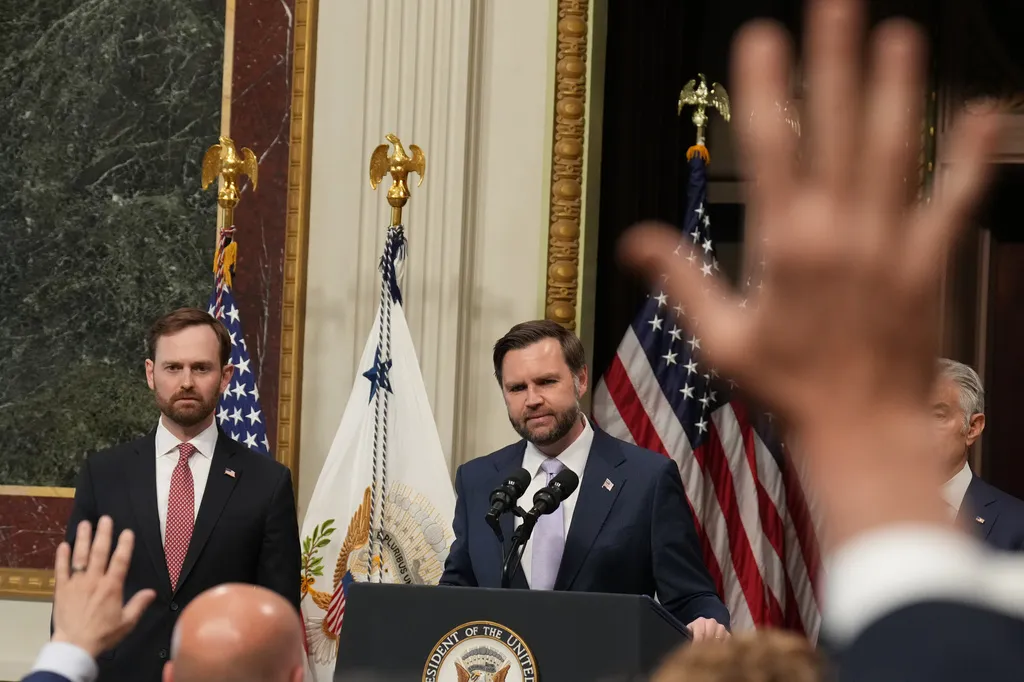
When Vice President JD Vance — President Trump’s appointed fraud czar — stood before the Cabinet at Camp David at the end of July, he rattled off some eye-popping numbers. His team had uncovered $230 billion in fraud and stopped $56 billion of it before a dime went out the door.
A week later, Vance took the same case to Capitol Hill, hosting a roundtable with lawmakers and urging Congress to make the crackdown permanent rather than let it lapse with a future change in executive leadership.
Congress should heed his advice, and quickly. The relevant committees — Senate Finance and House Energy and Commerce chief among them — should draft legislation this fall that locks in the Medicare and Medicaid’s enforcement authority, funding levels, and enrollment moratoriums by statute.
Otherwise, everything this administration has built through executive and regulatory action can be undone the same way: by a future administration that simply chooses not to enforce the law. Only Congress can make these wins permanent.
The case for urgency is not abstract. Just this month, prosecutors in Philadelphia unsealed charges against 19 people in a home-healthcare scheme that reads almost like parody. One caregiver allegedly billed for visits made while she was traveling abroad. Another claimed to be caring for seven patients at once, racking up more billed hours than exist in a single day. The government says that one fraud ring alone cost taxpayers more than $4 million.
That is the kind of abuse the administration’s crackdown is built to catch. Under Health and Human Services Director Robert F. Kennedy Jr., CMS Administrator Mehmet Oz and Center for Medicare Director John Brooks, the executive branch has suspended billions of dollars in suspect Medicare payments, imposed nationwide moratoriums on new enrollment for hospice, home health , and durable medical equipment suppliers, and revoked billing privileges from thousands of providers.
This year’s national health care fraud takedown produced charges against more than 450 defendants tied to roughly $6 billion in alleged false claims. California and Minnesota have had more than $1 billion in Medicaid reimbursements frozen while they prove the money is reaching real patients.
But the same enforcement tools that catch fraud can just as easily overcorrect and choke off legitimate care — which is exactly why these decisions should not be left to agency discretion alone.
Take remote patient monitoring, the technology that lets seniors managing diabetes, high blood pressure, or heart disease take readings at home and send them straight to their care team, instead of waiting months for an appointment or driving hundreds of miles to a doctor’s office.
Regulators recently found real fraud in the program: companies cold-calling or robocalling seniors into monitoring plans they never asked for, then billing Medicare for monitoring that did not meaningfully happen. CMS deserves credit for catching it. But unelected career staff have now drafted a proposal broad enough to effectively kill physicians’ ability to use outside companies to run remote patient monitoring at all — even though those companies are often what keeps monitoring running for practices too short-staffed to do it themselves, in a country already facing a serious doctor shortage .
The problem with leaving fixes to rulemaking is that it makes overbroad fixes more likely. And either way, a future administrator can rewrite it again.
Congress doesn’t have that problem. Lawmakers could write a fix directly into statute — banning the cold-calling of beneficiaries that has fueled most of the abuse, and requiring a physician’s sign-off before any patient is enrolled. As the Heritage Foundation’s Peter St. Onge has noted , those two changes alone would stop most of the fraud without gutting a program that seniors, especially in underserved rural areas, depend on.
And that’s exactly what Congress should be across the board. It should take the enforcement gains the administration has already made, and the fixes still being worked out at the agency level, and write them into law before the moment passes.
Protecting Medicare from fraud should not be a partisan project. Both parties have an interest in a program that serves the seniors who paid into it for decades. The administration has done its part; the crackdown has been thorough and, so far, effective. As Vance made clear on Capitol Hill, the next move belongs to Congress. Lawmakers should introduce that bill while they still have the momentum to get it done.
Thomas Stratmann is a senior research fellow at the Mercatus Center and a professor of economics and law at George Mason University. He has a health economics research focus.
Topics in this story
Gathered from external sources. Rights to this text belong to whoever originally published it.