Why Trump should designate Ecuador as a major non-NATO ally
Under President Daniel Noboa, Ecuador has restored extradition and expanded military, intelligence and law-enforcement cooperation with Washington.
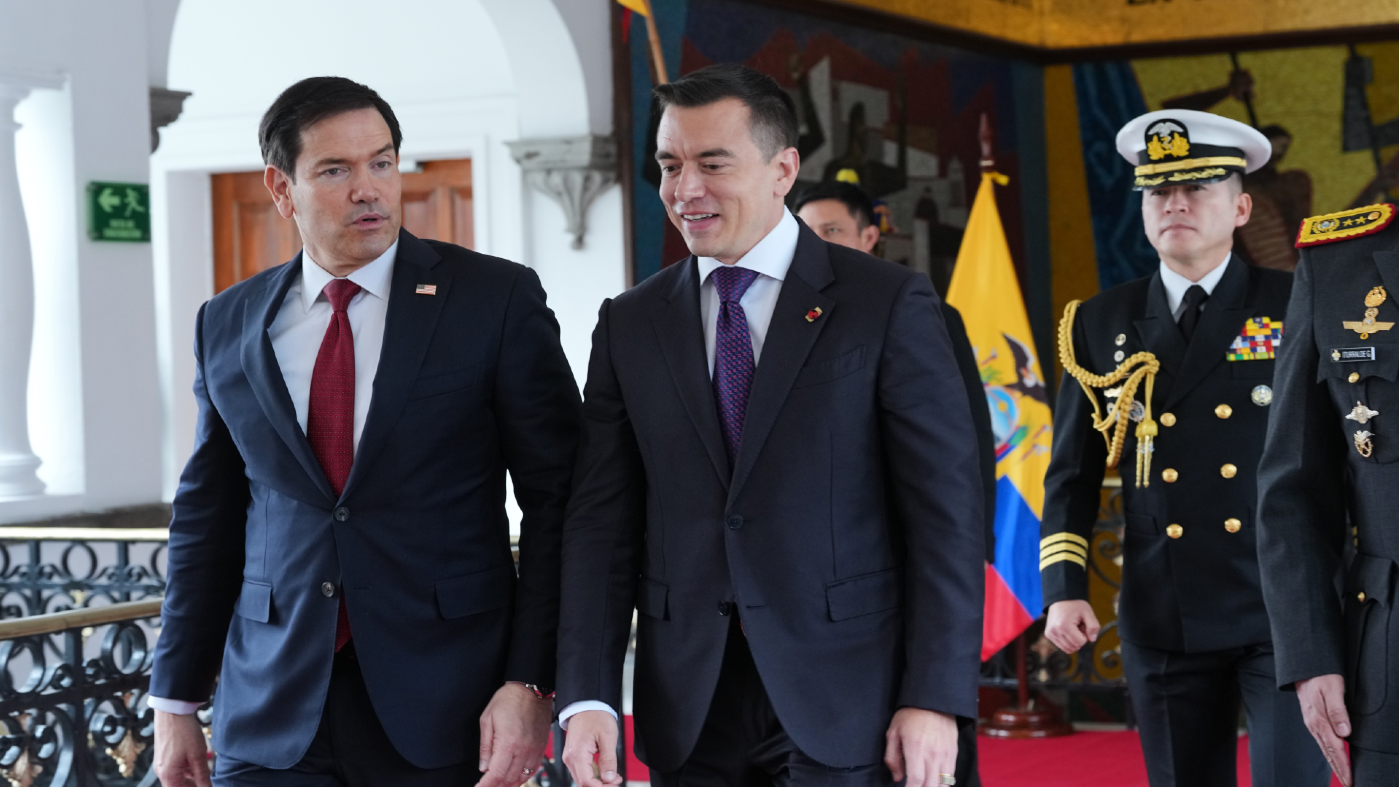
The Trump administration’s National Security Strategy calls for restoring “American preeminence in the Western Hemisphere” by enlisting “regional champions” to stop drug flows and “neutralize cartels.” No country has put that strategy into practice more clearly than Ecuador. Under President Daniel Noboa, Ecuador has restored extradition and expanded military, intelligence and law-enforcement cooperation with Washington.
The U.S. should reward this cooperation and lay the groundwork for deepening it further by designating Ecuador as a major non-NATO ally.
Ecuador’s partnership has proven to be especially valuable at sea. Since Ecuadorian and American forces launched joint operations in March, the U.S. Coast Guard cutter James was able to conduct nine interdictions and seize more than 46,500 pounds of narcotics. Last month, Quito announced that two U.S. warships would patrol Ecuadorian waters. Three Black Hawk helicopters were already in Manta and are now poised to conduct additional operations. Together, those air and naval assets add American reach to operations Ecuador is already helping us carry out.
Extradition offers even stronger proof of Ecuador’s commitment to the new American security doctrine. After Ecuadorian voters approved extradition in transnational organized crime cases by a margin of nearly 30 percent in a referendum, Ecuador sent three of its own nationals accused of major narcotics offenses to American courts.
Jose Adolfo Macias Villamar (aka “Fito”), the leader of the criminal group Los Choneros , became the first Ecuadorian national extradited by Ecuador to the U.S. under the 2024 reform. Two more Ecuadorian nationals accused of international drug trafficking followed this June. Cartel leaders now know that an arrest in Ecuador can end in an American jail cell, which is a prerequisite for long-term success against cartel leadership.
Ecuador’s courts have also shown that they can prosecute both cartel finance and abuses by the country’s own security forces. An Ecuadorian tribunal convicted six people and two companies for laundering more than $17 million through Macias Villamar’s family network. In a separate case, a trial court convicted 16 servicemen of the forced disappearance of four boys (three of those convicted have filed appeals ). Ecuador can balance a stringent crackdown on criminal groups with domestic accountability, which makes it a reliable partner.
Major non-NATO ally status would put that partnership on firmer footing. It would not create a NATO-style promise to defend Ecuador or write Quito a blank check. Instead, it would make Ecuador eligible for military training on reciprocal terms, cooperative defense research and testing and loans of materials or equipment for those joint projects.
If Washington later provides military financing for an approved purchase, Quito could contract directly with an American defense firm. Used well, those authorities could improve maritime surveillance and aircraft maintenance, enhance secure communications and boost the ability of Ecuadorian and American forces to work together. The designation would make long-term cooperation easier to plan and help turn today’s deployments into lasting Ecuadorian capacity.
The designation also makes strategic sense given Ecuador’s location. Colombia is already a major non-NATO ally, and President Trump designated Peru in January. Ecuador lies between them on the Andean Pacific coast.
Giving all three the same status could make it easier for Washington to train their forces to work together and develop joint defense projects along a principal cocaine corridor. It would also show the hemisphere that Washington rewards governments that align with the United States and is willing to help them weather the short-term costs that come with confronting criminal groups more forcefully after years of resigned neglect.
Five House Republicans, led by Rep. María Elvira Salazar (R-Fla.), have already urged Secretary of State Marco Rubio to support the designation. President Trump can act without negotiating a treaty, and the statutory process requires him to notify Congress at least 30 days before designation but does not require Congress to approve the designation with a vote.
The administration has asked the region for governments willing to confront the cartels, share the burden of creating a secure hemisphere and align openly and unapologetically with the United States. Ecuador has answered that call. Designating it a major non-NATO ally would give the phrase “regional champion” concrete meaning and give other governments a reason to follow Ecuador’s lead.
Gil Guerra is a fellow at Hudson Institute and a contributing writer at The Dispatch. He specializes in politics, security, and technology in Latin America and the Caribbean.
Topics in this story
Gathered from external sources. Rights to this text belong to whoever originally published it.