Refusing to investigate a judicial controversy lowers the bar for federal judges
The chief judge must not simply accept the subject judge’s denial.
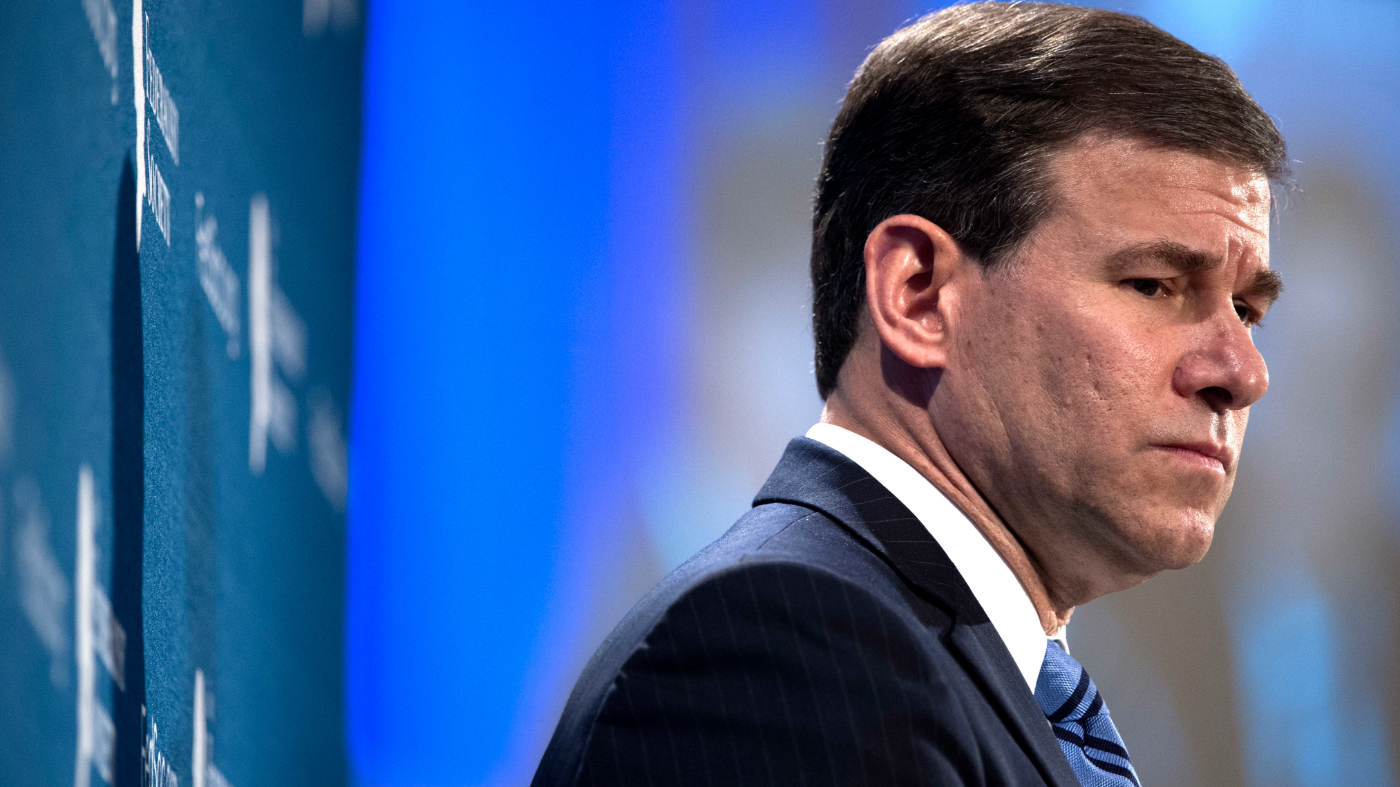
As chief judge of the U.S. 11th Circuit Court of Appeals, William H. Pryor has the unenviable task of receiving misconduct complaints against federal judges in Alabama, Georgia and Florida.
In theory, he must take every complaint seriously, without deference to the subject judge. In the recent case against District Judge Roy K. Altman, however, Pryor issued a quick dismissal without meaningful consideration of significant issues. His failure to initiate an investigation set a regrettable example for the entire federal judiciary.
Altman attracted national attention as author of “ Israel on Trial ,” which employs “courtroom-tested standards” to provide a rigorous defense for Israel against “claims of colonialism, apartheid, and genocide.” He drew criticism for wading into a controversial area as a sitting judge, as well as for the pro-Israel content of the book.
It is not improper for a judge to write about contentious issues that are not pending before him or her, even though it might require recusal in future cases. But writing a book is one thing — plugging it is another.
The complaint against Altman, filed by Florida lawyer Katherine Giannamore, alleges that he misused the prestige and perquisites of his office to push book sales, while sometimes making remarks conveying “anti-Muslim and anti-Arab bias.”
According to the complaint , Altman “used significant judicial resources to engage in live podcasts from his judicial chambers,” to promote his book. An appendix includes screenshots of 14 such appearances over three months, which were said to violate the Judicial Code of Conduct’s prohibition of the use of chambers “to any substantial degree” for financial or other extrajudicial activities.
Additionally, the complaint alleges that Altman publicly referred to the keffiyeh, which “bears significant distinction in the Palestinian and Arab cultures,” as a “terror scarf” or “terrorism scarf.” Those remarks were said to violate the Judicial Code of Conduct by compromising “the integrity and impartiality of the judiciary.”
Pryor had a choice under the federal judiciary’s Rules for Judicial-Conduct and Judicial-Disability Proceedings . He could either conduct a “limited inquiry” and decide the matter by himself, or he could appoint a special committee of other judges to investigate the complaint. He inexplicably chose the former. Based solely on an eight-page response from Altman, Pryor decided that the allegations lacked “any factual foundation” and were “conclusively refuted by objective evidence.”
Pryor did not mention the commentary outlined in the rules providing that “the chief judge must avoid determinations of reasonably disputed issues.” Moreover, the chief judge must not simply accept the subject judge’s denial.
The “ disputed issues ” for a special committee should have been obvious.
Altman conceded that he frequently broadcast book interviews from his chambers, ranging in length from 12 minutes to an hour, but claimed they did not constitute “ substantial ” use.
Is the question of substantiality relative or absolute? Altman argued that his 14 book promotions were trivial because he works “seven days a week, including holidays.” On the other hand, an investigating committee might well conclude that the broadcasts were sufficiently regular and repeated to be objectively substantial in and of themselves. Or they might ask whether a judge should be making even one sales pitch from chambers.
That disputed issue alone should have been sufficient to assign the case for investigation by a special committee.
Did the use of chambers for book publicity exploit the judicial office for financial gain? Pryor skipped past the main issue, which is whether Altman’s use of chambers, identifiable from the flag behind his shoulder, took advantage of his position to boost book sales and royalties. Instead, he echoed Altman’s insistence that “he never associates the prestige of his office with an interview.”
Altman’s assertion that he didn’t write the book in his “judicial capacity” is also contradicted by the interviews themselves. The banner below his image in video interviews typically identified him as a federal judge. So do the promotional materials on Amazon.com , from his publisher, Advantage Books , and from his distributor, Simon and Schuster . Altman’s forthcoming book talk at the University of Florida Law School describes him as “U.S. District Judge Southern District of Florida,” adding that he had been “the youngest federal district court judge in the country.”
Altman maintains that he did not write his book “as a judge,” but he certainly markets it as one.
Pryor uncritically accepted Altman’s rationalization that his “terror scarf” characterization referred only to keffiyehs worn by anti-Israel protesters who “terrorize their Jewish classmates” with slogans “in homage to notorious terrorists.”
A special committee, however, could have reviewed Altman’s Middle East Forum interview, broadcast from chambers, in which he bragged of admonishing college students — with no mention of terrorizing classmates — that “the terrorism scarf, the keffiyeh” isn’t cool or counterculture. By his silence, Pryor shamefully indulged Altman’s denigration of an historic symbol for Palestinian Americans.
Neither Altman nor his publicist replied to multiple emails. Giannamore has until Oct. 13 to file a petition for review. By email, she told me that she hasn’t yet decided.
A special committee may or may not have concluded that Altman’s book promotions and keffiyeh comments constitute judicial misconduct. But there was plenty to investigate if Pryor had allowed it.
Steven Lubet is the Williams Memorial Professor Emeritus at the Northwestern University Pritzker School of Law. He is coauthor of “Judicial Conduct and Ethics.”
Topics in this story
Gathered from external sources. Rights to this text belong to whoever originally published it.