Democrats made five promises. Here’s a look at how they might address them
Democrats promised to tackle some of the country’s most pressing issues around cost-of-living expenses, foreign wars and corruption ahead of November. With blockbuster wins — including gaining control of both chambers of Congress — those pledges are now being put to the test. Vows to tackle affordability, end the Iran war, address healthcare, put more…
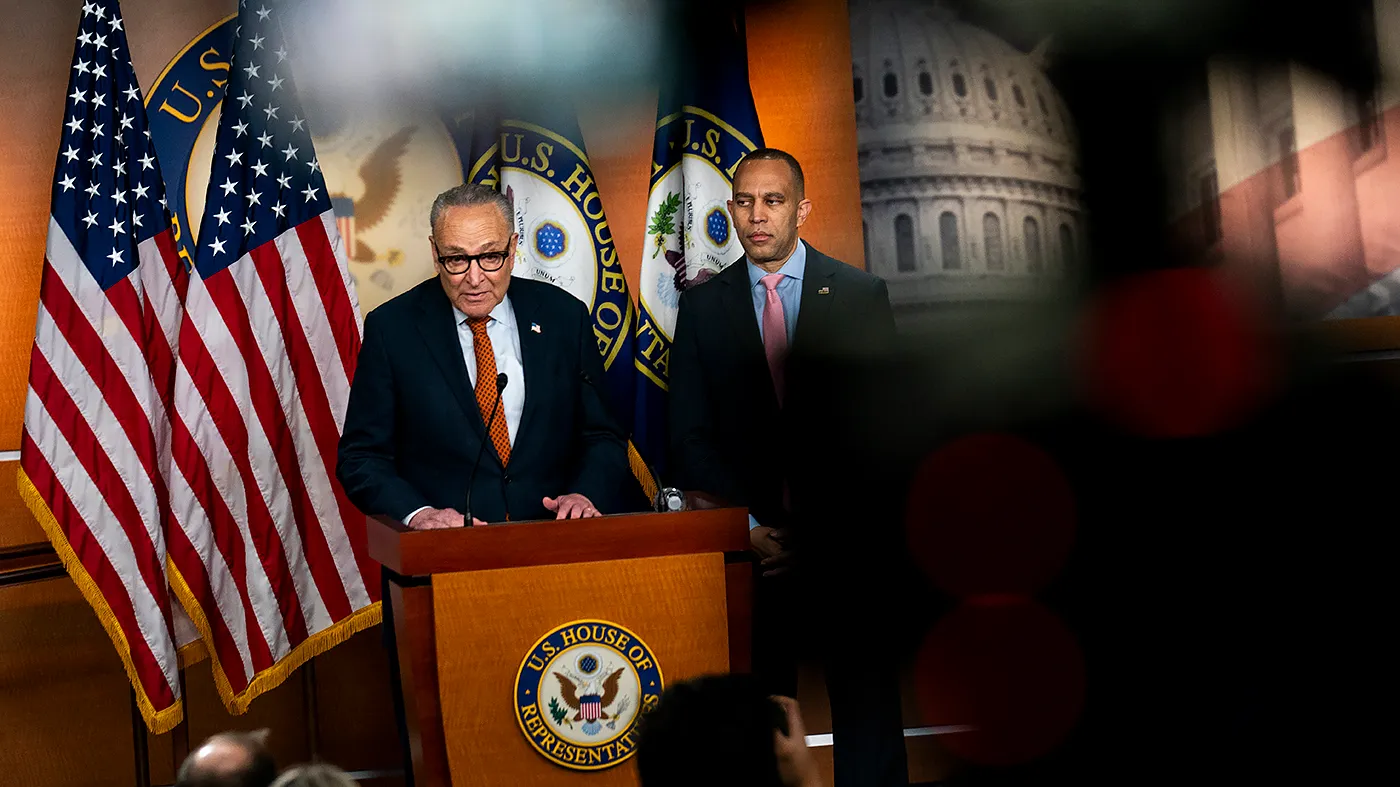
Democrats promised to tackle some of the country’s most pressing issues around cost-of-living expenses, foreign wars and corruption ahead of November. With blockbuster wins — including gaining control of both chambers of Congress — those pledges are now being put to the test.
Vows to tackle affordability, end the Iran war, address healthcare, put more guardrails in place for data centers and address corruption are on the list of big-ticket to-do items that Democrats will face pressure to start addressing quickly once their new majorities are sworn in next year.
While the party will hold control of both chambers, Democrats will still need some buy-in from Senate Republicans, offering both parties potential deliverables to tout ahead of a consequential 2028 presidential election. Lawmakers in both parties are already nearing some early wins even before 2027.
Here’s a look at how Democrats might address these five promises:
One word that united virtually every Democratic campaign was an emphasis on “affordability” — an issue that bedeviled Republicans, largely due to the Trump administration’s war in Iran that impacted global oil supply and a tariff war with Canada.
In fact, North Carolina Sen.-elect Roy Cooper’s (D) Senate campaign summed up much of his platform as “make stuff cost less.” But members of the party have different ideas on how to lower costs.
Cooper, for example, has proposed ending tariffs that negatively impact farmers and blocking the consolidation of grocery and food processing giants as ways to tackle grocery and food prices. The North Carolina senator-elect is also among many Democrats looking to expand the Child and Dependent Care Tax Credit to help offset childcare costs.
For Rep.-elect Sam Forstag (D-Mont.), he told The Hill earlier this month he wants to tackle the cost of housing as one of his first priorities when he starts his first term next year.
“We have over 4,000 Montanans who are in mobile home parks across our state who’ve had private equity firms buy their lots out from underneath them,” Forstag said.
“I want to see us get private equity the hell out of housing. I want to see us actually invest in programs to build affordable housing,” he said.
Democrats and even some Republican candidates campaigned on ending the war in Iran, which has strained consumer’s pocketbooks at the gas station and when buying other goods. House Speaker-Designate Hakeem Jeffries (D-N.Y.) made it clear during a recent interview with CBS’s “Face The Nation” that ending the foreign conflict was a top issue for the next Congress.
“We need to end this reckless and costly war of choice in Iran that has skyrocketed gas prices, food prices, and diesel prices,” Jeffries said.
Senate Minority Leader Chuck Schumer (D-N.Y.) also declared after the midterms that “we’re going to end the war,” pointing to Congress’s jurisdiction in where it allocates money.
But ending the war could prove trickier than some of the party’s other priorities given Trump’s inclination to work around Congress.
Some progressives are putting pressure on their Democratic counterparts to tackle the issue early by urging that the short-term spending bill essentially compels the Trump White House to end the Iran war, though it’s unclear what kind of language Democrats will ultimately pursue in government spending talks.
One of the biggest debates Democrats expect to have will be over how aggressive to go on healthcare policy: support an expansive Medicare for All program, create a public option or expand the Affordable Care Act (ACA), former President Obama’s signature healthcare package?
Jeffries outlined a few areas where he wanted to see changes to healthcare on CBS News’s “Face the Nation,” including extending ACA tax credits, reversing cuts to Medicaid from Republicans’ One Big Beautiful Bill and bringing back Supplemental Nutrition Assistance Program (SNAP) benefits.
“In my view, we should lower the age of Medicare eligibility,” he added. “We should expand coverage to include vision, hearing and dental, and we should make sure that we cover the kids, so that every single child and young American in this country can afford to go see a doctor when they need one.”
Other Democrats like Rep.-elect Zach Dembo (D-Ky.) also see reversing Medicaid cuts as a high-ticket priority.
“Six rural hospitals in my district are at risk of having to curtail services or maybe even close,” Dembo told The Hill, noting about a quarter of his district relies on Medicaid.
Medicare for All, which proposes a universal single-payer healthcare system, would likely face a much steeper hill given few Senate Republicans are likely to support that proposal, and it faces resistance among more centrist and moderate-minded Democrats.
But some progressives like Michigan Sen.-elect Abdul El-Sayed are determined to push it forward. The president recently said that he’s planning to meet with El-Sayed about “TrumpCare,” the Michigan Democrats’ potential branding for his Medicare for All plan.
“The point of winning elections is to do something good with the seat,” the Michigan Democrat wrote in a post on X. “The point for me is to pass Medicare for All. I really don’t care who puts their name on it if that’s what it takes.”
Data center regulation became a major flashpoint during the 2026 elections, as they’ve been tied to the broader issue of affordability. Data centers themselves are not new, though their presence has grown rapidly and with it, growing utility expenses hitting consumers.
Recent polling has shown negative or mixed views of data centers. Data from Pew Research Center released in September found 54 percent of U.S. adults say data centers are mostly bad for the environment, 50 percent say the same about home energy costs and 49 percent of respondents say so about people’s quality of life nearby.
The issue — one that saw some rare common ground among both parties on the campaign trail — weighs the economic benefits data centers bring for nearby communities with existing tax incentives many already receive, who has jurisdiction on where they can be built and how much of the energy and water costs associated should be passed onto the consumer.
Lawmakers look poised to address data centers before 2027 after the upper chamber passed bipartisan permitting legislation last week that would quicken permitting reviews for energy infrastructure projects while also seeking to have data centers pay more for their electricity use. The House is expected to take up that bill next week.
One theme that felt unique to this year’s midterm was a focus on tackling corruption and wrongdoing. Sen.-elect James Talarico (D-Texas) made that a focal point in his campaign against Texas Attorney General Ken Paxton (R), whose multiple controversies, failed impeachment trial and allegations of marriage infidelity rocked his GOP bid for Texas Senate.
Both Talarico and El-Sayed have pushed to get rid of corporate PAC and super PAC spending in politics.
The Democratic National Committee (DNC) is also requiring 2028 presidential candidates to say they’ll oppose dark money spending during the primary in addition to blocking candidates from creating any joint fundraising with Democratic Party committees in order to qualify for the DNC’s presidential debates.
One issue that’s already galvanized House Democrats early on is legislation to ban members of Congress from selling or holding stocks while in office. Over 50 new House Democrats signed onto a letter pressing House Democratic leadership to pass rules barring congressional stock trading in the next session.
“We want to right the ship. A machine can’t produce better outcomes if the machine’s not designed better,” Rep.-elect Cyril Jefferson (D-N.C.) told The Hill shortly after a House Democratic event on congressional stocking bans.
Jeffries signaled the stock ban would be a key priority for the next Congress in his interview on “Face the Nation.”
“We’ve got to clean up the mess in Washington. That means the Congress, that means the Supreme Court, and that also means with respect to the administration,” he said. “And we should begin by dealing with our own house, which is why, very early on in the new Congress, House Democrats are going to move to ban members of Congress from trading stock.”
Topics in this story
Gathered from external sources. Rights to this text belong to whoever originally published it.