Congress must not chicken out on investigating Nvidia
Jensen Huang has been reinstated as Nvidia’s CEO following pressure from President Trump, prompting calls for Congress to exercise its oversight authority regarding potential national security risks and chip exports to China.
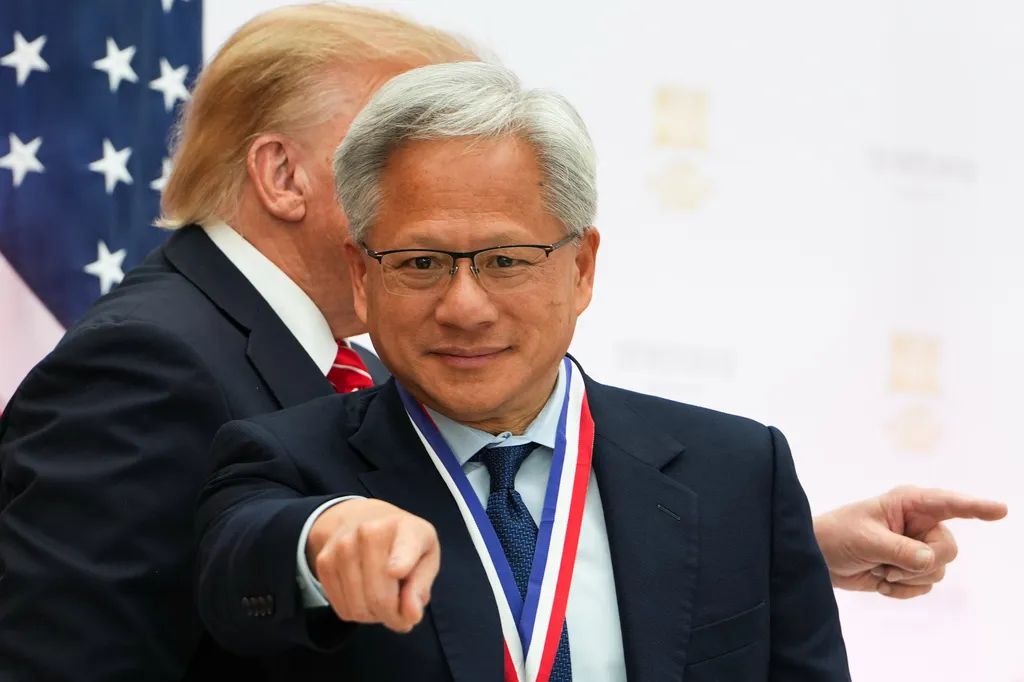
For the last two years, I have described Washington with the acronym CACO, or Congress Always Chickens Out. Now comes the first real test since voters overwhelmingly demanded change earlier this month. Jensen Huang has been abruptly reinstated as Nvidia’s chief executive despite serious national security concerns, and Congress has to decide what to do about it. It can use its Article I powers to find out what happened, or it can chicken out again.
Less than two weeks after Huang resigned over an alleged affair with a woman U.S. intelligence believes is a Chinese asset (plus alleged affairs with two Nvidia executives ), Nvidia’s board brought him back on Monday, citing “ input from senior levels of the United States government .” That input came from the president. In an interview Monday, President Trump boasted that the board would not have changed its mind without him, and said that he personally talked its members into it. When he was asked about the woman’s contacts with China’s Ministry of State Security, he brushed the question aside.
According to the New York Times , U.S. intelligence tracked her contacts with an officer of the Ministry of State Security from the spring of 2025 until this fall. Her business partner also worked with the agency, and her company is suspected of supplying Nvidia chips to contractors for China’s military. Within days, and after Nvidia’s stock price dropped precipitously, the administration put those concerns aside and vouched for Huang to his board. When a White House overrules its own intelligence professionals that quickly, and won’t explain why, it severely undermines trust in the intelligence community.
If, as the president says, a thorough investigation cleared Huang, the administration should let Congress see it. So far, it has shared little of the intelligence with Capitol Hill, and last week it postponed a briefing for senior national security staff. Who gave the board its assurances, and what were they based on? Those questions are all the more pressing after House Foreign Affairs Chairman Brian Mast (R-Fla.) revealed that the administration had approved export licenses covering more than 879,000 advanced Nvidia and AMD chips for China , including for companies the Pentagon designates as Chinese military companies. And at the end of last year, the president owned at least $12 million in Nvidia stock .
Any administration should not be in a position to investigate itself, which is why Americans are looking to Congress. They made their frustrations clear on Election Day. Republicans and Democrats should work together to get to the bottom of this and show they heard those voters.
Some of that work has begun, with Huang due to sit for closed-door interviews with three House committees on Dec. 1 and to testify at a public Senate Banking Committee hearing on Dec. 3 . That’s a start, but Congress should be bold. Put witnesses under oath and ask them tough questions. Bring in Commerce Secretary Howard Lutnick, along with Director of National Intelligence Jay Clayton and Attorney General Todd Blanche, whom the president says he consulted before vouching for Huang. And if the facts call for action, such as tighter export controls on our most advanced chips, pass them.
It may be tempting to wait until Democrats take over in January, but Republicans have a chance to show some independence from an administration that voters just rejected. If Congress means to use its Article I powers, now is the time.
Nvidia is not the only urgent test in front of this lame duck Congress, which should also restore the Russia sanctions it passed in September, after the president waived them a month later, and keep the government open past Dec. 11.
The question now is whether Congress will finally assert its authority or chicken out one more time.
Jane Harman represented California’s 36th District in Congress for nine terms and served as ranking member of the House Permanent Select Committee on Intelligence.
Topics in this story
Gathered from external sources. Rights to this text belong to whoever originally published it.