Trust in America’s food safety system is crumbling — Congress can restore it
Restore the traceability rule, fund foreign inspections toward what the law already requires and protect the research that makes both possible.
I grew up a farmer’s daughter in Buhl, Idaho. My father Thomas, who was president of the Potato Growers of Idaho, taught me early that America’s food security is not a slogan. It is national security and public health.
I carry that now as a freshman member of Congress on the House Agriculture Committee, and I m stunned by how quickly the agencies that keep our food safe have been hollowed out. When parents have to wonder whether the food they feed their children is safe, we have reached a breaking point.
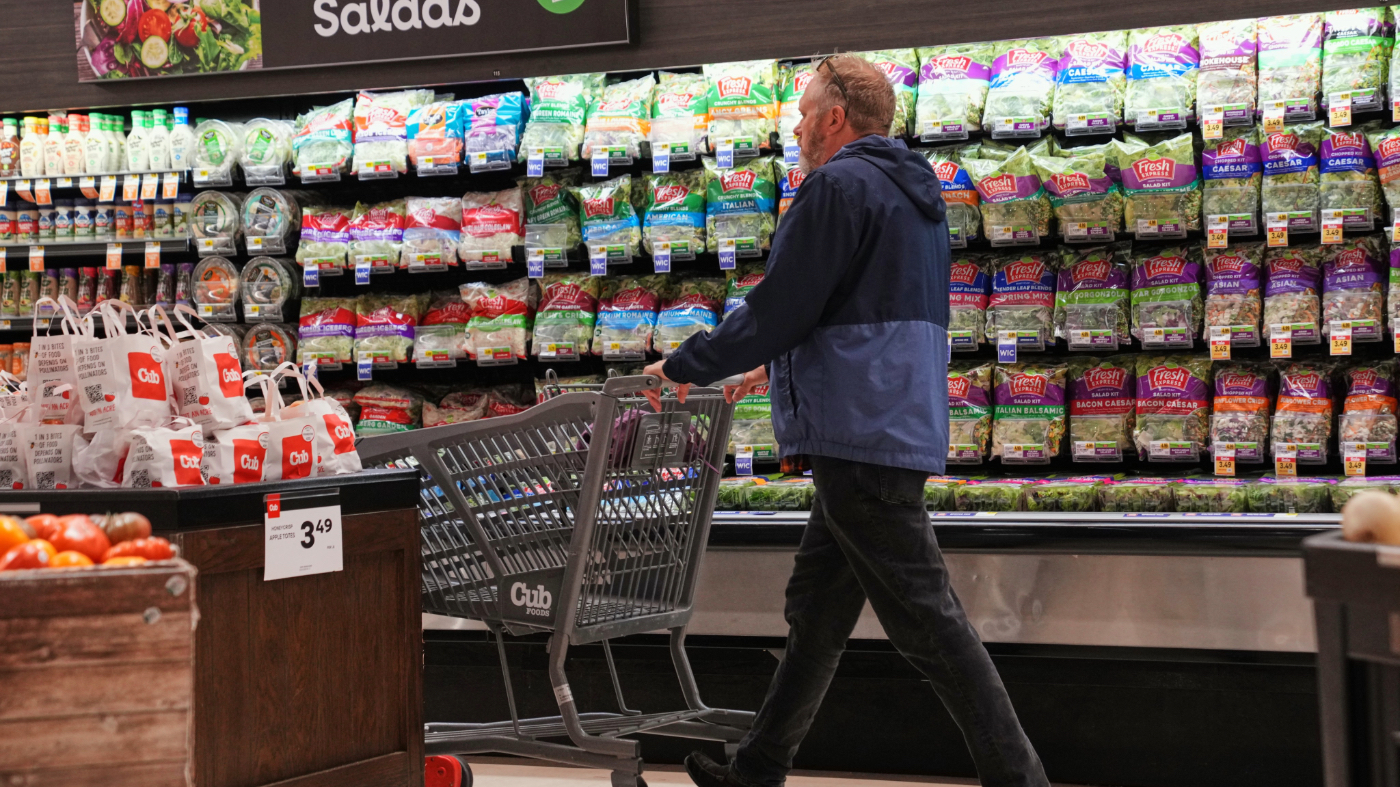
This summer, nearly 11,000 Americans have been sickened by an outbreak traced to iceberg lettuce . Of those, 454 were hospitalized across 17 states and two died. The first fell ill on June 22, yet the Food and Drug Administration did not place an inspector inside the Mexican facility that had grown that lettuce until Aug. 13 , 52 days later. And that was the agency’s first visit to the facility since 2019 . It had also inspected the site in 2013 , when an earlier cyclosporiasis outbreak sent investigators to a plant they found recycling its wash water.
The lettuce came from overseas, and so did the jalapeños behind a separate August salmonella outbreak that has sickened 431 people in 32 states . Yet last month, President Trump said we would accept up to 300,000 metric tons of imported ground beef over 90 days , free of the tariff that normally applies once import quotas are full. No supplying country has been named, no order has been issued and no one has said who will inspect it.
None of this is abstract where I live. The recalled lettuce was distributed here in Maryland even as it sickened people elsewhere. My district runs from the farms to the suburbs, featuring older communities where a listeria or salmonella infection means a hospitalization, not an inconvenience. It also affects the farmers I met, who satisfy every standard we set, then watch as imported produce arrives under a looser inspection regimen than their own crops.
Those farmers are getting it from both directions. The Agricultural Research Service has been cut back , and the Beltsville Agricultural Research Center in my own state is slated for decommissioning , even though its scientists study the pathogens that end up in these outbreaks. On the Agriculture Committee, I have been fighting to protect that funding. You cannot cut science funding and then act surprised when nobody can say where the lettuce came from.
Meanwhile, farm bankruptcies are up 46 percent . If we want food we can trust, we fund the science, staff the inspections and buy from the people growing it down the road.
This administration cannot tell us why these outbreaks happen or, in many cases, where they came from. Six cyclospora clusters are under investigation with no food source identified. An infant botulism outbreak last November tied to powdered formula went unidentified for 23 months, by which time 48 babies had been hospitalized . Of 28 foodborne outbreaks investigated last year, only 11 ended in a recall .
There is no clear plan to prevent the next outbreak, and none to tell families how to protect themselves. That second failure was no accident. The former director of the Food and Drug Administration’s food safety center says the teams that ran public awareness campaigns and coordinated crises abroad were eliminated in last year’s cuts . When an outbreak arrives, the people whose job was to warn Americans are no longer there.
This blindness has a cause. It was chosen. The law requires the Food and Drug Administration to conduct roughly 19,200 foreign food inspections a year. From 2018 to 2023, it averaged fewer than 1,000 per year. There were only 20 inspectors assigned abroad as of July 2024. The Agriculture Department’s inspection service lost 8 percent of its workforce in early 2025, and the FDA and Centers for Disease Control and Prevention lost more than 7,000 people between them. Last August, the CDC cut its FoodNet surveillance from eight pathogens to two .
One state official put it plainly: it is like owning a house and taking out the smoke detectors.
The tool that would have shortened these investigations exists, but it was taken away. Congress wrote a traceability rule , effective in January, requiring companies to produce tracing records within 24 hours, so that investigators could find contaminated lots in days instead of months.
Then this year’s appropriations bill barred the FDA from enforcing the rule until 2028 — a 30-month delay written into law amid the worst outbreak summer in years. Eleven food safety organizations are asking Congress to reverse it , and I intend to lead that fight.
The remedy is not complicated. Restore the traceability rule, fund foreign inspections toward what the law already requires and protect the research that makes both possible. The rest is will.
A family in a grocery aisle cannot inspect a bag of lettuce. They rely on a system, and this summer that system took 52 days to send someone to look. My father spent his life growing food he trusted his neighbors to eat, and he would not recognize a government this careless with that trust.
Food security is national security. It is time we started treating it that way.
Rep. April McClain Delaney (D-Md.) represents Maryland’s Sixth District and serves on the House Committee on Agriculture and the Committee on Science, Space, and Technology.
Topics in this story
Gathered from external sources. Rights to this text belong to whoever originally published it.