GOP, Trump on course to clash over chip export controls
President Trump’s extraordinary alliance with Nvidia CEO Jensen Huang is setting the stage for a lame-duck clash between Republicans in the Capitol and the White House over China policy, executive trade authority, and the global battle for AI dominance. Huang was reinstated as Nvidia’s CEO last week after Trump intervened on his behalf. But the…
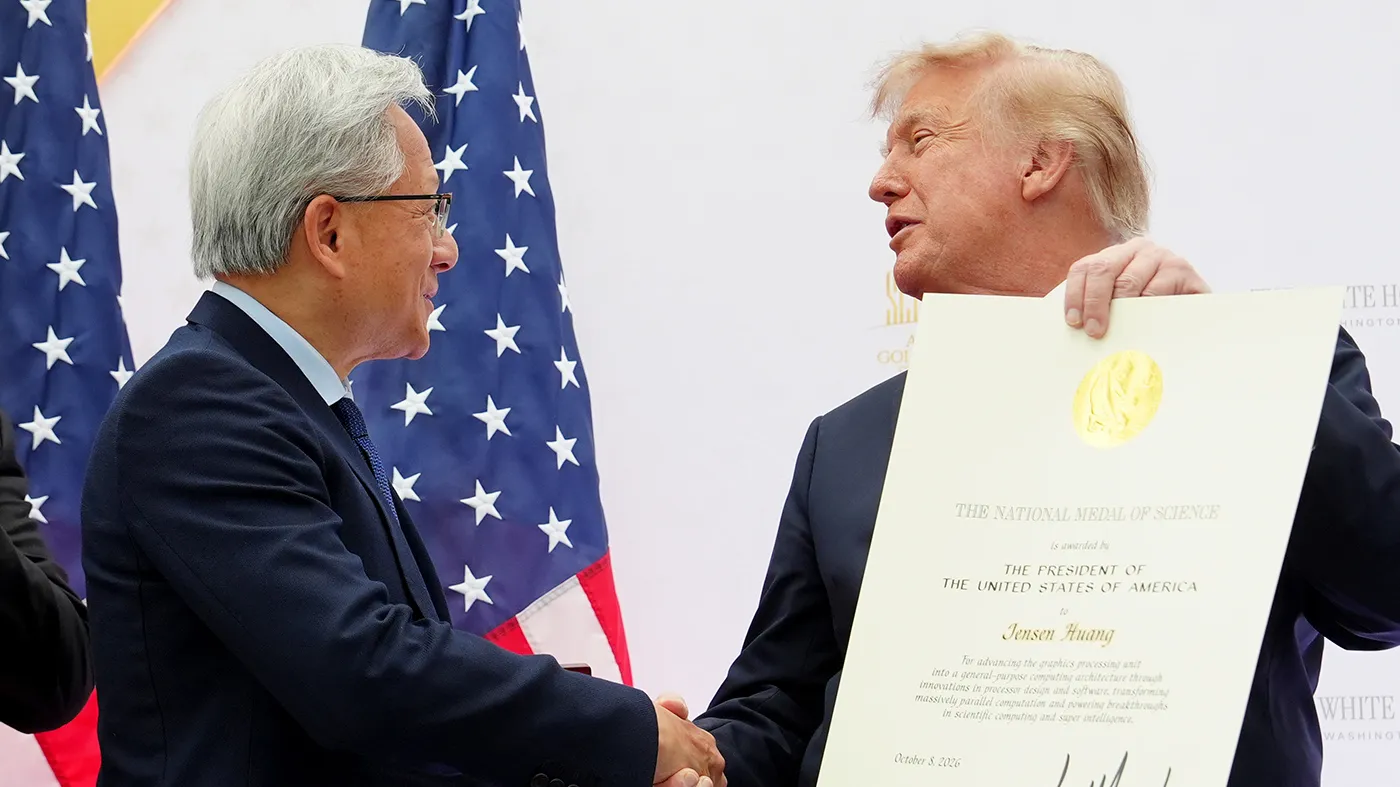
President Trump’s extraordinary alliance with Nvidia CEO Jensen Huang is setting the stage for a lame-duck clash between Republicans in the Capitol and the White House over China policy, executive trade authority, and the global battle for AI dominance.
Huang was reinstated as Nvidia’s CEO last week after Trump intervened on his behalf. But the stunning development has only fueled congressional concerns that Huang — who has long pushed to sell more Nvidia chips to Beijing — is undermining America’s advantage in the AI race.
The criticisms are coming not only from Democrats, but also from many of Trump’s long-time GOP allies, who are pushing legislation to strengthen Congress’s powers over the administration when it comes to approving the export of advanced microchips like those Nvidia produces.
The effort is championed by Republican China hawks, who plan to attach the new export limits to a must-pass Pentagon funding bill that’s expected to move through both chambers before year’s end.
That sets up a potential fight with Trump and other top administration officials, including Commerce Secretary Howard Lutnick, who have been protective of their go-it-alone approach to U.S. trade — most notably, Trump’s global tariffs — and are likely to balk at any congressional effort to scale back their powers to set those policies unilaterally.
The dynamics also raise questions about the ultimate fate of the National Defense Authorization Act (NDAA), which is typically a bipartisan affair but could face rockier terrain if Trump rejects the expected export controls.
The issue is already dividing top officials in Trump’s Cabinet, but the administration has not weighed in publicly on the specific legislation under consideration. The White House did not respond to several requests for comment.
Congress’s push to apply export controls on advanced microchips is hardly new. But it got a boost following revelations earlier in the month that Huang had been involved in extramarital affairs with several women, including a Chinese tech executive suspected of being a spy for Beijing, which led to his ouster from Nvidia on Nov. 12.
The effort gained even more steam after Nvidia’s board reinstated Huang just 11 days later, after an aggressive push from Trump.
“Allowing China to obtain America’s most advanced chips creates a significant national security vulnerability. Through vigorous oversight and adoption of strong, bipartisan export-control measures, Congress will do its part to ensure our national security interests are being met,” Senate Majority Leader John Thune (R-S.D.) said in a statement following Huang’s reinstatement at Nvidia.
Lawmakers have just three more weeks remaining in the legislative calendar with Republicans in control until Democrats assume the majority in January.
The trio of bills included in the manager’s amendment of the Senate version of the NDAA are the Chip Security Act, the AI Overwatch Act and the MATCH Act, aimed at preventing the smuggling of advanced chips to China, ensuring that Congress has oversight over the sale of AI chips to adversary countries and providing export restrictions on semiconductor manufacturing equipment, respectively. The Senate has yet to pass the NDAA.
The Chip Security Act received multiple rounds of constructive feedback from the Trump administration, a Senate aide told The Hill, but the details of what the White House sent are unclear.
The House version of the NDAA, which passed the lower chamber in July, doesn’t include chip export controls. However, Speaker Mike Johnson (R-La.) told reporters earlier this month that he supports adding chip restrictions to the defense bill.
Huang has pressed to expand the sale of advanced microchips to China, arguing that it’s better for the United States to have Beijing’s tech engineers reliant on American-made hardware, rather than developing the know-how themselves.
China hawks disagree, saying Beijing’s access to the high-powered Nvidia chips only helps China in the AI race at the expense of America’s national security.
The AI Overwatch Act is being watched with particular attention because it highlights Lutnick’s role in the sale of Nvidia chips to Beijing. That issue exploded after a New York Times report indicated that Lutnick has adopted a soft-glove approach to the export controls in ways that have helped his family financially. House Democrats have already opened an investigation , and Sen. Tim Scott (R-S.C.), chair of the Banking Committee, has asked Lutnick to testify before his panel in December.
Sponsored by Rep. Brian Mast (R-Fla.), the chairman of the House Foreign Affairs Committee, the Overwatch Act would require the Commerce Department to notify Congress of pending chip export approvals to certain adversarial countries, including China, while empowering Congress to block any sale lawmakers deem to be a national security threat. The proposal mirrors a 50-year-old law that established Congress’s authority to scrutinize the foreign sale of weapons, also in the name of national security.
“Export controls on our most advanced AI chips have been a top priority. I’ve been working on this extensively,” Mast, who introduced the AI Overwatch Act last year, said in a video clip posted to X on Monday.
“So, seeing these reports about Jensen Huang’s alleged affair with a Chinese intelligence asset and smuggling some of our most advanced chips into China has been extremely concerning. This is something that we’ve been working on for a long time, and this has been an issue going with Jensen and I for a long time because he fundamentally does not disagree with selling these most advanced AI chips into China. He has been working to do so … I don’t think he’s on the right page in understanding the risks of selling these chips into China,” he added.
Mast’s office did not respond to requests for comment.
Gathered from external sources. Rights to this text belong to whoever originally published it.