The Memo: Trump administration fails to quell concern over cascade of tech outages
The Trump administration is not out of the woods yet on the knotty issues of cybersecurity, AI threats and creaky tech infrastructure — even though almost a week has gone by since the nation’s longest air traffic ground stop in a quarter-century. The hours-long collapse of the Federal Aviation Administration’s (FAA) air traffic control system…
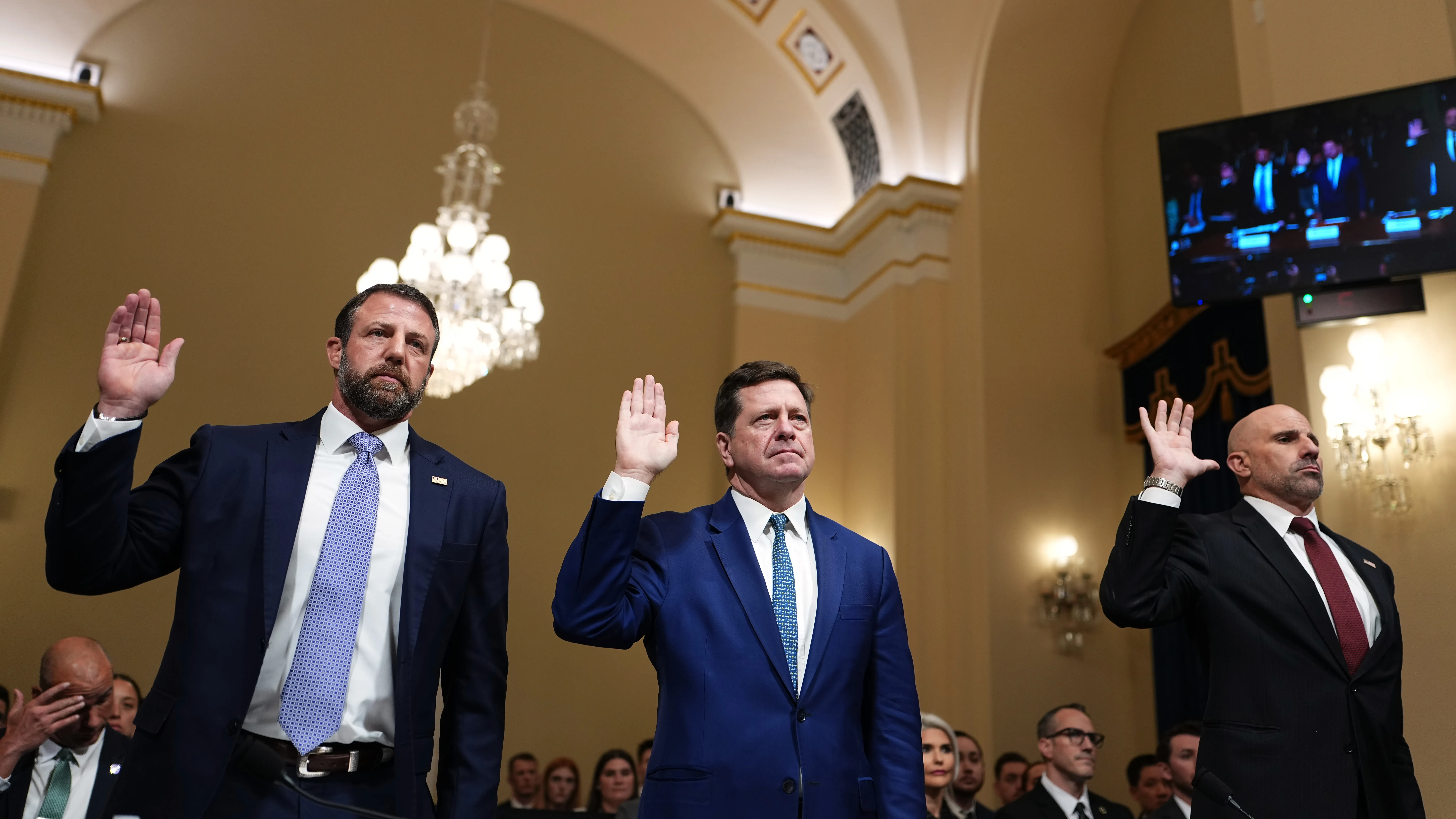
The Trump administration is not out of the woods yet on the knotty issues of cybersecurity, AI threats and creaky tech infrastructure — even though almost a week has gone by since the nation’s longest air traffic ground stop in a quarter-century.
The hours-long collapse of the Federal Aviation Administration’s (FAA) air traffic control system last Friday was just the most dramatic moment amid a cascade of tech failures.
Outages, disruptions and malfunctions have hit other branches of government, such as the National Security Agency, and have affected some of the biggest brand names in American commerce, including Microsoft, Apple, JPMorgan Chase and United Airlines.
The White House and its allies have tried to tamp down the problems. President Trump himself declared, “It’s fine.”
“It’s life. When you’re big and powerful and you have all the money, things like that happen,” Trump told reporters near the start of his Asia trip.
Secretary of State Marco Rubio, speaking in the Philippines on Wednesday, told reporters there was “zero evidence” that the various incidents “are related to each other.”
Rubio also insisted there was no reason to believe the occurrences “have anything to do with nefarious actors, with cyberhackers, with criminals, with another nation state, with a malign actor of any kind.”
But even some usually loyal Republicans have seemed unpersuaded.
Sen. Josh Hawley (R-Mo.) told reporters at the Capitol on Tuesday that the full Senate ought to be briefed on the issue.
Referring to the official explanation for the air traffic control meltdown, Hawley said, “Maybe it’s because, you know, somebody unplugged a router in Arkansas or whatever. I dunno. I find that, frankly, a little hard to believe.”
More generally, Hawley admitted he was not sure what was going on.
“If this is all coincidence, it’s like the greatest coincidence in the history of the world. You can’t tell me that all of this just is happenstance,” he said.
To be sure, there are some challenges inherent to the situation that any administration would struggle to overcome.
For example, Transportation Secretary Sean Duffy has been candid about the fact that the precise cause of the air traffic outage has not been identified, even though it appears to have something to do with an upgrade and a router.
But there have been avoidable stumbles, too — including somewhat different messages from different members of the administration.
At a hastily convened White House press conference last Friday, just after the ground stop had lifted, Duffy appeared to dissent as Homeland Security Secretary Markwayne Mullin spoke about what caused the issue.
“What it appears to be right now is, as Secretary Duffy and FAA was going in and putting patches into the system, they were putting new equipment and new technology, and that new equipment, new technology was overwhelming the older system,” Mullin said. Duffy, standing alongside him, looked down and shook his head.
Mullin also caused some consternation earlier this week when he cited an unnamed “one guy that’s very smart with tech” as the source of insight during an interview with Fox News.
This person, whom Mullin said was not Elon Musk, apparently contended that the root of the problem was the difficulty in making older software work in combination with the turbo-charged capabilities of artificial intelligence.
Beyond the specifics of Mullin’s performance, even some GOP-friendly voices express concern about the White House’s messaging.
At various times, Trump, Rubio, Duffy, Mullin and Director of National Intelligence Jay Clayton have all spoken publicly about the matter.
“They really need one person to be the communications lead and they need one clear message,” said Brendan Steinhauser, a Republican strategist who is also the CEO of the Alliance for Secure AI. “As they get more facts, they can share those facts — and avoiding speculation as much as possible is a good thing. But we have got quite a few different messages.”
A consistent and reassuring message, Steinhauser added, was especially important on issues like cyberthreats and AI, which are evolving at warp speed and seem ominous to broad swathes of the public — even as the minutiae of how the technology works remains opaque to most people.
“The American people’s fears are rational,” he asserted. “We are entering a new era where things are going to get worse because AI is going to transform everything … Defensive capabilities are not going to keep up with offensive capabilities, so we are going to have a lot of instability in our critical infrastructure.”
The public’s nerves are frayed further because the spate of recent developments is taking place against a backdrop of the wars in Iran and Ukraine, and the broader challenge the U.S. faces from China.
Indeed, even as all the outages have been taking place, Nvidia — for a period the world’s most highly-valued company — has been roiled by the departure of its CEO and co-founder Jensen Huang amid allegations that a woman with whom he had an affair was a Chinese agent.
China denies this, and the woman, Alice Huang — no relation to Jensen Huang — has not spoken publicly about the matter.
In terms of the outages themselves, a senior administration official told reporters on a Wednesday morning call that the precise causes were “disparate” but “in the upgrading and patching realm.”
But those statements don’t assuage the concerns — both technological and political — of those who fear that Trump’s tendency toward ebullient rhetoric is disconnected from public concerns.
“I don’t know what this president truly feels, but he certainly has not shown an appetite to talk about the dangers in a way that many voters would like to hear,” said GOP strategist Dan Judy.
“I think what most voters want is to be reassured that some adults in the room are keeping tabs on this — and I don’t think that’s what this administration is going for.”
The Memo is a reported column by Niall Stanage.
Topics in this story
Gathered from external sources. Rights to this text belong to whoever originally published it.