To mitigate Himalayan disasters, Beijing must abandon its narrow, fear-based controls
Following a devastating flood on Aug. 26, critics accused Beijing of suppressing casualty figures and blamed regional instability on aggressive hydroelectric dam construction in the fragile Himalayan ecosystem.
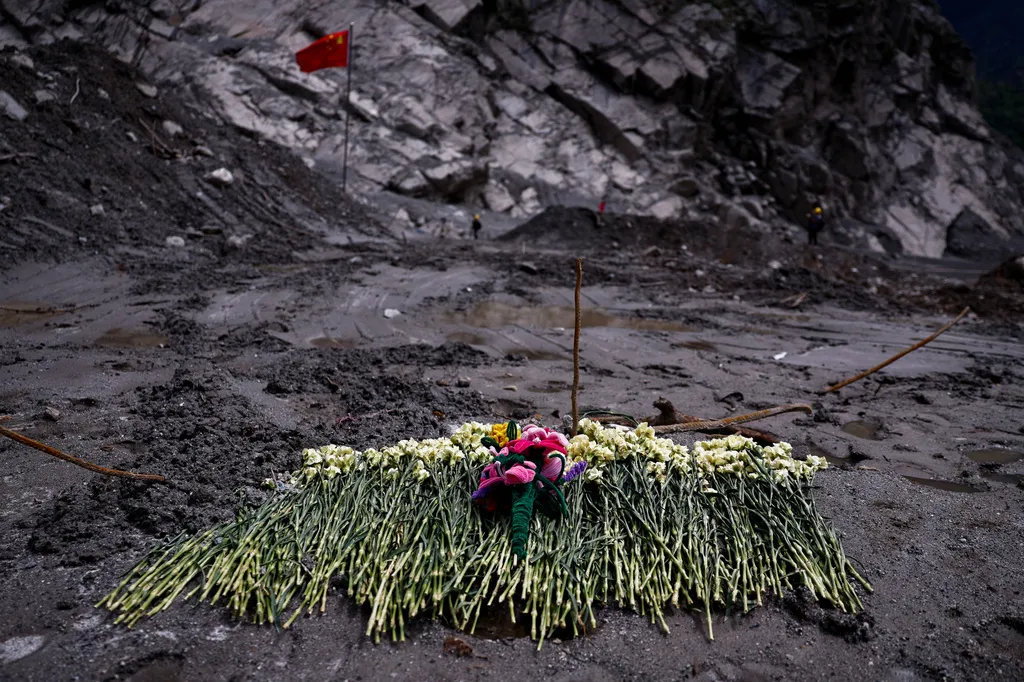
The latest death toll of the Tibet-Nepal flood on Aug. 26 is now reported to be 1,453, with 5,200 still missing. But this reflects exclusively on the Nepali side. Under Chinese control, the Tibetan people are deprived not only of basic human rights in life, but the right to have their deaths openly recognized is denied by Beijing’s impulse to restrict information.
On the day the flood struck, the Kyirong County administration in Tibet launched a WeChat alert system for residents to report missing family members. But after the registered missing reached 219 people, the authorities suddenly shut the system down, according to a reliable source in Kathmandu. Social media posts are blocked and citizens who contradict official death tolls, which stands at just 43, face fines of up to $150 or ten days in detention.
Critics contend that these information controls are designed to shield the root causes of such disasters from scrutiny.
Himalayan communities and civil societies have called for an immediate halt to mega-dam construction.
Critics and Chinese researchers alike have long tied regional disasters to Beijing’s aggressive dam -building across Tibetan rivers. But China continues to expand onto the Himalayas’ southern slopes, funding over a quarter of Nepal’s 570 hydropower projects.
This expansion is a clear geopolitical strategy. By financing Nepal’s power plants and supplying Chinese electric vehicles, Beijing aims to break Nepal’s traditional energy reliance on Indian oil and gas.
However, building massive reservoirs beneath fragile Himalayan glaciers where temperatures are already rising twice as fast as the global average, creates a serious environmental threat. Reservoirs pool immense volumes of surface water under the intense high-altitude sun and act as giant heat sinks which creates a localized greenhouse loop in the glacial zone. While scientists widely report this effect in expanding natural glacial lakes , man-made dam reservoirs built in the valleys directly beneath Himalayan glaciers produce the exact same warming dynamic. Therefore, for people in the Himalayas, the dams represent an existential risk that must not be ignored.
For decades, scientists have warned of the danger of Himalayan glacial lakes bursting as a result of global warming. Today, villages and towns in Tibet, Nepal, India, and Bhutan live under a nuclear weapon-like ticking threat hanging directly above them. There are at least 14,000 lakes trapped across the world’s highest mountain range. Now, as temperatures in the Himalayas surge, glacial melting is accelerating, giving rise to larger, deeper, and more lethal lakes.
A 9th-century treaty between Tibet and China declared: “Tibetans shall be happy in Tibet, and Chinese shall be happy in China.” This principle echoes the traditional Chinese proverb: “Those living near mountains live off the mountains; those living near water live off the water.” The Chinese civilization developed in the lowland river basins of East Asia, and Tibetan civilization thrived high on the Central Asian plateau.
This disconnect is the source of Beijing’s persistent mismanagement of the Tibetan Plateau. From the catastrophic commune-era terracing of highland barley fields to the forced relocation of traditional nomads, Sino-centric policies that ignore Tibetan voices and fragile ecological realities have consistently proven disastrous. Yet, even amidst today’s global environmental crisis, Beijing demonstrates no intention of drawing upon centuries of Tibetan cultural wisdom, a heritage globally recognized for its deep commitment to human harmony, environmental ethics and peace.
While open societies increasingly turn to Indigenous knowledge to combat the modern ecological crisis, China, by contrast, is stepping up efforts to eradicate the “minority” cultures. Decades after the Indian residential school system in North America was dismantled and recognized globally as a tragic mistake, Beijing implemented that exact same system in Tibet to erase a rich and unique civilization, and proudly codified it into the country’s law this year.
If China continues to ignore the potential seismic and ecological consequences of its actions in the Himalayas, and continues to systematically dismantle the only culture equipped to manage the plateau’s fragile ecosystem, it accelerates the clock on destructive glacial lake outburst floods and pushes the Tibetan environment further out of balance. But what happens in Tibet doesn’t stay in Tibet. It eventually flows downstream into neighboring countries, including China itself. China’s dams may fail to hold the ten trillion cubic meters of surface water hanging 20,000 feet above the lowland plains.
Should any of the 95,000 dams China has built ever fail, the 1931 Yangtze River flood , which claimed 3 million lives in China, might no longer hold the record for history’s deadliest disaster in that country. But these dams don’t just threaten Chinese lives. People in Tibet, India, Nepal, Bhutan, Bangladesh, Pakistan, Thailand, Myanmar, Laos, Cambodia, and Vietnam are in line for the same threat.
The 6th century Chinese poet named Yu Xin wisely wrote: “Those who eat the fruit think of the tree; those who drink the stream cherish its source.” Beijing’s leaders, instead of following the cultureless hardlining bloc who views Tibetan culture as a threat to China’s interest, might do better to reflect on their own ancestral wisdom. The very culture they are attempting to destroy may hold the key to securing China’s future in an era of catastrophic climate change.
Tenzin Bhagen (Yeshi Dorje) is a Tibetan writer, a former journalist for Voice of America and Radio Free Asia who had previously worked for environmental protection in the Himalayas.
Topics in this story
Gathered from external sources. Rights to this text belong to whoever originally published it.