Senate Republicans rebuff Trump’s attacks on Supreme Court, Federal Reserve
Republican senators are siding with conservative members of the Supreme Court who came under withering attack from President Trump this week after ruling against Trump’s plan to have the U.S. Postal Service screen mail-in ballots to guard against non-citizens voting. Republican senators say the Supreme Court made the right decision to reject the plan to…
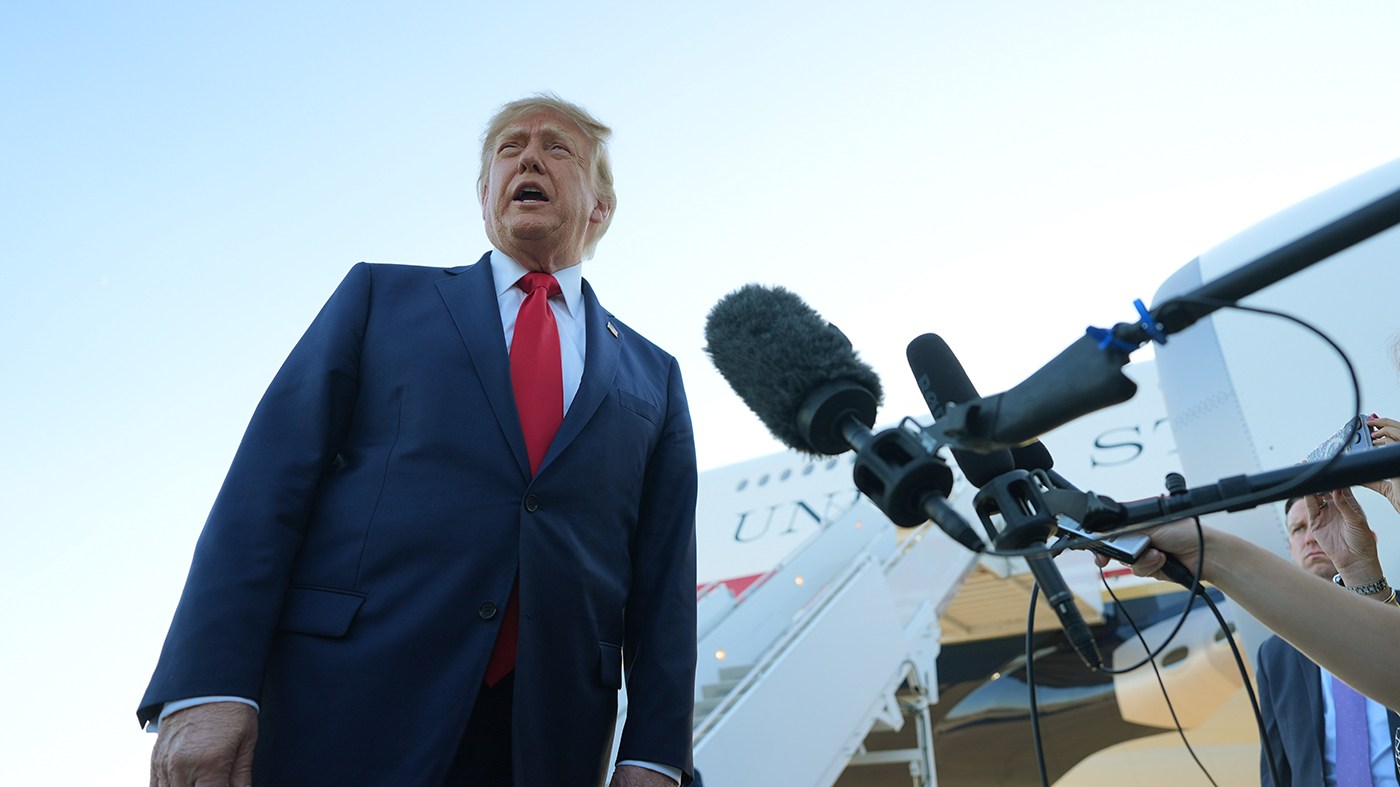
Republican senators are siding with conservative members of the Supreme Court who came under withering attack from President Trump this week after ruling against Trump’s plan to have the U.S. Postal Service screen mail-in ballots to guard against non-citizens voting.
Republican senators say the Supreme Court made the right decision to reject the plan to rework mail-in balloting processes across the United States only a few weeks before Election Day and rebuffed Trump’s angry denunciations of the justices he appointed — including Justices Neil Gorsuch, Brett Kavanaugh and Amy Coney Barrett.
Trump accused Gorsuch, Kavanaugh and Barrett, along with Chief Justice John Roberts, of being “bullied and cajoled by the Radical Left” and fumed that the conservative justices he appointed to the court “are merely a shell of their original selves.”
Republican senators recoiled at Trump’s broadside, calling the sharp attacks unwarranted and unfair.
“The president is entitled to his opinion but I don’t agree with him,” said Sen. John Kennedy (R-La.), a member of the Judiciary Committee, when asked about Trump’s bullying claim.
“I know every one of the justices. I think they do their very best to call it like they see it and that’s their job,” he said.
Kennedy said the court’s ruling against the last-minute plan to establish new rules for mail-in ballots was not a surprise.
Sen. John Cornyn (R-Texas), another member of the Judiciary Committee, said the Trump administration’s effort to mandate a complicated screening process for absentee ballots seven weeks before the election was a recipe for “chaos.”
“It’s too late to implement anyway. It would have been nothing but chaos in the runup to the election,” he said.
“Mail-in ballots are important in many parts of the country because they represent a substantial portion of the overall vote. I don’t know why you would want to restrict mail-in ballots,” he said.
“I’m all for voter integrity measures and there’s plenty of ways to do that but restricting the availability of mail-in ballots is, to me, counterproductive,” he said.
The Trump administration had proposed that states would be required to use special election mail envelopes with unique bar codes that would be scanned by the postal service to guard against the possibility of non-citizens voting.
States would have been required to create lists of voters who are approved to receive mail-in ballots and to upload those lists to a new and little-tested postal service portal.
Kavanaugh, whom Trump appointed to the court in 2018, wrote in a concurring opinion that attempting to rework the mail-in balloting process so close to the election would be “arbitrary and capricious” and would not give state officials enough time to “reasonably implement” changes.
The legal setback enraged Trump who posted on Truth Social: “These are not the people I interviewed to serve on the United States Supreme Court, they are merely a shell of their original selves.
Cornyn, however, waved off Trump’s declaration that Kavanaugh and other conservative justices had been “bullied” into voting with the Democratic-appointed justices on the court.
“Nah, I don’t believe that. They have lifetime tenure for a reason,” he said, arguing such appointments are designed to insulate justices from political pressure.
“An independent judiciary is really the most important institution in our government,” he said.
Senate Majority Leader John Thune (R-S.D.) also defended the justices who ruled against Trump, noting that the Supreme Court gave Trump a big victory last month by ruling that Trump could continue his controversial White House ballroom construction project.
“The judiciary is trying to be the objective referee on a lot of these issues and a lot of times folks out there disagree with the calls. There are some I disagree with, too. But I just think they’ve got a job to do and they’re an independent branch of the government,” he said.
“We worked hard to get some of those folks confirmed and their job is to be independent and do their best to ensure that they’re interpreting and applying the Constitution and the law in a fair and evenhanded manner,” Thune added.
Sen. Shelley Moore Capito (R-W.Va.), the Senate Republican Policy Committee chair, argued it’s too late in the election year to require states to create and distribute new ballot envelopes with unique bar codes.
“It’s so close to the election. I don’t know how you implement something like that anyway. I think we’ve got to go with the system we got and let the states run them well just like we do in West Virginia,” she said.
Asked about the president’s criticism of Kavanaugh, Gorsuch and Coney Barret, Capito waved her hand and said, “He can say what he wants.”
Trump’s sharp criticisms of the Federal Reserve Wednesday are also making some Republicans uncomfortable. Trump criticized the central bank after it raised interest rates.
Trump declared that “interest rates in the United States should be 1 percent or less because we are the Best Credit in the World.”
He called on the central bank to “lower the interest rates … and fast!”
Trump later told reporters that he’s “relying” on Kevin Warsh, the Fed chair, to cut rates, but gave him the greenlight to “vote with the board” since they had majority support for raising interest rates to between 3.75 percent and 4 percent.
The president lambasted the other board members as “very hostile” and “very political.”
But Republican senators said the Fed members only followed their mandate to keep inflation in check.
“I have no problem with the Fed decision. I think the Fed exercised their independence, which is what we elect them to do, and I think the markets have responded accordingly,” Sen. Mike Rounds (R-S.D.) said, calling the financial markets “a true barometer of what’s going on.”
Stocks Fell immediately after the Fed announced the rate hike but then surged on Thursday, with the S&P 500 and the NASDAQ rising 1.14 percent and 1.69 percent, respectively.
“That’s going to help the president long-term. It may not be what he wants short-term but to have a Fed in which the markets has confidence in their ability to look at the economy as a whole, that’s a very important thing for the president to have on his side long-term,” he said. “The Fed did what they were supposed to do.”
“They’re trying their best to ensure that they’re meeting their mission of keeping inflation at the rate that’s called for in their charter,” he said. “It’s always a bit of a judgment call but that’s the conclusion they came to.”
Through Thune acknowledged the rate hike “is not going to be helpful in terms of lowering costs in the near term.”
Sen. Thom Tillis (R-N.C.), a member of the Senate Banking Committee, said “the Fed made the right decision yesterday to unanimously raise rates.”
“I think Chairman Warsh for his leadership and displaying the independence needed to get prices under control for everyday Americans,” he posted on X.
Trump’s demand for the Fed to cut interest rates dramatically to 1 percent drew attacks from Democrats, who called the 1-percent interest rate target absurd.
“Every day that goes by, the president seems more detached from reality,” said Sen. Elizabeth Warren (D-Mass.), the ranking member of the Banking Committee. “This economy is in real trouble and the idea of a 1 percent interest rate is born of a form of wishful thinking.”
She said that cutting rates down to just 1 percent when inflation is still well above the Fed’s 2 percent target would be a “disaster for our economy.”
Topics in this story
Gathered from external sources. Rights to this text belong to whoever originally published it.