Trump Postal Service board nominees held up by Republican senator over mail delay concerns
President Trump’s goal to reshape the leadership of the U.S. Postal Service has hit a snag as a senator from his own party presses the agency for reforms. Trump has nominated four new governors for the Postal Service board, two of whom — Jeffrey Brodsky and William Gallo — are headed for a Senate floor…
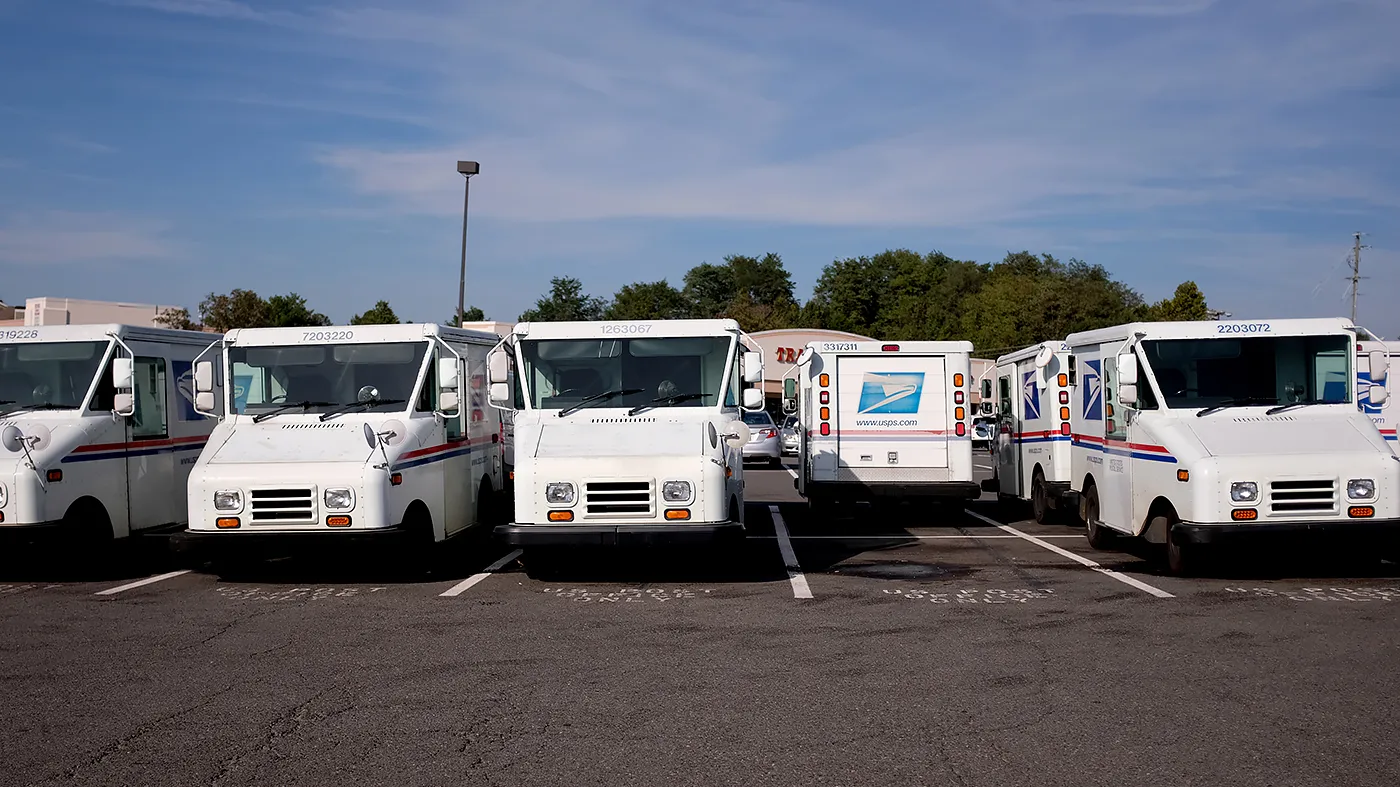
President Trump’s goal to reshape the leadership of the U.S. Postal Service has hit a snag as a senator from his own party presses the agency for reforms.
Trump has nominated four new governors for the Postal Service board, two of whom — Jeffrey Brodsky and William Gallo — are headed for a Senate floor vote. The new leadership will be a key part of Trump’s plan to reform the mail-in voting ecosystem.
But Sen. Mike Rounds (R-S.D.) is holding up the nominations for the postal board while demanding progress on fixing mail delays in South Dakota.
“I’m placing holds on every nominee for the Postal Service Board of Governors until their leaders take steps to fix mail service in South Dakota,” Rounds said in a floor speech on Aug. 7. “I suspect other senators from rural states may do the same.”
Rounds said he wants the Postal Service to, at a minimum, suspend a program that drew down delivery times at rural post offices and collection boxes; start delivering intrastate mail in his state within one to two days; and commit to implementing findings of an ongoing inspector general investigation that is expected to deliver a report in September.
Throughout that investigation, Rounds noted, the Postal Service directed its employees to hide undelivered mail from inspectors.
Rounds’s office confirmed Wednesday that they are “in talks” with the White House over Rounds’s demands. A source familiar with the matter said the nominees had, to their understanding, “spoken to all the senators or their staff who asked to meet with them,” although the source did not specify how many senators had requested a meeting.
In a communication obtained by The Hill, USPS told congressional leaders including the South Dakota delegation that they would upgrade a USPS facility in Sioux Falls to provide faster service in the region.
The South Dakota Republican’s objections don’t touch on the Postal Service’s role in elections, but they come as Trump has placed the agency at the center of his effort to reshape how Americans vote.
Trump in March signed an executive order directing the Postal Service to implement new standards for mail-in voting, which he has long sought to curb. The Supreme Court on Monday lifted a temporary block from another court on implementing the order, ruling that the plaintiffs had sued too early because the Postal Service hadn’t yet begun implementing the new standards.
The Postal Service has since published its plans to enforce the order, and Democratic states filed another lawsuit.
Under the order, states must upload lists of voters who are eligible to vote by mail, and their mail-in ballots must meet design standards. If a ballot doesn’t meet those requirements, the Postal Service will refuse to deliver it.
While the new nominees may not have a major effect on Trump’s ability to enforce his March executive order, control of the board could impact the administration’s future moves.
The 11-member board is responsible for directing policies of the Postal Service. Presidents traditionally nominate members in bipartisan pairs, so the approval of all four of Trump’s GOP nominees would effectively tilt the board in his favor.
Rounds is also not alone in his general concerns about the Postal Service: Sen. Josh Hawley (R-Mo.) sharply questioned Postmaster General David Steiner, a Trump appointee, in June over the agency’s issues delivering mail in Missouri.
In a confirmation hearing for the nominees, Hawley reiterated that concern and pressed the governors on their predecessors approving bonuses for the postmaster general as the Postal Service ran budget deficits and as rural mail delivery faltered.
“Frankly, I think it’s indefensible that we’re paying out these bonuses when my constituents, who are paying their taxes faithfully and they are paying the Postal Service, the stamps and everything else, all the rates, they can’t get the mail,” Hawley said.
Hawley ultimately voted to advance the nominees out of committee, and both advanced on party-line votes. His office did not respond to a request for comment on whether he agreed with Rounds’s concerns.
A single senator’s hold on nominees doesn’t necessarily doom them on the floor, though it could make the confirmation process more time-consuming as senators race through a pile of legislation before the midterms.
While the nominees are likely to be eventually confirmed, they also faced pushback from Democratic senators during their confirmation hearing in front of the Senate Homeland Security and Governmental Affairs Committee in June over their relative inexperience with the postal system and hesitation about the safety of mail-in voting.
Both Gallo and Brodsky, in response to a question from Sen. Elissa Slotkin (D-Mich.), eventually said mail-in voting was “safe and secure.” Brodsky said he had voted by mail three times.
Democrats also took issue with Trump breaking precedent and nominating only Republicans.
Sen. Gary Peters (Mich.), the top Democrat on the committee, wrote a letter to his Republican counterpart Sen. Rand Paul (R-Ky.) before the committee vote urging him to stall the nominations until Democratic nominees could be considered.
“Given the urgent financial, policy, and service issues facing the USPS and the critical role the Board plays in ensuring the Postal Service fulfills its public service mission, it is imperative that the President nominate and the Senate confirm well-qualified nominees from both political parties,” Peters wrote. “Advancing only nominees from one party and failing to consult with the minority unnecessarily politicizes the Postal Service and undermines its statutory independence.”
Topics in this story
Gathered from external sources. Rights to this text belong to whoever originally published it.