Mark Walter scandal, LA Lakers sale raise concern about ownership in pro sports
Billionaire Mark Walter’s purchase of the Los Angeles Lakers and his subsequent forced sale of the team less than a year later amid allegations of financial crimes at his companies are sparking fresh concern about who owns the biggest brands in pro sports. It is also highlighting how clubs are being leveraged as profit-driving mechanisms…
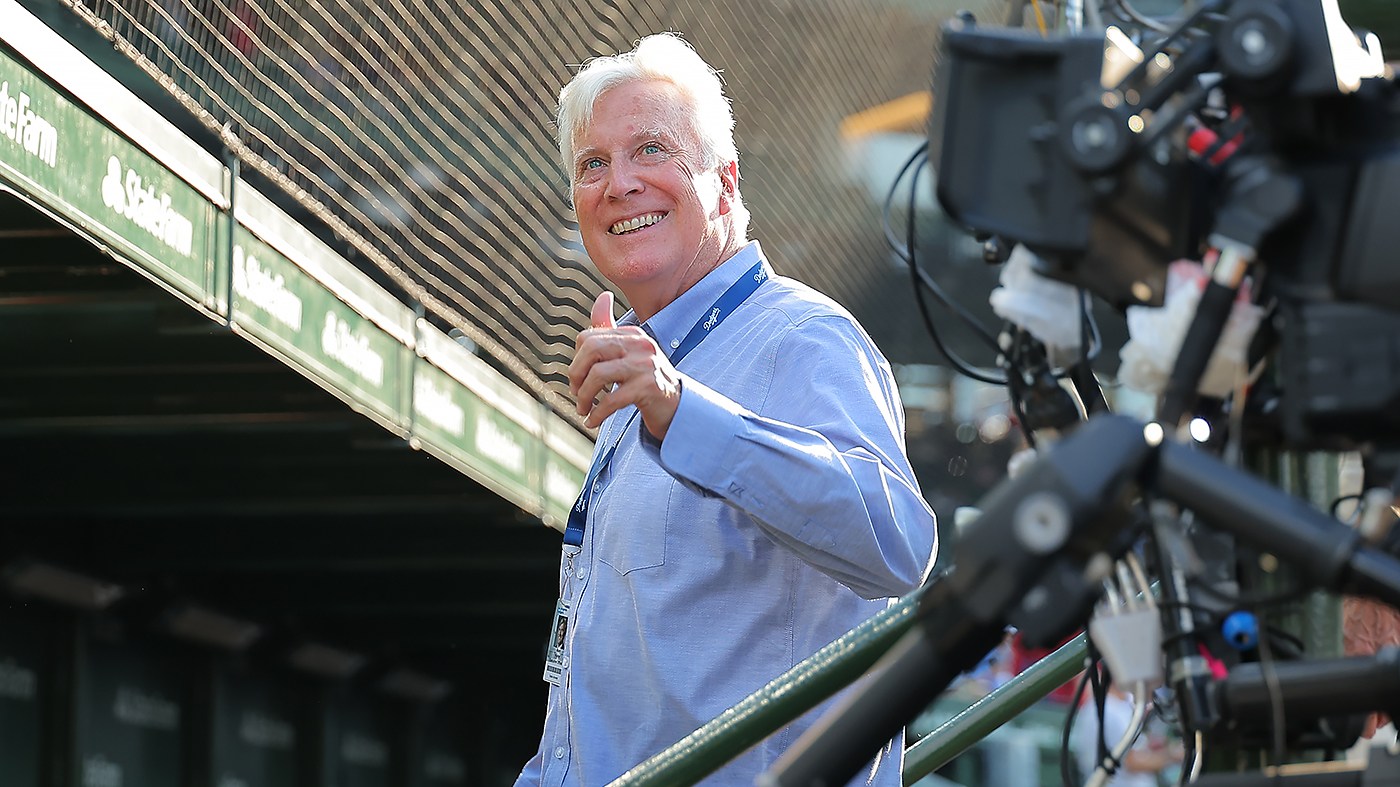
Billionaire Mark Walter’s purchase of the Los Angeles Lakers and his subsequent forced sale of the team less than a year later amid allegations of financial crimes at his companies are sparking fresh concern about who owns the biggest brands in pro sports.
It is also highlighting how clubs are being leveraged as profit-driving mechanisms for some of the world’s richest people.
Walter, who made his billions in the insurance business and until this summer owned stakes in the Lakers, Los Angeles Dodgers and the English Premier League’s Chelsea, is reportedly under investigation by the federal government for alleged tax irregularities and failure to report billions in financing for key portions of his businesses.
His abrupt sale of the Lakers to an ownership group that includes Josh Kushner, the brother of President Trump’s son-in-law, is raising suspicion Walter is attempting to curry favor with the federal government and avoid the harshest of possible punishments.
Walter is hardly the first billionaire sports magnate to face scrutiny. His case, however, is underscoring what critics say is a growing danger in the accelerating corporatization of pro sports.
Insufficient guardrails vetting the financing of potential club buyers are a growing problem, critics say, and they are contributing to a widening disconnect between the sports ownership class and fans.
“There is probably no drier topic than billionaire debt service for everyday people, but we know for sure that fans are a more than a little bit tired of seeing their favorite teams treated like assets as opposed to community goods,” said Will Norton, director of the McCormack Center for Sport Research and Education at the University of Massachusetts Amherst. “These teams are becoming so expensive that you simply have to look to open up avenues to capital that otherwise would look like precarious choices for the long-term health of the club.”
More franchises than ever in the NFL, NBA, NHL and other leagues are partially owned and controlled by either private equity firms, owners who live and do business hundreds of miles away from a club’s home city or top executives with financial priorities that have little to do with the sports brands they own.
The result has been an ecosystem in which fan experience is suffering, and ownership groups are placing short-term return on investment over hometown pride and roster development.
Walter’s scandal is unique in that his businesses involve multiple franchises in several top sports leagues.
The Dodgers, perennial winners in the National League, have benefited in recent years from a major bargain on the team’s most recent media rights deal brokered by Walter.
The deal freed up millions for the franchise to spend aggressively on top talent and build arguably the most elite roster in baseball while ticket prices skyrocketed and wealthy celebrities packed Dodger Stadium’s most desirable seats.
The club’s financial strategy and others like it are at the center of a potential crisis facing MLB this offseason as its players union and owners stall out on a new collective bargaining agreement, a stalemate that most around the sport expect will end in a prolonged lockout.
Many attribute the arms race in baseball, and other pro sports, to the growing presence of private equity in the MLB, NBA, NFL and other leagues.
Top investment and venture capital firms now hold at least a partial stake in more than 70 clubs across North America alone, according to a recent study from the CFA Institute.
Internationally, governments are also spending aggressively on sports, most notably the Saudi Public Investment Fund, which has poured billions into niche sports such as golf and boxing and more popular global sports like soccer.
In the U.S., the presence of private equity is leading to more pressure than ever on ownership groups to raise larger sums of capital for better coaches, new stadiums and top talent.
Phoenix Suns owner Mat Ishbia is currently facing litigation from other minority owners in his club alleging he is using the team as a “personal piggy bank” to fund less profitable ventures in his portfolio.
Ishbia’s business partners also argue he cut them out of a deal granting naming rights for the team’s arena to his mortgage business.
“This all does start to raise questions about to what extent these leagues are properly vetting owners and potential owners,” said Mark Conrad, director of Fordham University’s sports business program. “Very few people can write a check for $12 billion. So, the idea of a hometown family owning a team is very passe, and the amount of money [required to buy a team] is a big part of it.”
Around the country, fans have grown increasingly frustrated with ownership groups in top leagues that have asked for billions in tax breaks for new stadiums, sold broadcasting rights for games to expensive paywalled streaming platforms and invested more in elite experiences for deep-pocketed fans.
Portland, Ore., faces a unique situation with the Trail Blazers ownership in the coming months.
The Blazers are owned by private mega-investor Tom Dundon, but the team’s home arena is the property of the city.
The two sides are currently negotiating how much the city should underwrite a planned renovation of the Moda Center, which is expected to come with a price tag of more than $300 million.
The standoff is leading many fans there to fear that if no deal is stuck by the end of the team’s current lease, one of the city’s only professional sports clubs could leave town.
It’s a problem that cities such as St. Louis, San Diego and Oakland have fallen victim to in recent years.
In those cases, observers say, smaller market teams are losing beloved franchises because they do not offer a big enough, or fast enough, return for wealthy ownership groups.
“Part of the problem is we still don’t have hard numbers behind the valuation of these teams to justify the amount that’s being paid [to keep them in a market]. We’ve got a different class of owners now, and the process hasn’t evolved with it,” said Cade Massey, an expert at the Wharton School’s operations, information and decisions department.
“The entities that are getting involved are widely more sophisticated now. And I’m sure all of the leagues, if they weren’t before, they’re thinking about this now,” he added.
College football kicked off this weekend, and the debate about player eligibility has never been more heated. Several major conferences such as the Big Ten and SEC are trying to ban players who were drafted by NFL teams last spring but were cut from pro rosters and still have NCAA eligibility from returning to college teams. The issue gets to the heart of NCAA’s lack of antitrust protection, opening it to litigation from players who wish to return to college or transfer to new schools. It also underscores the timeliness of the Protect College Sports Act, which senators are expected to vote on when they return from recess after Labor Day.
Good Good Golf, a golf media company that exploded in popularity with young people after the coronavirus pandemic, is under fire for an advertisement the brand published depicting violence against a woman. Club manufacturer Callaway cut ties with the organization over the ad, and the PGA Tour said last week Good Good would no longer be a sponsor of one of its fall events in Austin. The ad and the backlash it received have sparked widespread debate in the sports business community about “cancel culture” online and the game of golf’s inclusivity as it relates to women and underrepresented groups.
The Republican Party’s first-ever midterm convention is slated for next week, Sept. 9 and 10. The event will have some big competition as it looks to capture the news cycle: the NFL. The league’s first regular season game kicks off Wednesday, Sept. 7, with a Super Bowl rematch between the Seattle Seahawks and New England Patriots, and the following night will pit the San Francisco 49ers against the Los Angeles Rams in an NFC West showdown set to be streamed on Netflix. Major news networks are expected to cover the GOP convention thoroughly during the day, but how many eyeballs the party can tear away from the NFL in primetime remains to be seen.
Rep. Herb Conaway (D-N.J.), a doctor of internal medicine who is up for reelection this year, answered some sports questions for The Hill.
“Certainly, it’s football. But lately I watch more golf than I used to. I’m into it, and my son is I would say an avid golfer, so he’s always got it on. I see it a lot.”
“Oh now this is a little controversial. … How do I answer this question? … I have been a Dallas Cowboys fan since I was 7 years old. I played quarterback in high school and played No. 12 because it was Roger Staubach’s number. And my offensive line behaved in the way the Cowboys did in the ’70s in terms of slapping their pads before getting down.”
Is there an athlete you admired growing up?
“It had to be Staubach. He always found a way to win a game. I figured if he got the ball in his hands at the end of the game, he would always find a way to get the Cowboys in the end zone. Never say quit, never die.”
Hate is a strong word, but is there a team you love to root against?
“For years I liked to root against Pittsburgh because of Super Bowl XIII. It was one of the sad days of my young life when they lost, when Jackie Smith dropped that ball in the end zone.”
Sports and politics are both full of cliches; what’s one that resonates with you?
“I’d have to say my high school basketball coach said the best way to lose is to rest on the field of victory, so you have to keep driving through straight to the end.”
In the era of name, image and likeness rights, Sports Illustrated surveyed more than 40 college football insiders to find out “what teams are really spending on players this season.” Some of the top spenders: the University of Miami, Texas Tech University and the University of Oregon.
As Major League Baseball builds stronger ties to prediction markets and gambling platforms, The Athletic’s Zack Meisel spoke with a number of pro baseball players who told him about threats and harassment they regularly receive from bettors on social media.
The Wall Street Journal has a new profile out highlighting the work of Los Angeles Rams general manager Les Snead, who the outlet writes “found a way to build a perennial contender by rethinking the market as a value investor.”
Topics in this story
Gathered from external sources. Rights to this text belong to whoever originally published it.