The Memo: Trump and Bessent crank up economic pressure on Iran as other options fall short
Six months into the war on Iran — and with less than three months left before the midterms — the Trump administration has decided it’s time for Plan C. Treasury Secretary Scott Bessent on Monday laid out his ambitions for an “economic onslaught” against the Islamic Republic that would target its “financial connections around the…
Six months into the war on Iran — and with less than three months left before the midterms — the Trump administration has decided it’s time for Plan C.
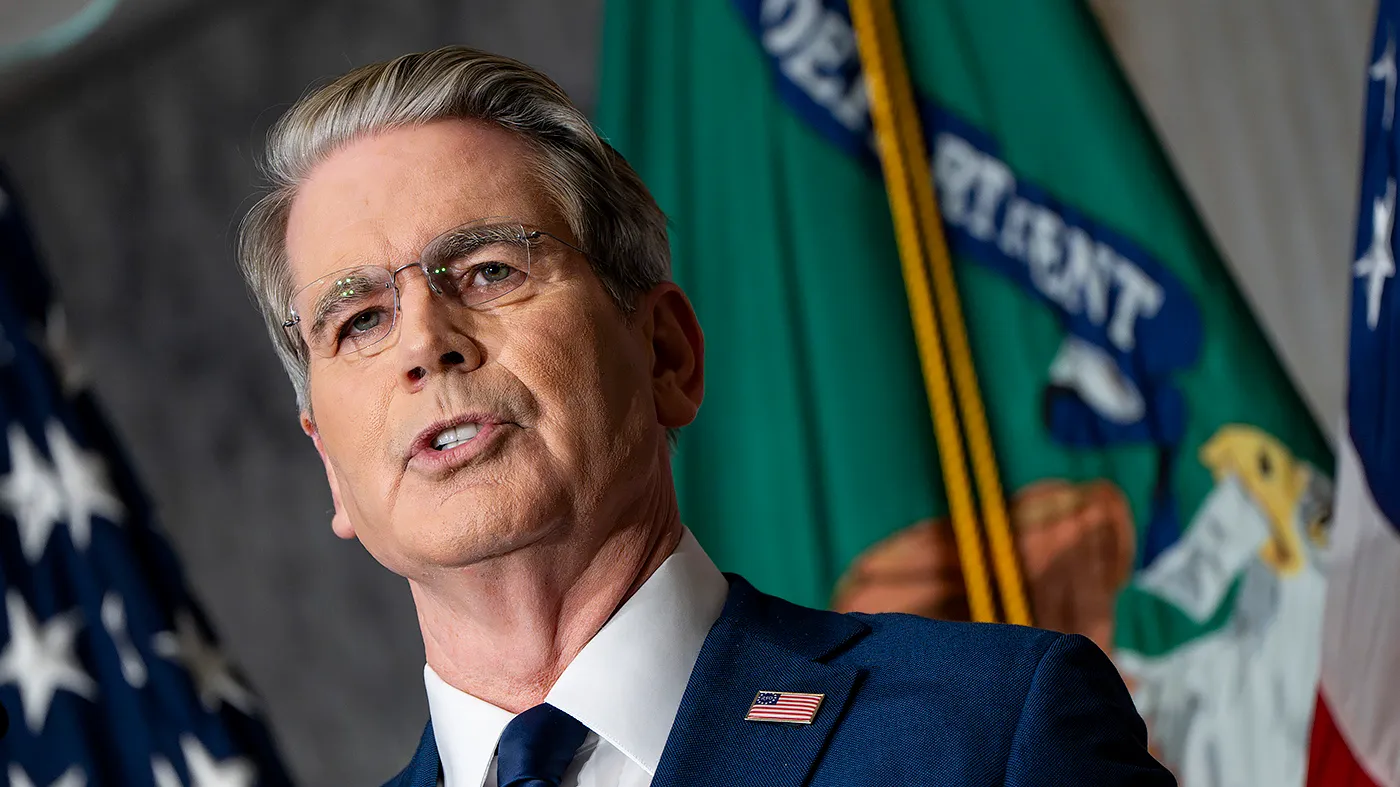
Treasury Secretary Scott Bessent on Monday laid out his ambitions for an “economic onslaught” against the Islamic Republic that would target its “financial connections around the globe.”
The hope within the administration seems to be that turning up the economic heat on Iran can produce tangible results without the baleful complications that could result from the two other broad options before the president.
If President Trump were to return to all-out war, he would risk a new spike in oil prices, Iranian reprisals aimed at U.S. allies in the Gulf, and a further diminution of American munition stockpiles. Even then, it is not clear that a definitive victory would be achieved without putting U.S. boots on Iranian soil — a scenario that has vanishingly thin support from the public.
If, on the other hand, Trump were to sue for peace right now, Iranian recalcitrance — and an apparent belief in Tehran that they retain plenty of leverage — would require him to make sizeable concessions.
The memorandum of understanding signed in June provided a preview of how such an approach would be received: Negatively.
The memorandum drew criticism from GOP hawks, who suggested it was too soft on Iran; from liberal opponents, who asked rhetorically what the war had been for in the first place; and from Israel, which jointly launched the war with the U.S. in late February.
So, on Monday it fell to Bessent to put some flesh on the bones of Trump’s earlier threats to up the economic pressure on Iran. The president, in a morning social media post, had insisted in his customary all-caps style that “IRAN IS COMPLETELY COLLAPSING!!!”
The Treasury secretary communicates in a different register to his boss, but his language was aggressive all the same.
The administration’s objective, he said, was “to sever every economic lifeline that sustains this tyrannical regime until Tehran stands alone.”
Taking questions from reporters after his prepared remarks, Bessent characterized the U.S. as intent upon the “economic asphyxiation” of Iran.
When it came to the U.S. desire to see other nations comply with Washington’s demands to cut off Iran or face secondary sanctions, Bessent warned, “We do not have infinite patience here.”
There were some definite lines of economic attack — but also a lot of detail that was not filled in.
For example, Bessent asserted that five areas of activity by which Iran sustains itself would be targeted: digital assets, technology, gold, aviation and shipping. He also insisted that branches of Iran’s Bank Melli “must be shuttered and dark.”
Bessent also contended, even as he spoke, that an office within the Treasury Department was “sanctioning over 60 entities, individuals and vessels around the world that enable the Iranian regime to procure illicit nuclear and missile technology, conduct cyber operations and generate oil revenue.”
Yet, alongside the tough talk, there was also some vagueness.
Importantly, a sizeable question mark hangs over how aggressive the administration is prepared to be with China, which is by far the largest buyer of Iranian oil exports.
Asked about that topic, Bessent asserted both that “no one is above the reach of U.S. sanctions” and that “the best way to engage with countries is through quiet diplomacy.”
It is, of course, rather debatable how committed the Trump administration is to quiet diplomacy. A few hours before Bessent’s appearance before the cameras, Trump had delivered a new jab in an unrelated trade dispute with the U.S.’s northern neighbor, beginning a lengthy social media post by declaring, “Canada has been ripping off the United States of America for years.”
That being so, Bessent’s supposed commitment to a softer, more private approach could also function to provide cover for ambivalence about how hard to push Beijing.
The unignorable backdrop to all the machinations is the unpopularity of the war with the American public.
Trump’s approval on Iran in the RealClearPolitics polling average is deep underwater. Roughly 61 percent of Americans disapprove of his handling of the issue, while about 35 percent approve.
The war is intertwined with voters’ chief concern — rising prices and the cost of living. The average gas price nationally was roughly $4.10 per gallon on Monday, according to AAA , having been just below $3 before the war began.
Inflationary pressures, in part caused by the Iran war, are also part of the reason why there have been some jitters on the bond market recently. Bessent stepped in to try to calm the unease last week, with only partial success.
Put it all together, and it is an inhospitable landscape for Republicans seeking office in November’s midterms.
For now, the administration is clearly recalibrating its rhetoric.
Even the pugilistic Defense Secretary Pete Hegseth told reporters on Monday that, although he was not “foreclosing” using direct strikes on Iran, “economic pressure, we know, hurts them the most right now .”
Bessent, in a lesser-noted part of his Monday remarks, characterized the U.S. armed forces as having “laid the groundwork” for the achievement of American objectives.
This was a notably more circumspect assessment than those given by other senior administration officials in the early part of the war.
So, for now, the Iranian economy is the battlefield.
The big question is how fast, if at all, the U.S. can secure a meaningful victory.
The Memo is a reported column by Niall Stanage.
Topics in this story
Gathered from external sources. Rights to this text belong to whoever originally published it.