Senate takes big step toward passing permitting reform package
The Senate took a big step Monday to advance a bipartisan permitting reform package closer to final passage by voting to end debate on a managers’ amendment to strengthen provisions of the bill addressing energy-hungry data centers and protecting tribal sovereignty. Senators voted to invoke cloture 70-27 on the substitute amendment sponsored by Sen. Shelley…
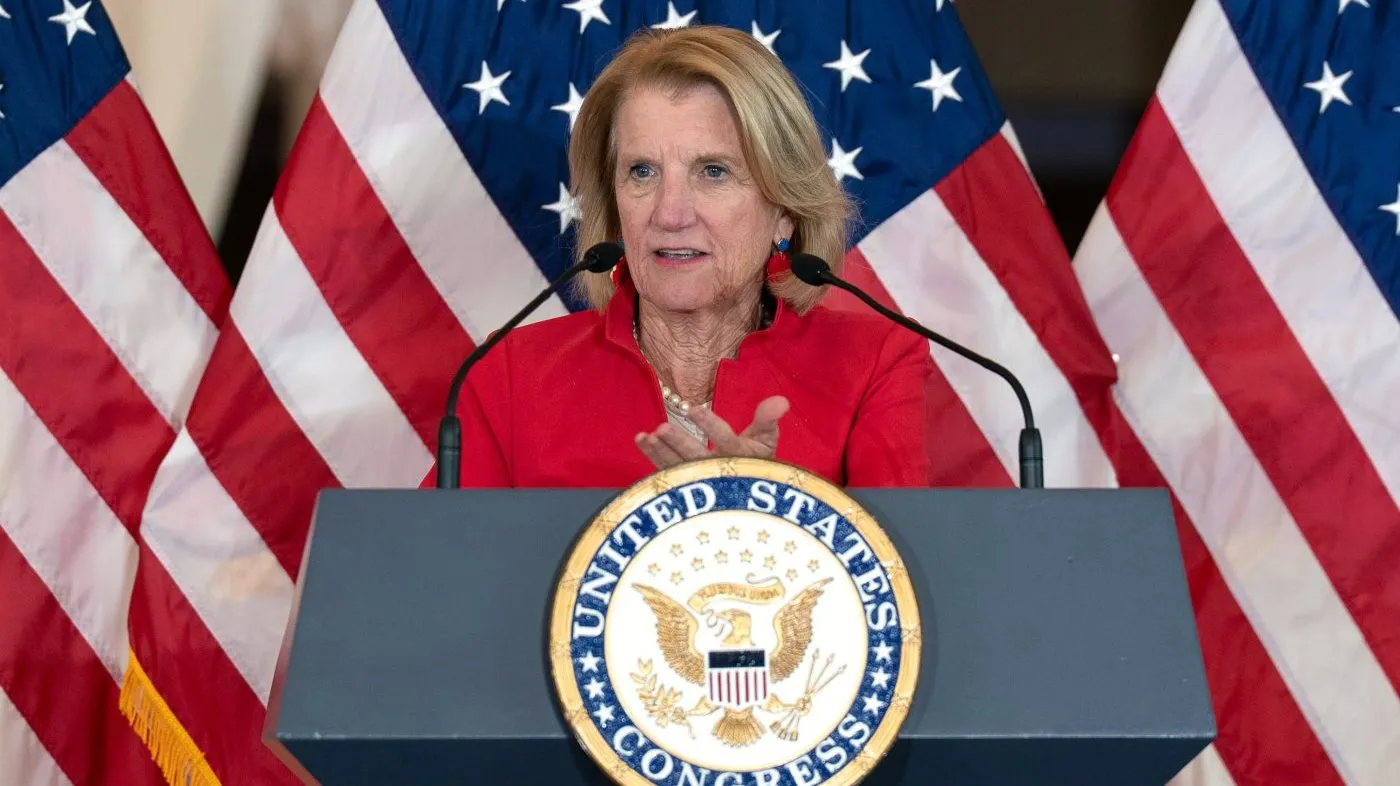
The Senate took a big step Monday to advance a bipartisan permitting reform package closer to final passage by voting to end debate on a managers’ amendment to strengthen provisions of the bill addressing energy-hungry data centers and protecting tribal sovereignty.
Senators voted to invoke cloture 70-27 on the substitute amendment sponsored by Sen. Shelley Moore Capito (R-W.Va.), the chair of the Environment and Public Works Committee.
The procedural vote sets up a vote on final Senate passage of the legislation before the Thanksgiving recess.
The bill would speed the construction of energy, mining and infrastructure projects while limiting environmental challenges under the Clean Water Act, the Endangered Species Act, the National Environmental Policy Act and the National Historic Preservation Act.
It seeks to dramatically boost the capacity of transmission lines and could reduce the time it takes to build new lines from 10 years or longer under current law to five or six years.
It would direct the Federal Energy Regulatory Commission to establish timelines for utilities to upgrade their transmission lines and implement advanced technologies when benefits outweigh costs.
A significant number of Democrats voted to limit debate on the substitute amendment even though it’s not clear whether they will be able to offer additional amendments to the proposal.
Some Senate Democrats who voted to begin debate on the bill, such as Sen. Catherine Cortez Masto (D-Nev.), threatened to oppose bringing it up for a final vote unless changes were made. Cortez Masto specifically called for striking out a section of the bill affecting the National Historic Preservation Act.
The bill still needs to pass the House, where Energy and Commerce Committee Chair Brett Guthrie (R-Ky.) has called for changes to address grid reliability.
It also faces opposition in the lower chamber from pro-conservation advocates such as Reps. Jared Huffman (D-Calif.), Adelita Grijalva (D-Ariz.), Summer Lee (D-Pa.), Melanie Stansbury (D-N.M.) and Rashida Tlaib (D-Mich.).
Huffman, who is in line to chair the House Natural Resources Committee, says the bill, formally known as the Bipartisan American Affordability and Jobs Act, or BAAJA, would constrain National Environmental Policy Act reviews, radically alter transmission approvals and let companies sue the government for damages if they can show they were discriminated against based on fuel type.
Grijalva issued a statement last week declaring that “Congress should not be rushing to pass a bill that gives [President Trump] even more unilateral authority to bypass our laws.”
Some Democrats are concerned by Trump’s threat that he will continue to block the construction of wind turbines, even if the bill passes.
“I will not approve wind turbines,” the president vowed. “Wind turbines are a major loser.”
Several leading environmental groups oppose the legislation, including the Sierra Club, the Natural Resources Defense Council, and the Southern Environmental Law Center.
Industry groups such as the Data Center Coalition, the American Petroleum Institute and the National Mining Association support the legislation as do labor unions such as the AFL-CIO and the International Brotherhood of Electrical Workers.
The bill has strong Democratic support in the Senate thanks to the backing of Senate Energy and Natural Resources Committee ranking member Martin Heinrich (D-N.M.) and Environment and Public Works Committee Chair Sheldon Whitehouse (D-R.I.).
Whitehouse told The Hill Monday that prospect of the bill passing the House “seems pretty good” and downplayed the criticism of some House Democrats.
“There aren’t many bills that pass around here without some criticism,” he said.
He said that the Senate floor staff is now trying to work out an agreement on amendments.
Heinrich said the legislation would ensure that data centers pay for the energy they use and the grid upgrades they cause and would lower electricity prices for families.
He noted that the substitute amendment incorporated “feedback we’ve heard from Tribes” who were concerned that it would undermine the federal government’s obligation to consult with them on infrastructure, energy and mining projects affecting their ancestral lands.
“The Bipartisan American Affordability and Jobs Act will help lower energy costs, strengthen Tribal consultation and create more good-paying jobs,” he said after introducing the substitute amendment with Capito, Whitehouse and Senate Energy and Natural Resources Committee Chairman Mike Lee (R-Utah).
The Rhodium Group estimates the bill will reduce household electricity bills by $50 to $78 a month per year by 2040 by allowing more lower-cost energy sources to reach the grid and shielding taxpayers from data-center costs.
The substitute amendment expands the list of entities that may serve as a “lead agency” to include a Tribal or state government agency with regard to a proposed project.
And it clarifies that projects financed by the Transportation Infrastructure Finance and Innovation Act and the Railroad Rehabilitation and Improvement Financing Programs are not excluded, among other changes.
Whitehouse, a leading Senate advocate for addressing climate change, said the bill will “juice the clean energy economy” and help Americans “build big things again,” reduce pollution and create new well-paying union jobs.
Sen. Jeff Merkley (D-Ore.), who is seeking to become chairman of the Senate Environment in Public Works Committee next year, opposes the legislation as does nearly half of the Senate Democratic caucus.
He said the bill “accelerates the extraction and burning of fossil fuels” and would make it “easier to build more data centers powered by ‘behind the meter’ natural gas plants,” referring to data centers and other industrial facilities that receive power directly from a natural gas plant without it touching the public utility grid.
The legislation has strong support from Trump, who is expected to sign it into law if it reaches his desk.
“We’re behind it 100 percent,” Trump told reporters last week.
Trump said he may help Speaker Mike Johnson (R-La.) whip House Republicans to support the legislation.
Topics in this story
Gathered from external sources. Rights to this text belong to whoever originally published it.