Could Protect College Sports Act be running out of time? Randy Levine sounds the alarm
The Protect College Sports Act faces an uncertain future in the House. Randy Levine is turning up the heat on Congress.
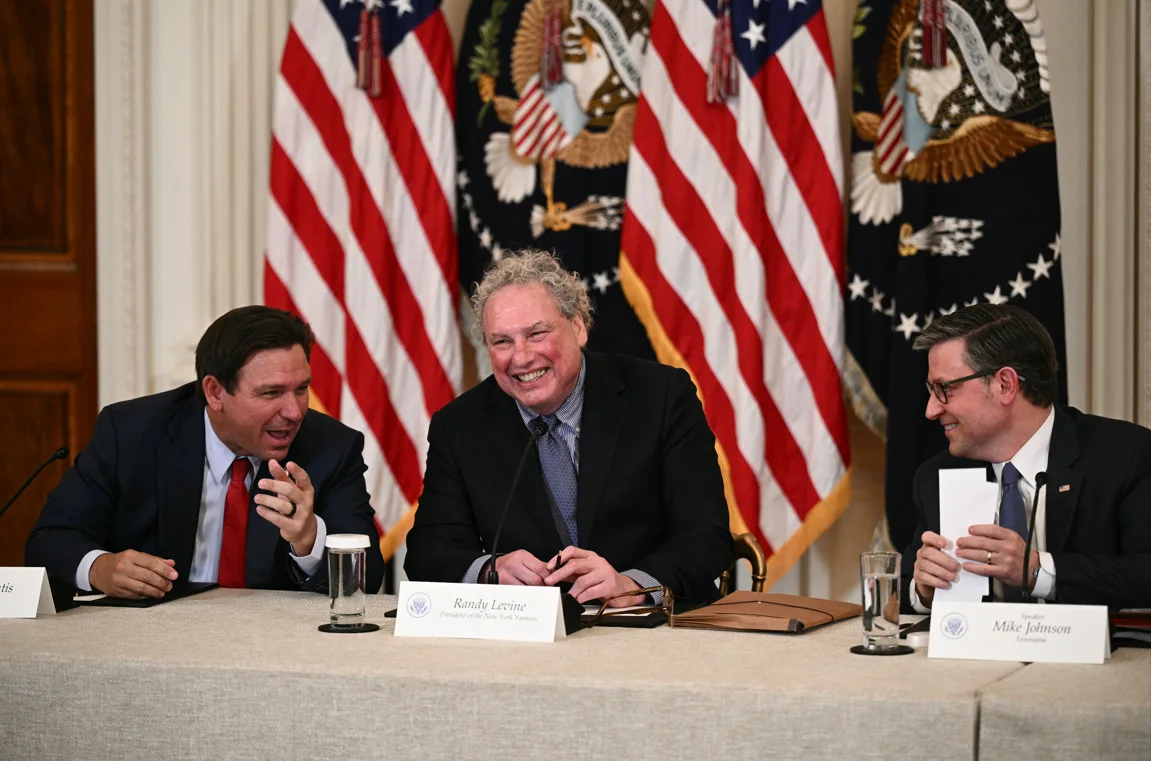
Randy Levine has ratcheted up the rhetoric and pressure on the U.S. House of Representatives over the Protect College Sports Act .
On Tuesday, Nov. 10, Levine sent a letter to the House, obtained by USA TODAY Sports, that told representatives, in part, "If the PCSA passes, there will be nothing to prevent collective bargaining in the future if the law changes in the future."
And his missive has nothing to do with Tuesday night's second edition of the 2026 College Football Playoff rankings , which have sparked their own controversy over the past week.
As president of Major League Baseball's New York Yankees and President Trump 's Roundtable on Fixing College Sports, Levine used the 800-word letter to paint in stark terms what he believes will happen if the PCSA passes, or if it fails.
"It is not debatable that if the PCSA passes, student-athletes will receive major benefits that they do not have today," Levine wrote.
"Members of Congress, the ball is in your court. It is the ninth inning, fourth quarter, third period. The nation is watching. Will it be petty politics, anger and division, or will it be a bipartisan consensus coming together for the public good?
"History will remember if you choose wrong. Pass the PCSA."
The 200-plus-page bill sailed through the Senate with 77 votes and has been publicly touted by Trump. Bill co-sponsor Ted Cruz (R-Texas) repeatedly has called for the measure to be whisked through the House and placed before Trump to sign live on ESPN's "College GameDay."
Levine touted funding for HBCUs, women's sports and Olympic sports as key elements of the legislation while saying "special interest groups" are again working to thwart the bill.
"Almost every university and college in the country, both large and small — about 400 of them — want the PCSA passed," Levine wrote. "Why? Because without it, these schools believe their financial health will seriously continue to decline. They will have to raise tuition and fees, cut scholarships, and eliminate women's and Olympic sports programs just to stay afloat. Yes, college will become less affordable for every student. And with fewer scholarships available, fewer students will have the opportunity to earn one.
"So, too, it is no secret that HBCUs are reeling in financial distress. The PCSA provides a billion dollars or more lifeline to them. Yet despite the fact that the PCSA received 77 votes in the U.S. Senate — a remarkable and overwhelming bipartisan show of support — as the legislation moves to the House, the same special interests that tried to kill it in the Senate are at work again."
A lobbyist who has worked directly with a Power conference and individual P-4 schools told USA TODAY Sports this week of the PCSA: "It's dead." The individual spoke on condition of anonymity to provide candid thoughts about the bill's prospects.
Elsewhere, a proponent of the measure on Capitol Hill who has worked directly on the act shared the following with USA TODAY Sports:
"There is no realistic path to secure the same broad, bipartisan support for a new bill in 2027 and beyond. Passing the Senate-approved bipartisan bill through the House and sending it to the President's desk during the lame-duck Congress gives House Republicans an opportunity to close out the 119 th Congress with a significant win for President Trump, HBCUs, women's sports, and student athletes. An attempt to amend it would be a surefire defeat for the colleges and fans counting on the PCSA's enactment."
As the lobbyist noted, "the primary issues facing Congress" during the post-election period include "Government funding, which halts on Dec. 11, 2026; defense authorization, healthcare and policy extenders, farm bill and agriculture."
Additionally, the lobbyist said nominations and judicial confirmations are expected to be wedged onto the Senate calendar before newly elected members of Congress take office in January 2027.
Topics in this story
Gathered from external sources. Rights to this text belong to whoever originally published it.