Bessent: Iran economy could collapse ‘within weeks or months’
Treasury Secretary Scott Bessent on Monday said Iran’s economy could collapse “within weeks or months,” as the Trump administration seeks to debilitate the Middle Eastern country’s economy. “I think it could be within weeks or months –– and the economy doesn’t have to collapse, we just have to have the regime come to their senses,”…
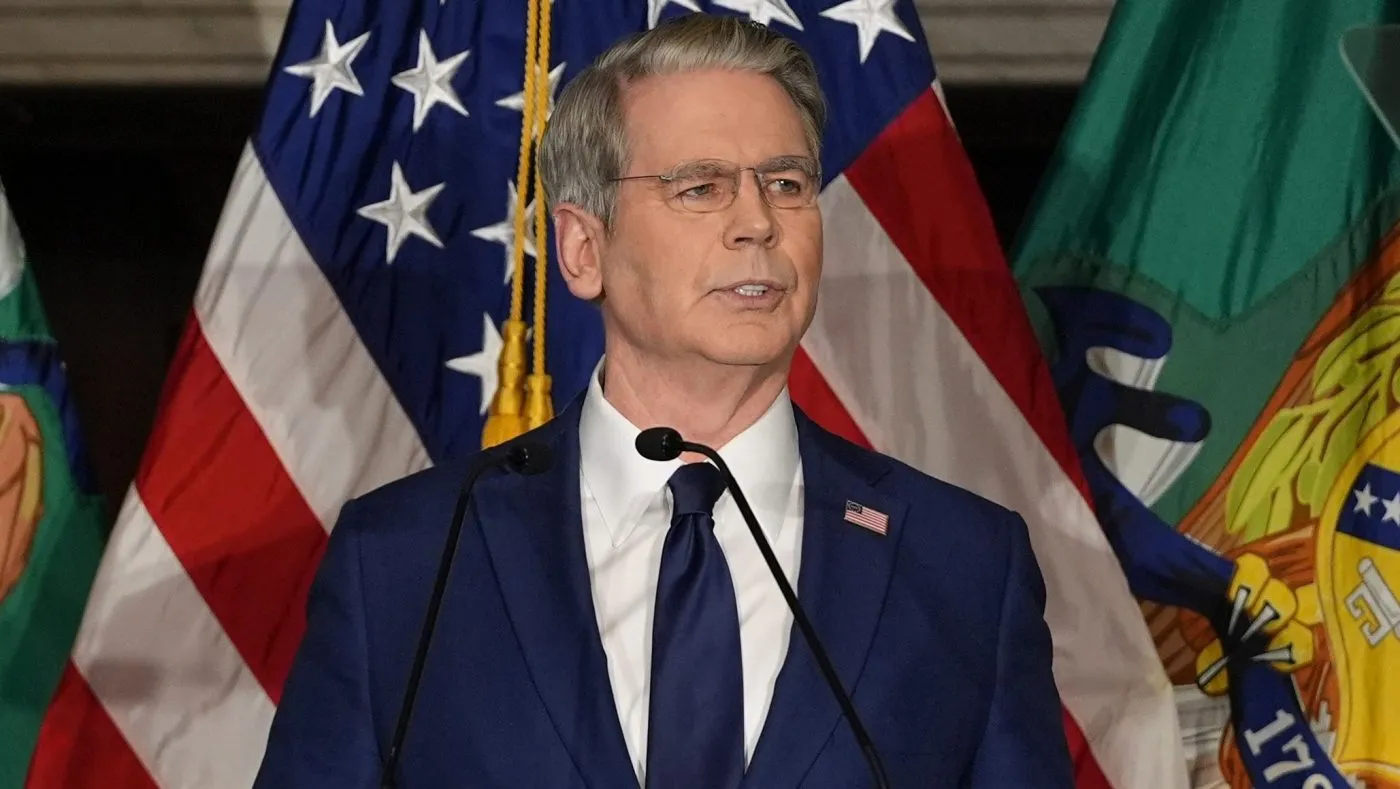
Treasury Secretary Scott Bessent on Monday said Iran’s economy could collapse “within weeks or months,” as the Trump administration seeks to debilitate the Middle Eastern country’s economy.
“I think it could be within weeks or months –– and the economy doesn’t have to collapse, we just have to have the regime come to their senses,” he told reporters when asked how long it would take for the Iranian economy to collapse.
He added that the latest sanctions, as part of what the Trump administration has called an “economic D-Day,” are backed by the European Union, saying the U.S. has its “fulsome support.” The EU said Sunday that it was working with the U.S. and other partners to put pressure on Iran’s economy.
Bessent told The Associated Press in an interview on Sunday that the U.S. will sanction another Iranian bank as part of this pressure campaign, called Operation Economic Outcast. The secretary noted that the Trump administration is prepared to instill “financial violence if we have to.”
The remarks came before and after a Monday meeting with Bessent and the Group of 20 finance ministers in Asheville, N.C., where he said he wanted to focus on growing the world economy.
Bessent and President Trump, along with other Cabinet members, have reached out to their counterparts in other countries to urge them to sever their financial ties with Iran or face consequences.
The Treasury secretary also warned that “all options are on the table” to sanction China for continuing to purchase Iranian oil.
The president has so far not followed through with the economic warfare approach, but both sides exchanged fire at one another on Sunday and Monday in the first known attacks by U.S. and Iranian forces since late last month.
The two countries have been locked in a stalemate over control of the Strait of Hormuz, which Iran has kept closed off to commercial vessels exporting what amounts to one-fifth of the world’s oil. Trump responded with a U.S. naval blockade deployed outside Iranian ports in the strait.
Closing the strait has led to soaring gas prices, with the national average in the U.S. reaching $4.10 per gallon on Tuesday, nearly $1 more than the average at this time last year, according to AAA’s data . Crude oil also jumped more than 3 percent following the strikes, with futures for Brent crude , the international benchmark, at $92.50 per barrel and futures for the North American standard, West Texas Intermediate , at $88 per barrel.
Trump has downplayed concerns over gas prices, defending the choice to take military action against Iran to prevent it from developing or obtaining a nuclear weapon. But his administration has released oil from the Strategic Petroleum Reserve (SPR) to fight back against these high costs, resulting in the SPR reaching its lowest level since 1983 .
The president on Sunday said that following an oil deal reached with the Venezuelan government to control more than 65 billion barrels of oil from the South American country, the U.S. will be able to “fill up” the SPR .
Topics in this story
Gathered from external sources. Rights to this text belong to whoever originally published it.