Starship’s successful launch to low Earth orbit is a big deal
As the late, great science fiction writer Robert Heinlein said, “Once you get to Earth orbit, you’re halfway to anywhere in the solar system.”
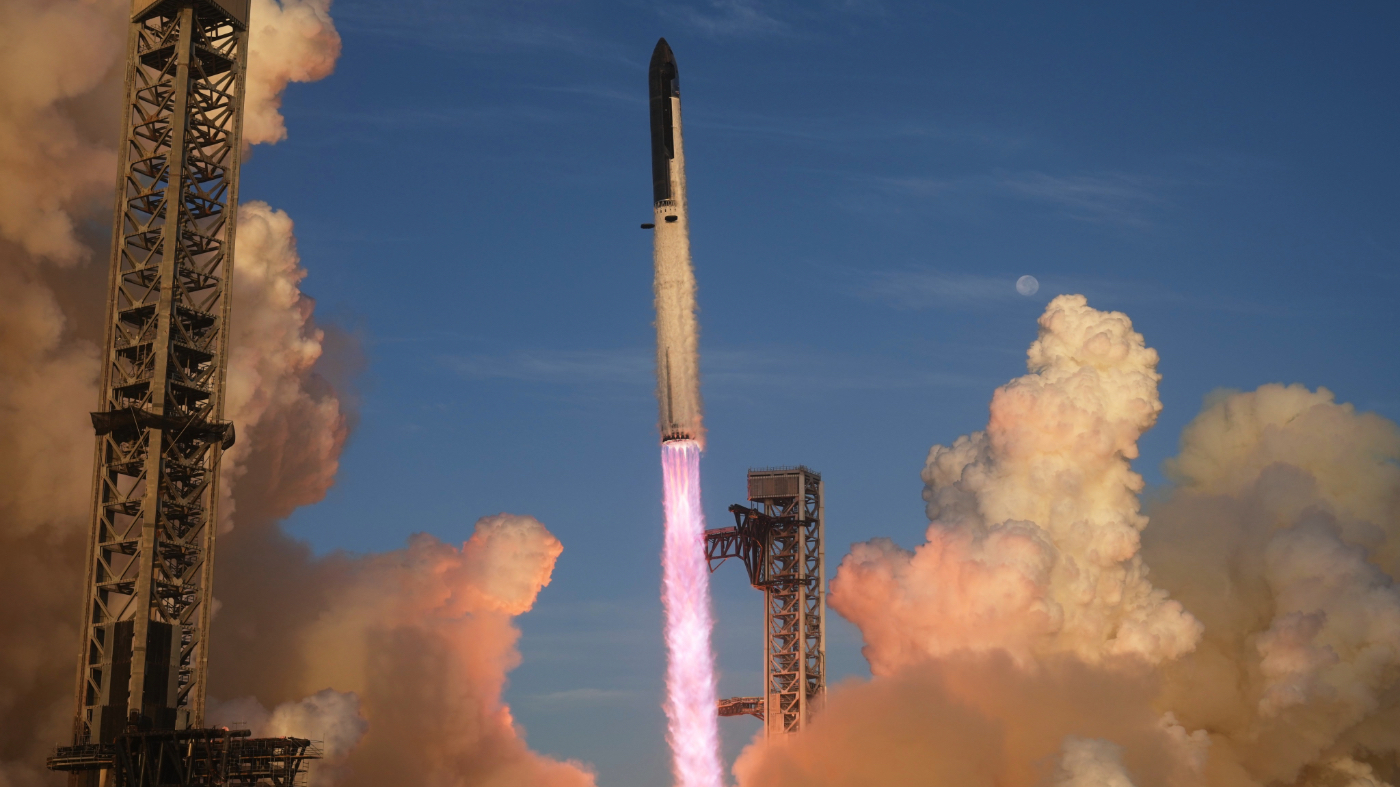
Test 14 of the SpaceX Starship concluded recently with several milestones achieved that are important not only for the Artemis program but for the long-term fortunes of the company.
For the first time, the Starship achieved low Earth orbit. The feat was important for SpaceX’s goals of establishing a transportation system for the moon and Mars since, as the late, great science fiction writer Robert Heinlein said, “Once you get to Earth orbit, you’re halfway to anywhere in the solar system.”
The Starship also deployed 26 operational Starlink satellites, an accomplishment that established the launch vehicle as a money-making asset and not just as an experimental rocket.
It is unknown what the test cost, since the Super Heavy and the Starship were not recovered. But one estimate for a commercial Starship launch pegged the figure at $90 million. PJ Media suggested that the 26 V3 Starlink satellites deployed will generate $2.6 billion to $3.9 billion in revenue over a five-year lifespan.
Some glitches occurred along the way, however, which shows that SpaceX has some work to do before Starship becomes a fully functional operational spacecraft.
First, one of the Super Heavy’s engines failed. It was still able to deploy the Starship successfully and then splash down in the Gulf, but with a harder landing than SpaceX engineers would have liked.
Then, two of the Starship engines failed, causing the SpaceX ground crew to initially decide to abort the orbital insertion. However, ground controllers subsequently decided to burn the remaining engines longer and thus send the enormous spacecraft into its first orbital flight.
However, the SpaceX engineers decided to cut the mission short from 10 hours to about three and splashdown the Starship early. Call it another incomplete success.
SpaceX still has a lot to do before Starship becomes the operational spacecraft that will open up the moon, Mars and beyond to human exploration. The first thing that needs to happen is for SpaceX engineers to discover why the engines on the Super Heavy and the Starship itself failed and to develop a solution so that all of them run reliably every time.
The Starship has to prove that it can maintain an orbit, not just for a few hours, but for at least several days. It has to prove that it can maneuver while in orbit. Both capabilities are necessary before the Artemis III mission that will test rendezvous and docking between the Starship and the Orion spacecraft. The mission will also feature a rendezvous and docking between the Orion and the Blue Origin Blue Moon.
SpaceX has to transition from splashing down the Super Heavy and the Starship in the ocean to catching them both with the “ chopsticks ” back at the launch pad to facilitate reusability
To prove the Starship’s capability for moon and Mars missions, SpaceX must demonstrate that it can be refueled in low Earth orbit. The refueling effort will involve the launch of multiple Starships configured as tankers and their rendezvous and docking with the original vehicle bound for deep space.
Finally, before Artemis IV, the first crewed moon landing since Apollo 17 in 1972, can happen, Starship must show that it can land on the moon and, just as importantly, take off from the lunar surface.
To accomplish all of these things, SpaceX must increase the launch cadence for Starship. Test 14 took place about two months after the 13th test. The time between Starship launches must be compressed to at least weeks if the schedules for Artemis III and Artemis IV are to be met.
Still, in the midst of all the troubles besetting the world, with wars and rumors of additional wars abroad and political rancor at home, something remarkable is taking place at Starbase’s Boca Chica site, at the very southern tip of Texas.
When Apollo 17 departed from the moon, astronaut Gene Cernan said , “As we leave the Moon at Taurus-Littrow, we leave as we came and, God willing, as we shall return: with peace and hope for all mankind.”
Cernan did not live to see Artemis IV fulfill his vow. Who would have thought that the crucial man for the return to the moon would be a nerdy, eccentric immigrant from South Africa who was not even two years old when human beings last walked on the moon?
Thus, history is made by unlikely people and events.
Mark R. Whittington, who writes frequently about space policy, has published a political study of space exploration entitled “ Why is It So Hard to Go Back to the Moon? ” as well as “ The Moon, Mars and Beyond ” and, most recently, “ Why is America Going Back to the Moon? ” He blogs at Curmudgeons Corner.
Topics in this story
Gathered from external sources. Rights to this text belong to whoever originally published it.