Federal judge rules warrantless Flock camera searches may violate 4th Amendment
An Oklahoma federal judge ruled Friday that warrantless searches using AI-powered surveillance camera data, such as what Flock Safety’s hallmark technology collects, may violate the Fourth Amendment without adequate probable cause. “Freedom from persistent, dragnet-style surveillance while in public is not a foreign concept in our society, and it is a reasonable expectation that society…
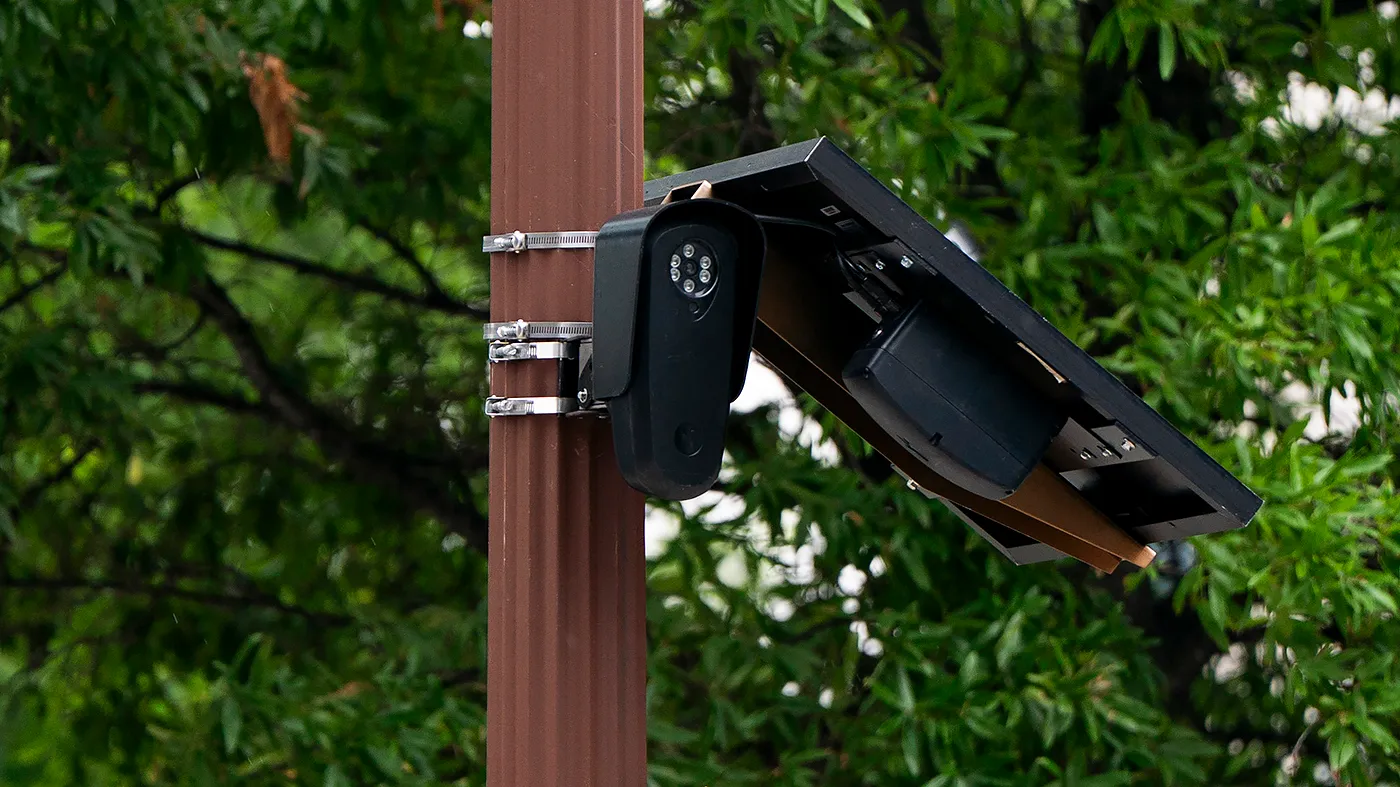
An Oklahoma federal judge ruled Friday that warrantless searches using AI-powered surveillance camera data, such as what Flock Safety’s hallmark technology collects, may violate the Fourth Amendment without adequate probable cause.
“Freedom from persistent, dragnet-style surveillance while in public is not a foreign concept in our society, and it is a reasonable expectation that society already accepts,” U.S. District Judge Sara E. Hill wrote in her ruling .
Hill, a former President Biden appointee, continued, “But it becomes constitutionally problematic when law enforcement can indiscriminately and passively catalog your whereabouts over an extended period of time and then use that information for any purpose whenever convenient. “
Flock offers a system of automated license plate readers (ALPRs), which use recording devices to log plate numbers and identify what the company calls a “vehicle signature” — including a car’s make, model and other identifying features. The cameras do not collect the biometric data of a vehicle’s occupants.
The ruling concerned ALPRs’ role in a Tulsa County deputy sheriff’s traffic stop that resulted in a drug arrest. In this case, the deputy began following a driver after noticing she had an out-of-state license plate and ran her vehicle through an AI-powered camera database — allegedly before the officer had identified any traffic violation or other criminal activity
The officer had access to both Flock and VehicleManager systems, according to the judge’s ruling, and his search turned up over 50 sightings of the woman’s vehicle across several states. The deputy sheriff eventually observed an infraction and pulled over the driver.
The judge’s ruling does not label the use of Flock data to aid in arrests as illegal, rather, it clarifies that the officer in this case did not have probable cause to “intruded on her reasonable expectation of privacy” with the technology — setting stricter precedent for when law enforcement may employ extensive ALPR databases during investigations.
A spokesperson for Flock told The Hill, “The ruling goes against the overwhelming weight of authority in similar cases across the country, including multiple recent decisions in Oklahoma, and we expect it will be appealed and ultimately overturned.”
“This ruling is limited to the specific facts of this case. It does not set controlling precedent and does not affect law enforcement agencies’ continued use of these important public safety technologies,” the spokesperson added.
ALPR technology has faced bipartisan pushback. Texas Gov. Greg Abbott (R) and Florida Gov. Ron DeSantis (R) made moves over the past two months to limit the technology’s use in their respective states. A growing number of municipalities have also ended contracts with Flock.
Sens. Bernie Sanders (I-Vt.) and Jeff Merkley (D-Ore.), along with Rep. Alexandria Ocasio-Cortez (D-N.Y.), similarly unveiled legislation that would both prohibit federal agencies from using the AI-powered surveillance technology and pause government grant funding toward local law enforcement agencies looking to contract with ALPR manufacturers.
VehicleManager’s parent company, Motorola Solutions, did not respond immediately to The Hill’s request for comment.
Topics in this story
Gathered from external sources. Rights to this text belong to whoever originally published it.