Proposed diesel export ban pits GOP senators against each other
Senate Republicans are clashing over a proposal endorsed by Sen. Chuck Grassley (Iowa) and other farm-state Republicans to embargo the export of diesel to increase supply and lower prices at home, something U.S. leaders last implemented during the 1970s energy crisis. Senate Majority Leader John Thune (R-S.D.) is open to the idea, but oil-state…
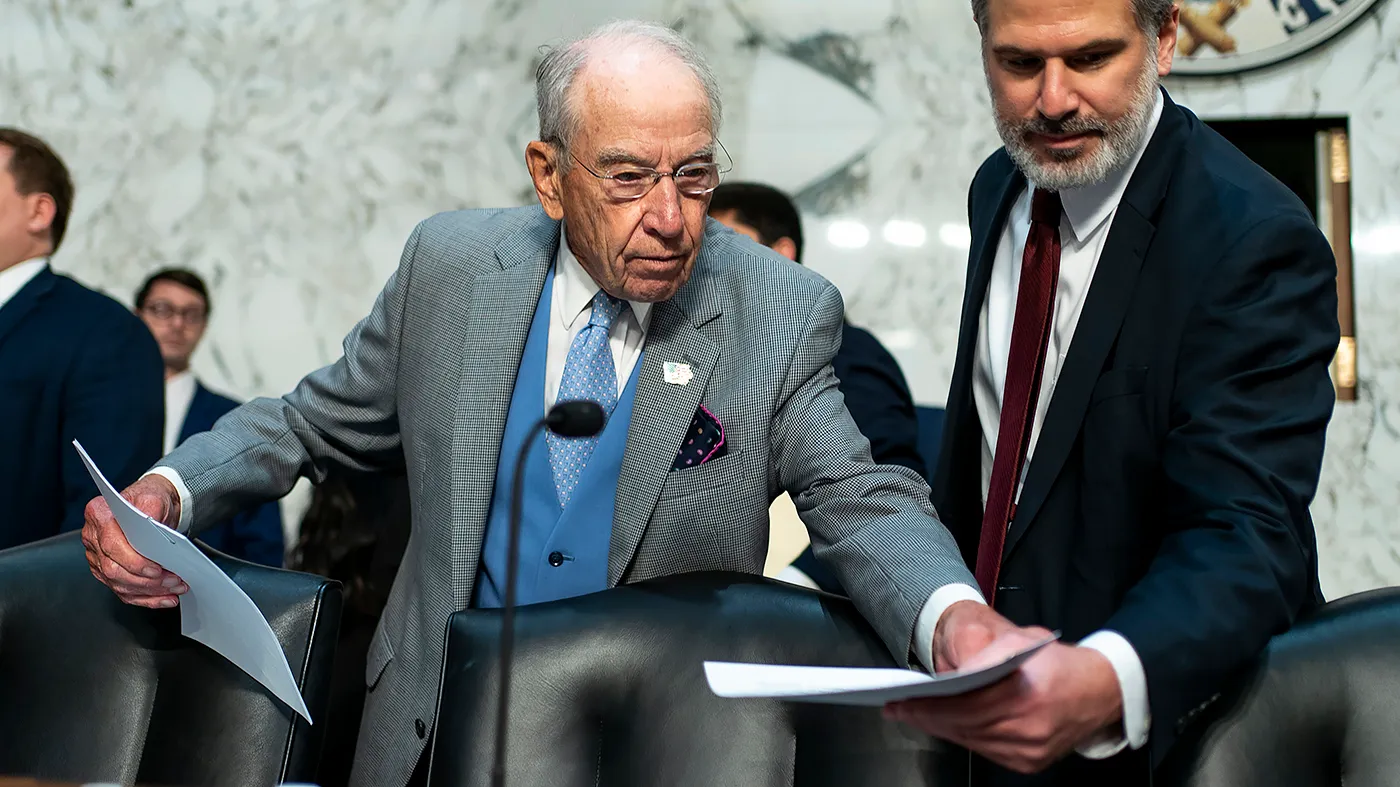
Senate Republicans are clashing over a proposal endorsed by Sen. Chuck Grassley (Iowa) and other farm-state Republicans to embargo the export of diesel to increase supply and lower prices at home, something U.S. leaders last implemented during the 1970s energy crisis.
Senate Majority Leader John Thune (R-S.D.) is open to the idea, but oil-state Republicans have slammed the proposal as a “gimmick.”
The soaring cost of diesel is putting political pressure on Republicans in farm states such as Iowa, Kansas and Nebraska, where Democrats now have a chance to win Senate seats that weren’t viewed as competitive a year ago.
The double whammy of President Trump’s global trade war, which has impacted commodities such as pork and soybeans, and the mounting cost of fuel and fertilizer has put farmers in a foul mood, and some Senate Republicans fear an angry backlash in key red states.
“Why doesn’t Pres Trump put an embargo on diesel exports like presidents in the 70s put embargoes on ag[riculture] products bc [because] food prices were inflated,” Grassley posted on social media over the weekend.
“High diesel prices ARE KILLING FARMERS INCOME,” he declared.
Rep. Ashley Hinson (R-Iowa), who is neck and neck with her Democratic opponent Josh Turek in the polls, endorsed an embargo on diesel exports Monday and blamed Trump’s months-long war with Iran for pushing up fuel prices.
“Iowans are being squeezed and shouldn’t have to foot the bill at the pump or the checkout line for the war in Iran. We need to use every option at our disposal to provide some relief from high prices,” Hinson posted Monday on social platform X.
She called for suspending the gas tax, pausing diesel exports and loosening restrictions on gas with higher blends of ethanol.
Thune said he’s open to the idea of limiting diesel exports, an echo of the mid 1970s when the Ford and Carter administrations halted most crude oil exports to stabilize prices in response to the oil shock created by the oil embargo imposed against the United States by members of OPEC.
“The export ban, honestly, makes probably more sense to me. I think that suspending the [gas] tax is a short-term thing and then you create holes in the Highway Trust Fund,” he said.
Thune, however, said the best solution would be for Trump to find a way to reopen the Strait of Hormuz, through which a quarter of the world’s seaborne oil supplies once traveled, as soon as possible. Iranian threats have slowed shipping traffic through the strait to a trickle.
Agriculture Secretary Brooke Rollins discussed diesel prices with Trump on Monday, signaling the Trump administration is taking the issue of soaring fuel costs in farm states seriously.
Asked about a proposal to ban diesel exports, Senate Republican Whip John Barrasso (Wyo.) told NBC’s “Meet the Press” on Sunday that Trump “is considering a number of different things that he can do.”
But Republicans from oil-producing states are pushing back hard on the proposed diesel export ban, which could depress prices for producers based in their home states.
“It’s a gimmick,” said Sen. John Cornyn (R-Texas), who represents the biggest oil-producing state in the nation.
Mike Sommers, the president and CEO of the American Petroleum Institute, warned that pausing the export of diesel would “make the problem worse” because it would lead to a glut of supply in Gulf Coast states and could make costs rise in other parts of the country because of imbalances in the broader oil market.
“Americans are hurting from rising diesel prices, and policymakers are understandably searching for answers. But restricting U.S. diesel exports would make the problem worse, not better — for consumers, farmers and the broader U.S. economy,” Sommers posted on X.
“Most U.S. diesel production is concentrated on the Gulf Coast, which produces more fuel than the region can consume. Meanwhile, other parts of the country rely on imports because of geography and infrastructure constraints,” he said.
Sen. Lisa Murkowski (R-Alaska) was cool to the idea of an oil export ban when asked about the idea early last week.
Murkowski sounded more receptive to the idea later in the week but expressed concern that shutting down oil exports might not “move the needle.”
“We actually produce more than we consume here, produce more diesel in this country than we consume,” she said. “We’re talking about global supply, so I worry that we do something in the short-term … that doesn’t really move the needle.
“It sounds interesting and intriguing as, ‘OK, what are we going to do if we’re facing high prices?” she added.
Murkowski played a role in lifting the 1970s-era oil export ban more than 10 years ago.
“We have seen the prices of fuel and related products — diesel, other refined products, fertilizer — we’ve seen all that rise as a consequence of what we’re seeing in Iran,” she said.
Residents of Alaska are now spending more than $3,000 annually per capita on diesel and home heating oil, more than residents of any other state in the country.
The United States had an oil export ban in place for 40 years, from 1975 to 2015, and then lifted it after domestic oil production boomed because technological advances enabled U.S. companies to extract oil from shale reserves more efficiently.
The lifting of the export ban was supported at the time from now-Sens. Cynthia Lummis (R-Wyo.) and Kevin Cramer (R-N.D.).
Other Republicans argue it would make more sense to pursue other options, such as reopening two large refineries in California.
“I’d want to see how they would do it,” Sen. Mike Rounds (R-S.D.) said of a potential ban on oil exports.
“The bigger problem we’ve got right now is, as I understand it, in California we’ve already lost two more refineries because of California’s strict environmental rules,” he said. “They’ve shut down two more refineries. I would like to get those back up and operational again.
“That might very well help a lot of our domestic needs right here in the United States. It seems to me that refining is going to be a bigger issue here than a lot of people thought.”
Barrasso warned that banning diesel exports is a complex issue given the interconnected web of economic transactions across the United States. He argued that high diesel prices would be temporary because of the conflict with Iran.
“What we do in Wyoming, you know, we import diesel from Canada. We refine it and then send it back. So the president will consider a number of things,” he said.
“What we need to do is when the war is over, prices are going to come down and stay down significantly,” Barrasso predicted.
National average diesel prices hit an all-time high Monday, reaching $6.51 cents per gallon.
Diesel cost $3.52 a gallon on average before the United States and Israel launched strikes against Iran, which led to a months-long conflict that has dramatically slowed oil shipments through the Persian Gulf.
Topics in this story
Gathered from external sources. Rights to this text belong to whoever originally published it.