The FDA cannot inspect its way to a safe global food supply
In a country divided on nearly everything, there should be nothing controversial about this: Americans deserve safe food, regardless of where it is produced. The question is how best to ensure it.
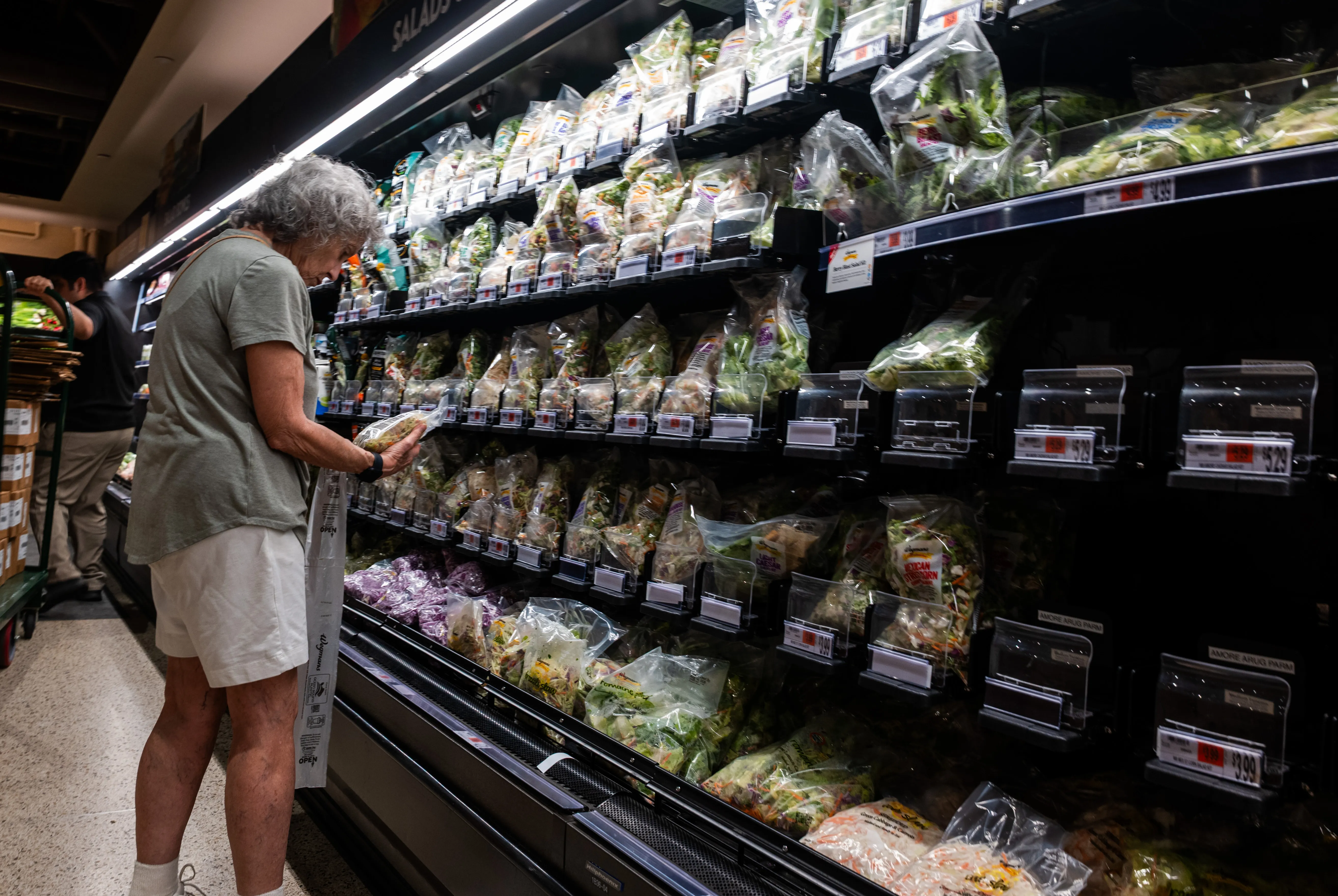
Two major outbreaks involving imported produce have again tested Americans’ confidence in the safety of their food. A multistate cyclospora outbreak linked to iceberg lettuce from central Mexico sickened 9,481 people. A salmonella outbreak linked to jalapeño peppers from Sinaloa has sickened 345 people and triggered numerous downstream recalls .
In a country divided on nearly everything, there should be nothing controversial about this: Americans deserve safe food, regardless of where it is produced. The question is how best to ensure it.
Americans expect fresh fruits, vegetables and seafood year-round. Meeting that demand requires importing enormous quantities of food through increasingly complex global supply chains. Our food-safety system needs to adapt .
One longstanding element of the Food and Drug Administration’s imported-food safety strategy relies on a surprisingly old-fashioned approach: sending American investigators around the world to inspect individual foreign food-processing facilities. It is the regulatory equivalent of the Lone Ranger riding into town to handle the problem himself. It is also wildly ineffective.
Congress reinforced that approach with the Food Safety Modernization Act . The foreign-inspection target eventually reached 19,200 facilities annually — a level the FDA itself has called unrealistic and unachievable . The agency has proven itself right many times over.
According to a 2025 Government Accountability Office report, the FDA averaged just 917 foreign food-safety inspections annually from fiscal 2018 through 2023 — less than 5 percent of its target. Even in 2019, when the agency conducted 1,727 inspections, it reached only about 9 percent of the target.
The predictable response is to call for more inspectors, more money and more inspections. But that misses the larger problem. The FDA is relying too heavily on a model that no amount of additional staffing can make scalable.
Imports account for about 15 percent of the U.S. food supply, including 32 percent of fresh vegetables, 55 percent of fresh fruit and 94 percent of seafood. That food comes from more than 200 countries and territories and roughly 125,000 foreign food facilities, plus farms.
Foreign inspections are not the FDA’s only defense. The agency also relies on importer requirements such as the Foreign Supplier Verification Program , along with border screening, examinations, sampling, testing, import alerts and enforcement. Yet Congress continues to emphasize an inspection target bearing little relation to what the FDA can realistically accomplish.
There is another model worth examining. The European Union places substantial reliance on exporting countries and their “competent authorities,” combined with European oversight and risk-based border controls. For many imported foods, exporting countries must demonstrate that their production and control systems comply with EU requirements. Official certificates are issued by the exporting country’s competent authority.
European authorities use audits and other oversight to evaluate national control systems, while border controls provide another layer of protection. The central question is broader than whether one processor complied on the day of an inspection: Does the country’s food-safety control system work?
That is fundamentally different from sending an American investigator overseas primarily to determine whether a single processor complies with U.S. requirements. The U.S. need not copy the European system, but its central principle deserves consideration.
The FDA already recognizes this principle. Its Systems Recognition program evaluates whether other countries operate a comparable food-safety regulatory system and allows the FDA and its foreign counterparts to leverage one another’s regulatory systems and redirect resources based on risk. Yet the FDA currently has Systems Recognition arrangements only with Australia, Canada and New Zealand — countries that already have robust food-safety systems.
Those arrangements can conserve agency resources, but they do relatively little to address the more difficult challenge: ensuring the safety of food coming from major exporting countries where regulatory capacity or compliance may require greater FDA attention.
That is where the greater opportunity lies. The FDA should work with competent authorities in major food-exporting countries to identify weaknesses and strengthen their ability to oversee the farms and processors supplying the U.S. market.
The FDA has already demonstrated how such collaboration can work. In August 2023, it established its first Regulatory Partnership Arrangement with Ecuador for aquacultured shrimp exported to the U.S. The arrangement is designed to leverage Ecuador’s commodity-specific regulatory oversight and allow the governments to exchange information, including inspection records and sampling findings.
Importantly, the FDA itself is now moving in this direction. Its 2026 Human Foods Program priorities explicitly call for the agency to “leverage foreign competent authorities” responsible for food offered for import into the United States. The FDA identifies the Food Safety Partnership with Mexico, Regulatory Partnership Arrangements and Systems Recognition as priorities. For imported shrimp, the FDA says it will advance regulatory partnerships with leading shrimp-exporting countries such as India.
The partnership with Mexico is particularly relevant to the current produce outbreaks. The FDA’s Food Safety Partnership with Mexican agencies grew out of a produce-safety partnership established in 2014 and was expanded in 2020 to cover all FDA-regulated human food. The FDA says that roughly one-third of FDA-regulated human food imported into the U.S. comes from Mexico, including 60 percent of U.S. fresh-produce imports.
Direct FDA inspections remain an important tool, but they should be targeted where they provide the greatest value: high-risk foods, weaker regulatory systems, facilities with poor compliance histories, emerging hazards and verification that foreign authorities are doing their jobs.
For countries with developing food-safety systems, the FDA should combine oversight with technical assistance, training and capacity building. And where governments cannot or will not provide adequate oversight, the FDA should retain its full arsenal of inspections, border examinations, sampling, import alerts and enforcement.
Congress and the FDA should rethink a foreign-inspection strategy built around a numerical target that the FDA itself says is unrealistic. The objective should not be maximizing the number of American inspectors sent overseas but maximizing protection for American consumers.
Brett Koonse worked at the U.S. Food and Drug Administration for 31 years as a food-safety official and founded All Things Seafood, LLC.
Topics in this story
Gathered from external sources. Rights to this text belong to whoever originally published it.