Meet Stephen Miller, Trump’s new chief of staff: 5 things to know
President Trump announced Friday that longtime White House aide Stephen Miller would be his next chief of staff, replacing Susie Wiles — who has served in the role since Trump returned to office. Miller is an immigration hardliner and Trump loyalist who has been with the president since he launched his first campaign. The promotion…
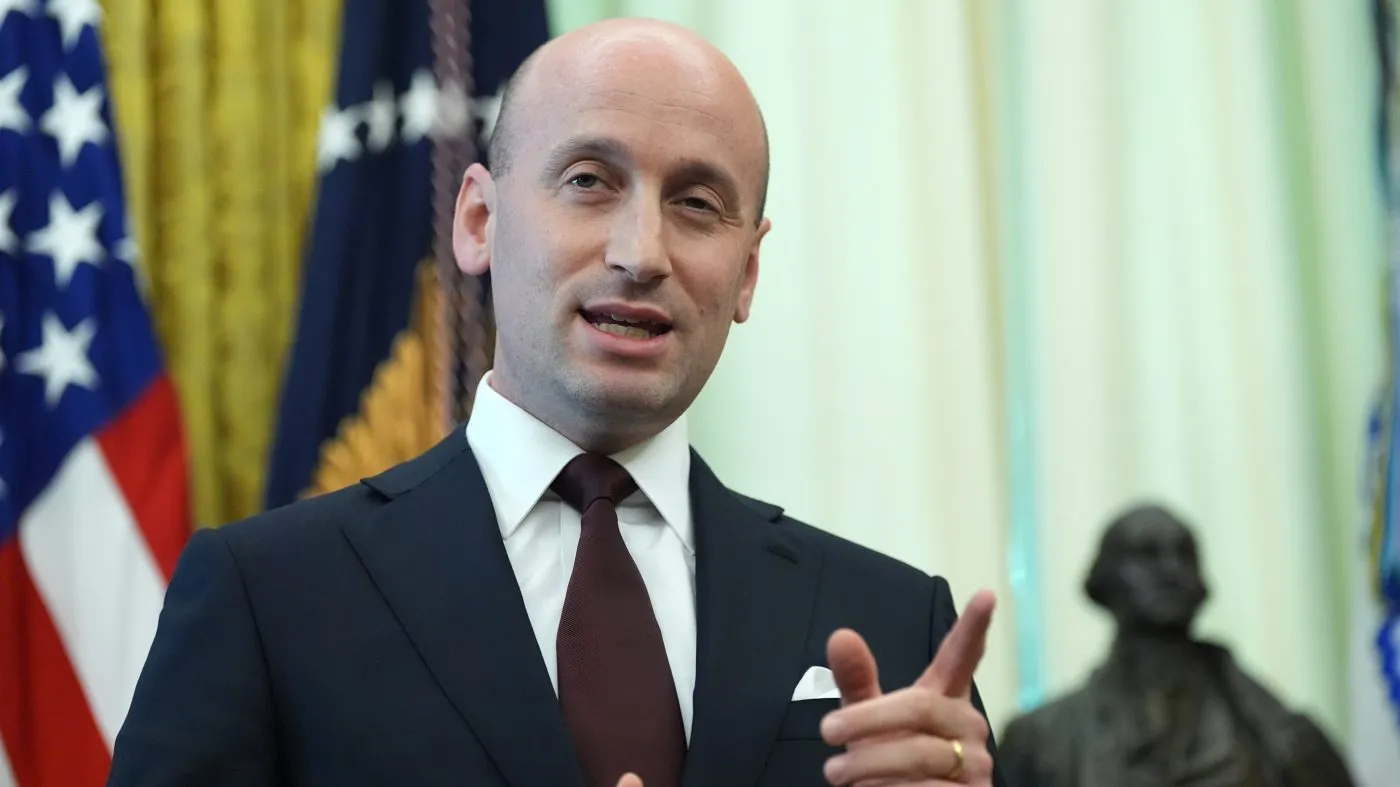
President Trump announced Friday that longtime White House aide Stephen Miller would be his next chief of staff, replacing Susie Wiles — who has served in the role since Trump returned to office.
Miller is an immigration hardliner and Trump loyalist who has been with the president since he launched his first campaign. The promotion was highly controversial among Democrats and even some Republicans, who see Miller as partly responsible for the GOP’s midterm losses, when the part lost control of the House and Senate and Democrats won large majorities.
Here are five things to know about Stephen Miller.
Miller started his career in Washington working as a press secretary for Rep. Michele Bachmann (R-Minn) in 2007 and later for Rep. John Shadegg (R-Ariz.). In 2009, he served as Alabama Sen. Jeff Sessions’s press secretary before moving up the ranks — becoming his communications chief.
Miller pushed Sessions to become more outspoken and combative, especially on the issue of immigration. He helped Sessions kill a bipartisan immigration reform bill in 2013 by writing a handbook to help lawmakers defeat it.
Behind the scenes, Miller carved out an inside-the-Beltway reputation as a hard-charging press aide, frequently battling with reporters and others in Washington.
When Trump announced his run for the presidency in 2015, Sessions became the first senator to endorse him. The Alabama senator went onto to serve as the president’s attorney general during his first stint in the White House.
But Sessions eventually fell out with Trump after recusing himself from investigations into Trump’s 2016 presidential campaign and election win.
Miller, in contrast, became a part of Trump’s inner circle and was a confidant to the president for the rest of his first term, his years out of office and during his second term.
Miller is considered the architect behind much of Trump’s immigration policies — most recently his administration’s mass deportation efforts.
As deputy chief of staff for policy, Miller pushed the administration to suspend habeas corpus rights, which allow people in custody to challenge their detention, and triple its daily immigration arrest goals to 3,000.
One of the administration’s most high-profile immigration blitzes in Trump’s second term was “Operation Metro Surge” in Minneapolis, during which federal agents fatally shot two American citizens. Miller at the time called both victims “domestic terrorists.”
In the first Trump administration, Miller was also a primary advocate of the administration’s family separation policy.
Before his promotion to chief of staff, Miller was already in the president’s ear as a key policy adviser. He will now be one of the top voices in the Trump White House and among other influential people in Washington.
Miller is one of the only aides from Trump’s first term to be serving in a high role in his second term. He has a deep understanding of how Washington runs, and is known to dig deep into policy matters. His background as a Senate aide gives him a strong understanding of how Congress works, and on how executive authority can be used to assert presidential power.
During debates over legislation affecting immigration, Miller was seen as having a big influence on the stance Republicans took. He is known as a detail-oriented aide who reads briefs, asks questions and demands results.
As chief of staff, Miller will be able to have his fingers on everything the White House touches. Wiles, the outgoing chief, was seen by some as a brake on Miller. With her gone, that brake would be lost just as Miller takes what has histocially been seen as the second most powerful role at the White House, behind only the president himself.
The chief of staff works closely with the president on day-to-day operations and manages the White House staff. It can be a gatekeeper role for how sees the president and can be a position involved in all policy decisions, depending on the individual chief of staff.
It is a role that does not require Senate confirmation.
Miller’s wife, Katie Miller — a GOP political adviser and podcaster — has also established herself during Trump’s time in office and is well-connected in Republican circles. During the first term, she served as communications director and press secretary to then Vice President Pence.
When Trump returned to office, Katie Miller became an adviser to the controversial Department of Government Efficiency (DOGE), an Elon Musk-led initiative to slash government spending and reduce the size of the workforce.
Katie Miller now hosts a podcast , “The Katie Miller Podcast,” directed at conservative women.
Many in the president’s orbit have come and gone over the past decade — including Wiles, who had a brief falling out with Trump before returning to run his campaign in 2024.
But Miller has remained loyal the entire time, from the 2016 campaign to both his terms in the White House.
When Trump lost reelection in 2020, Miller co-founded America First Legal , a conservative nonprofit advocating for dismantling diversity, equity and inclusion (DEI) programs, enforcing immigration laws and protecting election integrity.
Miller rejoined Trump’s 2024 campaign and returned to the White House right away as deputy chief of staff for policy and an adviser on homeland security.
While most of the criticism around Miller’s promotion came from Democrats, some Republicans questioned whether Trump was making the right choice in light of sweeping midterm losses.
No critic of Miller in the GOP is louder than Sen. Thom Tillis (R-N.C.), who told the president to “rethink” his decision to promote the deputy chief. The North Carolina Republican has repeatedly criticized Miller’s immigration stance and accused him of giving the president bad advice.
“It is a colossal mistake, and the last thing we need 72 hours after the a– whooping we got on Tuesday,” Tillis told CNN Friday.
Even some former Trump administration officials questioned the move.
Sarah Matthews, a former deputy White House press secretary, called the notion of replacing Wiles with Miller “terrifying.”
Another former Trump administration official told The Hill Miller’s promotion is “exactly the opposite” direction from what voters demanded.
“It’s exactly the opposite direction voters are begging Republicans to go. Susie was the best thing that happened to President Trump,” the official said.
A former Trump chief of staff said choosing Miller is not likely to help the president forge a working relationship with the new Democratic majority.
Topics in this story
Gathered from external sources. Rights to this text belong to whoever originally published it.