Results from Latino voters should make the GOP course correct, not despair
Wishful thinking that overstates the meaning of short-term shifts risks obscuring the unstoppable assimilation that is remaking Latino populations from within.
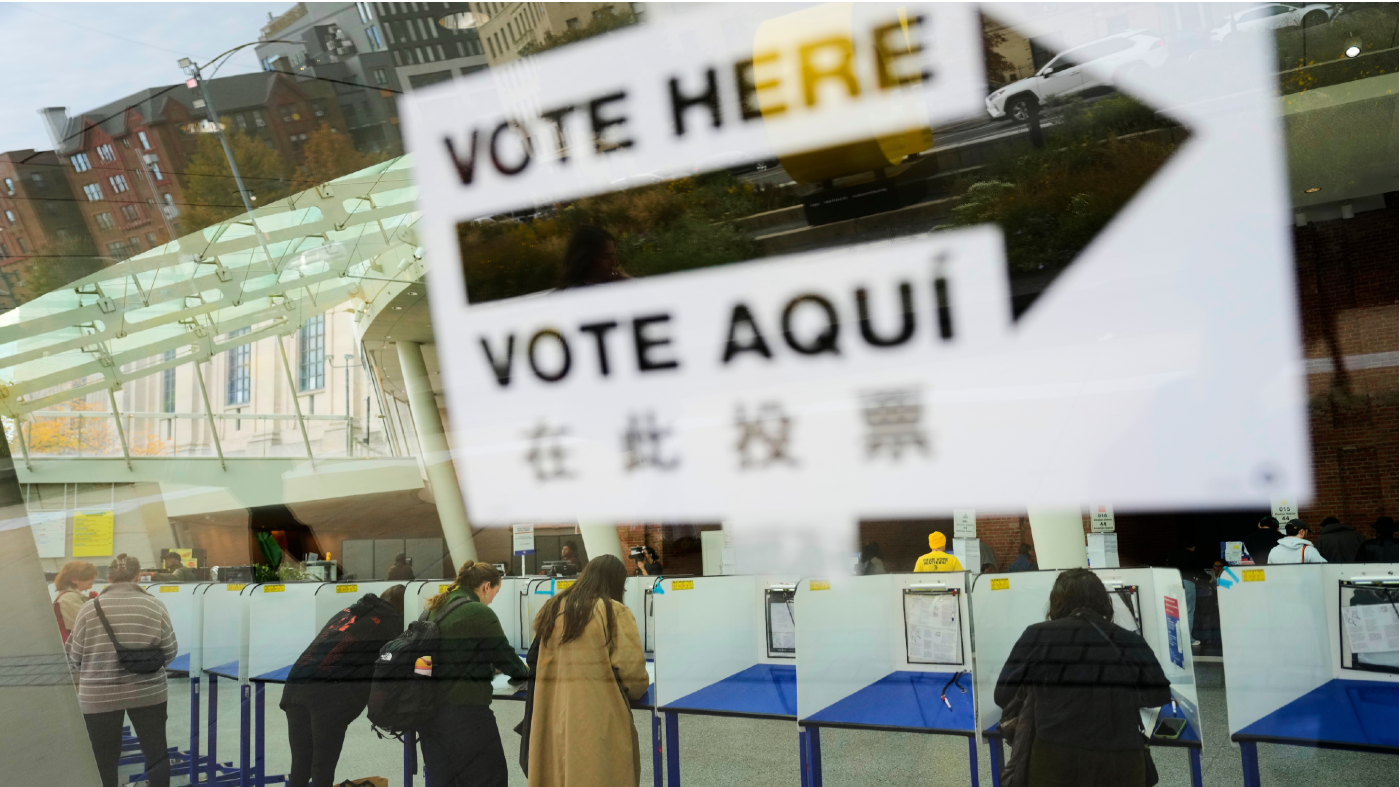
As the polls predicted , the decade-long movement of Latino voters toward the Republican Party came to an end on Nov. 3. That’s a big deal given that almost 15 percent of eligible voters in our closely divided nation are Latino. The fact that we are not currently deep into the second year of a Kamala Harris administration owes something to the 14 percentage point swing by Latinos toward the GOP in 2024.
But the exit polls indicate that from 2024 to 2026 , the Latino vote for Republicans declined from 46 to 33 percent and increased for Democrats from 51 to 65 percent. The historically low five percentage point Democratic advantage in the Harris-Trump race rebounded to a 32 percent margin in the midterms.
This is sure to tempt progressive pundits, activists and academics into believing that Latinos are supposedly coming home to the Democrats. After watching their “ demography as destiny ” dream collapse across the last half dozen election cycles, progressives are hungry for good news.
But a word to the wise: Wishful thinking that overstates the meaning of short-term shifts risks obscuring the unstoppable assimilation that is remaking Latino populations from within .
Understanding the Latino vote requires attention to two separate dimensions of change. Along the first are long-term shifts in partisanship that occur when any population moves toward the American mainstream. Along the second run, the day-to-day political dynamics that shape elections, particularly the economy but also the foreign and domestic policy issues prominent in any cycle.
The key point is that short-term fluctuations in the Latino vote, as we just saw, do not contradict the longer-term changes in the population’s political orientations. Quite the contrary, in fact. When Latinos in a specific election move toward the Democrats in response to issues that generally shape the American electorate, this is exactly what we would expect from a population becoming less distinct with each election cycle.
This November, Latinos were not voting for the Democrats as much as against a GOP that is associated with three toxic I’s: inflation, Iran and ICE — Immigration and Customs Enforcement. These issues are important to all Americans, although two characteristics of the contemporary Latino electorate are likely responsible for the shift this year.
First, the electorate is disproportionately young and working class . About 1 million Latinos turn 18 every year , so in these precarious times, it’s no surprise that 70 percent of Latinos prioritized the economy in 2024.
Second, the Latino electorate has a disproportionately large share of new voters with relatively weak partisan attachments , so it is less likely to stick with any party out of loyalty or habit.
Taken together, these two factors lead to a ruthless and retrospective Latino electoral calculus: Deliver economically or pack your bags. With Republicans in control of the White House and both chambers of Congress, it was clear to Latino voters who should be held accountable for the economic harm caused by inflationary tariffs, wars of choice and the deportation of non-criminal immigrants.
But these short-term factors are joined by a long-term dynamic: A Latino electorate that is socially and economically moving toward the mainstream . And as Latinos become more like other Americans, they will increasingly respond to the policy agenda that dominates the mainstream rather than acting as a distinct electorate. Given that the ideological middle in America remains the center right , this is bad news for Democrats.
In this, Latinos are traveling a well-worn path. A century ago, Italian , Polish and other European Catholic immigrants largely began their American political lives as Democrats. But over time, they assimilated and came to value the GOP’s message about economic prosperity and social mobility over ethnic group appeals. The Latino population is undergoing a similar transition .
As the midterms clearly showed, Republicans cannot make the Democratic mistake of taking Latino voters for granted. For starters, a population that continues to have strong immigrant roots creates challenges for a GOP that has been captured by its nativist wing. While many Latino American voters were amenable to Trump’s pitch on curtailing new immigrant arrivals, on Election Day they voiced their opposition to aggressive policies that deport long-established but unauthorized Latino immigrants.
If Republicans want to get back to building on their gains with a Latino electorate that was naturally moving in their direction just two years ago, they need to understand that Latino support comes with caveats . Policies that economically harm Latinos and target them for elevated policing and surveillance will give electoral opportunities to Democrats in any election year — 2026 being a perfect example — regardless of long-term trends.
The Democrats’ post-2024 course correction, which saw a focus on bread-and-butter economics and the reemergence of Blue Dog politics, stands as a lesson for Republicans. The task for the GOP is to take this electoral disaster as an opportunity for honest reflection, not for despairing about the Latino vote or doubling down on harmful domestic and foreign policies.
If a traditional Ronald Reagan-style conservatism reemerges in the GOP after the blue tsunami, reorienting the party toward economic prosperity and individual liberty, this will help the GOP regain lost Latino, and non-Latino, voters.
David L. Leal is a senior fellow at the Hoover Institution and a professor of government at the University of Texas at Austin. Alvaro Corral is an assistant professor at The University of Texas – Rio Grande Valley.
Topics in this story
Gathered from external sources. Rights to this text belong to whoever originally published it.