Trump’s attacks on NBC’s Welker raise pressure on FCC
President Trump’s threat to have the Federal Communications Commission (FCC) punish “Meet the Press” moderator Kristen Welker over her reporting on the president’s primary endorsement record has renewed concerns about the commission’s independence and the lengths Trump will go to control press coverage of his administration. Welker angered the president on Sunday while teasing an…
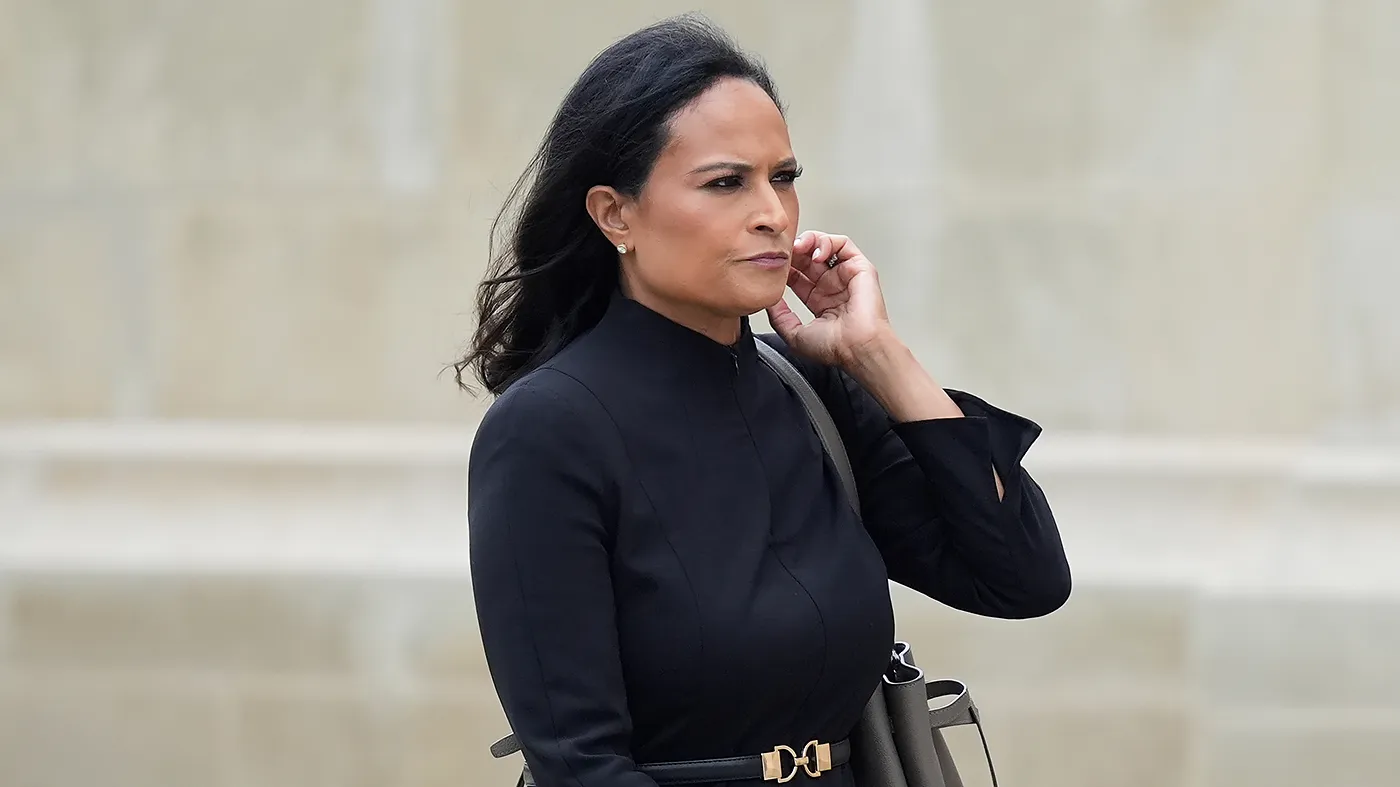
President Trump’s threat to have the Federal Communications Commission (FCC) punish “Meet the Press” moderator Kristen Welker over her reporting on the president’s primary endorsement record has renewed concerns about the commission’s independence and the lengths Trump will go to control press coverage of his administration.
Welker angered the president on Sunday while teasing an upcoming episode of NBC News’s flagship Sunday show on its Washington, D.C., affiliate earlier that day. The journalist said Trump is “going to loom large over” this fall’s midterm elections, noting candidates who have been backed by him have experienced “mixed results.”
The comment incensed the president , who wrote on Truth Social hours later that Welker would “be reported to the FCC for rebuke or punishment” for what he called “purposeful inaccuracy.”
“How can anyone be allowed to say this, working for freely given Public Airwaves?” Trump wrote.
Jill Olmstead, an associate professor at American University’s School of Communication, called Sunday’s episode between Trump and Welker “alarming,” noting it “distorts” the FCC’s “fundamental role.”
“He once again threw a verbal tantrum over Welker’s use of factual information about his mixed endorsement record, attacking the journalist rather than addressing the facts,” Olmstead said. “His playbook has now worn thin and is recognized as the distraction that it is.”
A spokesperson for NBC said in a statement to The Hill, “Kristen is one of the best in the business and we stand by her.”
Sunday’s episode gets to the heart of what has become a recurring theme between the president and top news outlets during Trump’s second term: applying pressure on leading broadcasters through the regulatory power of the FCC, historically an independent commission.
The FCC is chaired by Brendan Carr, a conservative communications media lawyer who, like the president, is a frequent critic of mainstream news outlets. Carr raised eyebrows in December when he said “formally speaking” the FCC is not an independent agency.
The backlash to Trump’s post about Welker was swift on Sunday, and Carr has not weighed in publicly on the president’s plans to “report” the NBC anchor to the commission.
“As I’ve said many times, the FCC has no authority to punish journalists this administration doesn’t like,” Anna Gomez, the lone Democratic FCC commissioner, wrote on social media . “These threats to press freedom are dangerous. They undermine the foundation of our democracy, and they have no place in it.”
The FCC did not respond to a request for comment on Trump’s remarks about Welker, but they follow a months-long span of tensions between the regulator and some of the nation’s largest news broadcasters.
Carr has repeatedly questioned whether networks that air coverage he sees as critical of the president are using federally regulated airwaves in the “public interest.” He has reopened previously litigated news distortion complaints against outlets like NBC and appeared regularly on conservative-leaning outlets like Fox News to defend his actions.
And Carr late last year launched investigations into the diversity, equity and inclusion hiring practices of both NBC and ABC, and has praised the retooling of CBS News under controversial editor Bari Weiss, an appointee of Trump ally and billionaire David Ellison.
Carr’s decision earlier this year to recall the broadcast licenses of several local ABC affiliates up for early renewal landed the federal government in court, with the Disney-owned broadcaster alleging the department is attempting to punish the company over its programming.
Critics see the president as ramping up his usage of the FCC as a tool to intimidate journalists and Democrats ahead of the midterm elections. Carr, these observers say, is a willing participant in that effort.
“Even if the FCC gets an instruction from the president that is on its face unconstitutional, the chairman gets the message and can figure out a way to creatively use the FCC’s regulatory power to put pressure on the offending media company,” said Conor Gaffney, an attorney at the left-leaning political nonprofit Protect Democracy.
Trump’s frustration with Welker dates back years but has picked up significantly in recent months. Earlier this summer, he walked out of a sit-down interview with her after she pressed him about an unfounded claim that the California gubernatorial primary was “rigged.”
He also attacked her after she questioned a Republican lawmaker on “Meet the Press” about the Signal chat leak of Pentagon attack plans.
While the attacks may excite some in Trump’s base, one national Republican strategist said the attacks on the media were more likely to elicit exhaustion from most voters.
“I mean it’s starting to become eye-rolling at this point,” the strategist told The Hill on Monday. “Like, when was the last time a politician got glowing reviews from the media? Plus, what she said was accurate. I don’t see it. There’s just a lot of diminishing returns on this stuff when it comes to going after the media.”
Topics in this story
Gathered from external sources. Rights to this text belong to whoever originally published it.