Democrats: Don’t fear the veto
If Democrats want to hamper the public’s approval of President Trump and his party, they should pursue energetic initiatives despite his veto threats.
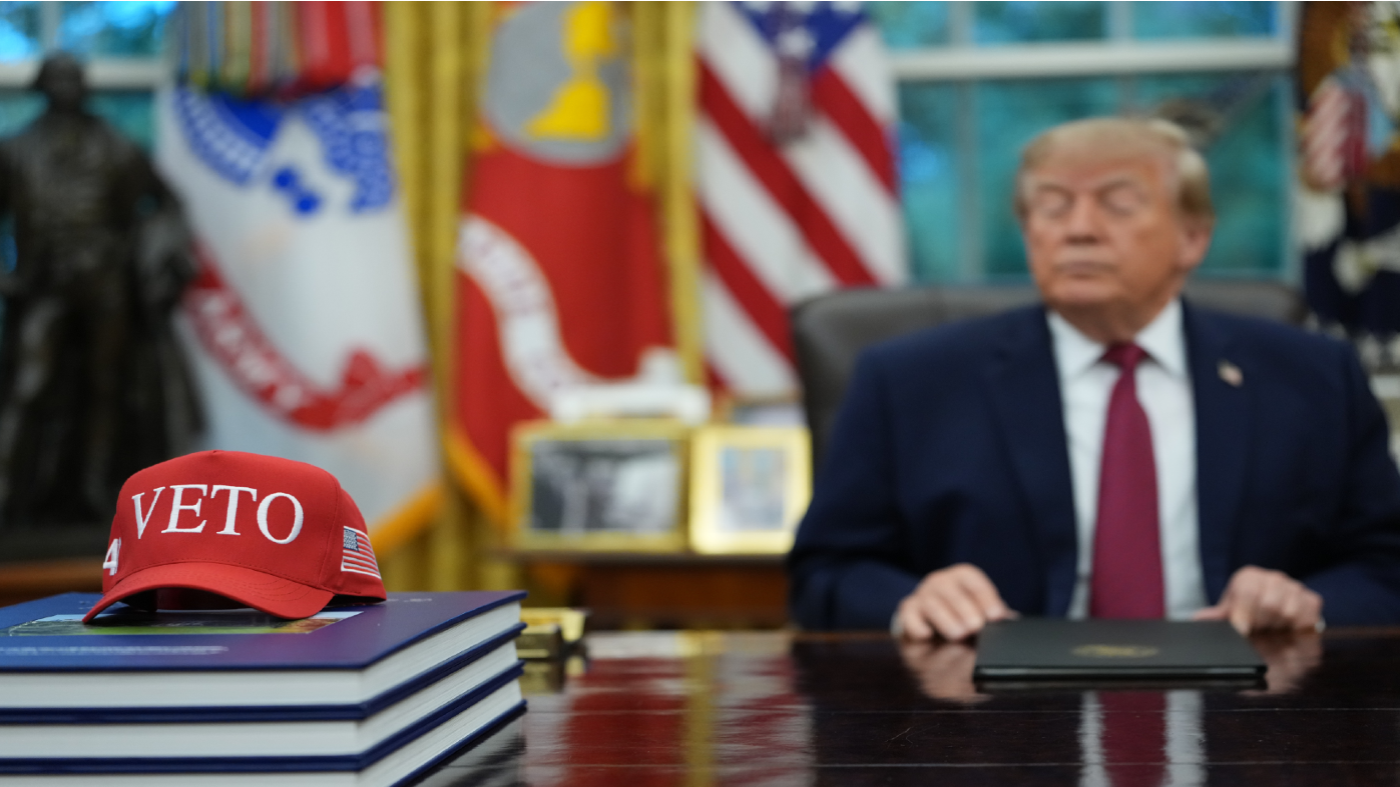
Since Democrats’ decisive victory in the midterm election, President Trump has added a new decoration to the Oval Office: a red hat emblazoned with the word “VETO.” Although Democrats will control Congress come January 2027, Trump’s threat to become “Mr. Veto” and “veto everything” has sparked lively internal debate concerning how they should legislate in anticipation of presidential opposition.
Some, like Sen. Brian Schatz (D-Hawaii), argue that the party should not make proposals that Trump “is guaranteed to veto” because that would be “wasted energy.” Others, like Rep. Greg Casar (D-Texas), assert Democrats should pursue ambitious legislation and make the president use his veto on their “popular, pro-affordability policies.”
Recent political science scholarship on presidential vetoes suggests Democrats like Casar have a point. While Trump may veto legislation they pass, forcing the president to use his veto can be politically beneficial because it erodes public support for him and his party, which could position Democrats for further victories in 2028. However, in pursuing this strategy, Democrats should focus on policies with broad popular support and not make their provocations too obvious.
Central to Americans’ notion of democracy is that majorities rule , and when Congress passes legislation, it does so with the support of majorities of the people’s representatives. Given Democrats’ historic margins of victory , the size of the coalitions passing legislation for the next two years will far exceed the bare majorities required. This imprimatur of majority support poses a challenge for presidents like Trump who want to block legislation. By exercising their veto, they risk appearing to obstruct the popular will.
This obstruction can damage presidents’ public standing for two reasons. First, the choice to unilaterally block policies can trigger Americans’ skepticism of excessive executive power. Indeed, recent studies show only roughly half of Americans support the president’s ability to veto legislation. Further, people are more likely to oppose a president’s veto when they disapprove of him. Since Trump’s approval rating is at a historically low level , many people would likely react negatively should he use his veto pen.
Second, when a president vetoes legislation, the public often perceives him to hold extreme preferences out of step with its policy priorities. Consequently, presidents who issue vetoes often see their job approval decline. For instance, Tim Groseclose and Nolan McCarty have shown that presidents’ approval ratings fall by about 2 percentage points each time they veto major legislation during divided government.
These findings suggest that if Democrats want to hamper the public’s approval of Trump and his party, they should pursue energetic initiatives despite his veto threats. However, this strategy’s success depends on which policies Democrats pursue and how well they frame their efforts as sincere attempts to legislate.
First, in order to frame the president’s veto as out of touch with public opinion, Democrats must ensure the underlying policy is popular. As Andrew Reeves and his coauthors show , when a president vetoes an unpopular bill, his approval rating can stay steady or even increase. In this scenario, the president can cast his veto as protecting the public from a disfavored policy and perhaps erode Congress’ public support.
Therefore, Democrats would benefit more from eliciting a veto on a popular initiative like restoring Affordable Care Act subsidies rather than on something more controversial, such as increasing taxes on the wealthy .
Second, if the public thinks Congress knew the president would veto the legislation, they may punish Congress for prioritizing political gamesmanship over advancing practical policies that would improve their lives. Ryan Williamson and Joel Sievert demonstrate people are more likely to blame Congress than the president when a veto occurs if told Congress knew the president would exercise his veto. As Democrats pursue legislation likely to draw Trump’s veto, they must frame their actions as good faith policymaking rather than cynical provocations.
Democrats, don’t fear the veto. As long as you pass legislation the public supports and do so as a serious exercise in governance, Trump’s vetoes are likely to depress public support for him and the Republican Party while helping you promote your agenda for 2028.
And, hey, if Trump decides the political costs of vetoes are too high and your proposals become law, you’ll get some policy wins earlier than expected.
David Miller is an assistant professor in American University’s Department of Government.
Topics in this story
Gathered from external sources. Rights to this text belong to whoever originally published it.