DOJ maneuver on unconfirmed US attorneys inches closer to Supreme Court
A legal maneuver repeatedly used by the Department of Justice (DOJ) to install acting U.S. attorneys without Senate approval may be inching closer to the Supreme Court. Two appeals court panels ruled last week the DOJ cannot sidestep the confirmation process by changing someone’s title or handing them the duties of the top prosecutor. It marks…
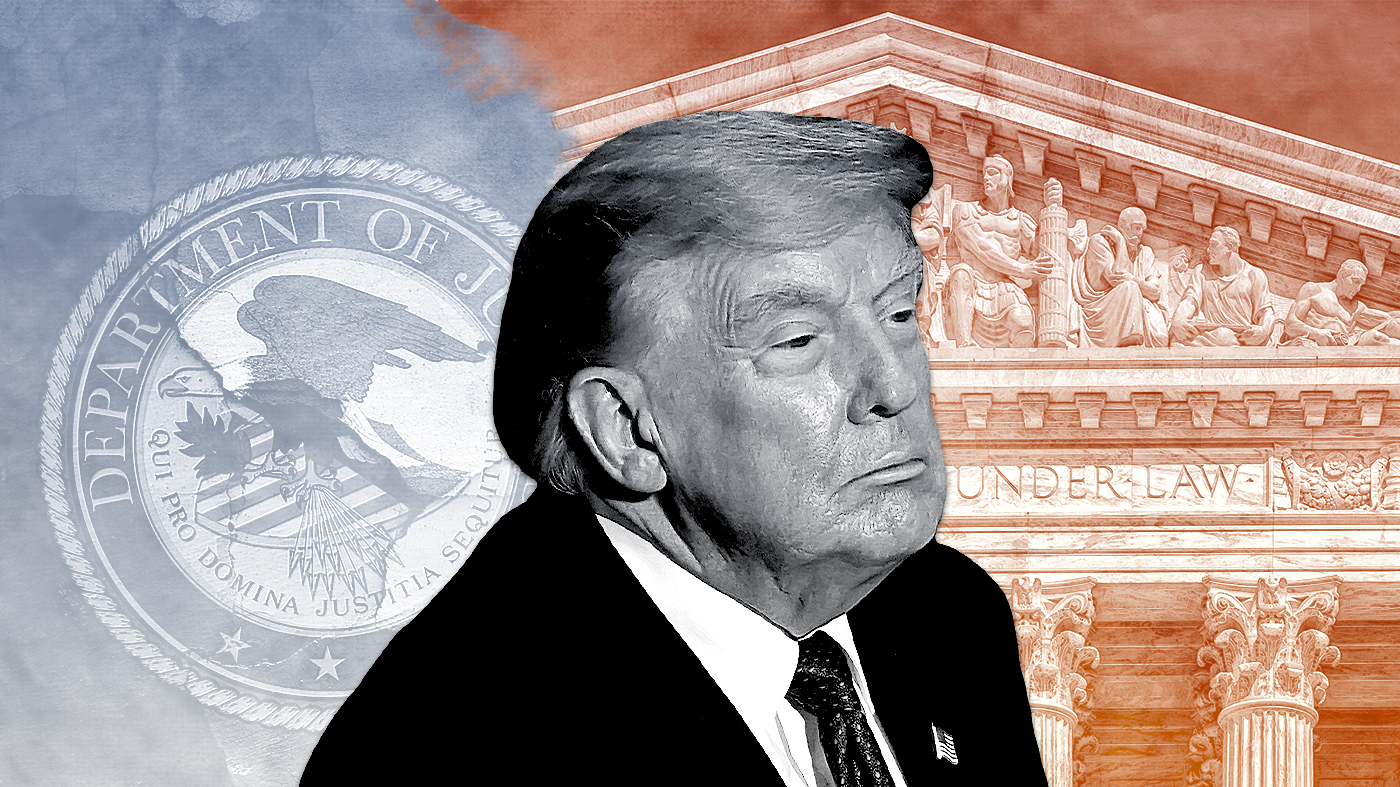
A legal maneuver repeatedly used by the Department of Justice (DOJ) to install acting U.S. attorneys without Senate approval may be inching closer to the Supreme Court.
Two appeals court panels ruled last week the DOJ cannot sidestep the confirmation process by changing someone’s title or handing them the duties of the top prosecutor.
It marks another setback for the Trump administration in its efforts to get around federal vacancy laws and elevate loyalists into senior leadership roles.
Three-judge panels for the 2nd and 9th U.S. circuit courts of appeals had been weighing whether the DOJ’s workaround was legally valid, and both concluded it was not.
Those rulings affirmed that Sigal Chattah and John Sarcone III were properly disqualified from serving as acting heads of the U.S. attorney’s offices in Nevada and the Northern District of New York, respectively.
The 9th Circuit ruling, decided by two Trump appointees and and appointee of former President George W. Bush, was unanimous. The 2nd Circuit was split 2-1, with a Trump appointee dissenting.
A spokesperson for the Justice Department told The Hill that it disagreed with the courts’ decisions in both cases and planned to appeal to the Supreme Court.
Parties generally have a 90-day deadline from the time a lower court judgment is issued to petition the high court for review. The DOJ hasn’t done that yet, and even if it does, there’s no guarantee the justices would hear the case, as they have ultimate discretion over the docket.
Carl Tobias, a professor at the University of Richmond School of Law, is doubtful the justices would take up the challenge because at least two circuits have already reached the same conclusion, and he suspects others will, too.
“That should be enough to tip off the Supreme Court that there’s widespread agreement among judges,” he said.
Before trying the Supreme Court, the DOJ could also ask the full appeals courts to rehear the cases.
Both panels’ rulings hinged on the automatic succession rules outlined in the Federal Vacancy Reform Act of 1998, which states that a first assistant to a Senate-confirmed officer assumes the acting role by default whenever a vacancy occurs.
But Judge Eric Miller wrote for the 9th Circuit that the process doesn’t apply to a first assistant who wasn’t already serving under a “validly appointed official,” nor could the attorney general create a de facto U.S. attorney simply by “delegating all of the functions and duties of the U.S. Attorney to someone else.”
“The FVRA’s text and structure are unambiguous: The statute does not permit the executive to fill an existing vacancy by designating a new first assistant,” Miller wrote, referring to the act.
Under federal statute, U.S. attorneys must be nominated by the president and confirmed by the Senate to permanently serve as the head of one of the 94 district offices across the country.
If a vacancy arises, which is typical during the transition to a new administration, the attorney general is authorized to appoint someone to serve in an interim capacity for up to 120 days.
Chattah, a former Nevada chair for the Republican National Committee, took over as interim U.S. attorney for the District of Nevada in April 2025. She became responsible for overseeing a broad range of criminal prosecutions in one of the nation’s largest federal judicial districts, which includes Las Vegas and Lake Tahoe.
She resigned late that July, two days before her interim term was set to expire. Then-Attorney General Pam Bondi subsequently changed Chattah’s title to first assistant and also named her special attorney with the powers of the top spot.
There are at least 12 U.S. attorneys’ offices being led by first assistants or people with similar designations, according to a review of the Justice Department’s website.
That includes Sarcone, who was named a special attorney after district judges in upstate New York declined to appoint him indefinitely once his 120-day term expired.
John McKay, a former U.S. attorney for the Western District of Washington, called the move a “blatant attempt” to avoid the Senate’s advice-and-consent role.
“The reason for that is very clear by what we’re seeing around the country: MAGA loyalists being put into position who would never be confirmed by the Senate,” he said.
The mechanism permitted Chattah and Sarcone to remain atop their respective prosecutor offices for longer than technically allowed. Federal judges have since repeatedly struck it down.
U.S. District Judge David Campbell found in September that Chattah had not been lawfully appointed, asserting that the DOJ was using a procedure “never intended by Congress.” In doing so, he sided with a challenge brought by several criminal defendants who sought her removal from their cases.
A month later, in the nearby Central District of California, U.S. District Judge Michael Seabright disqualified Bill Essayli from supervising three criminal prosecutions on the grounds he was not lawfully serving as U.S. attorney.
And in January, U.S. District Judge Lorna Schofield blocked grand jury subpoenas obtained by Sarcone against New York Attorney General Letitia James (D) for information on investigations tied to Trump and the National Rifle Association.
In some cases, judges have allowed them to remain in the first assistant role while their appeals played out.
“Nothing is changing,” Essayli wrote on the social platform X at the time, noting he would “continue serving” as the top federal prosecutor and looked “forward to advancing” the Trump administration’s agenda.
McKay argued that having someone serve as the district’s No. 1 in the U.S. attorney’s office without congressional approval not only undermines judicial independence but also public trust.
“The public confidence in someone who is not Senate-confirmed is going to be much lower, especially when you look at the resume of some of these persons who, some of whom have had no prosecutorial experience at all,” he said.
A panel for the 3rd U.S. Circuit Court of Appeals also upheld Alina Habba’s disqualification in December, rejecting similar tactics used by the department to keep Trump’s former personal attorney at the helm of the New Jersey office. A trio of prosecutors tapped by Bondi to replace her was also disqualified.
And next month, the 4th U.S. Circuit Court of Appeals will hear oral arguments in a similar dispute involving Lindsey Halligan over her appointment to the Eastern District of Virginia.
Halligan’s disqualification prompted the dismissal of criminal cases against James and former FBI Director James Comey, two prominent Trump adversaries. Comey is now facing new charges in North Carolina for allegedly threatening the president’s life after sharing a since-deleted photo of seashells arranged to read “86 47” on social media.
“The idea of independence in the individual 90-plus offices is a long tradition at DOJ,” Tobias said. “Because when you’re prosecuting people, you want the decisions to be made on the law and the facts, not on who are the president’s enemies.”
Topics in this story
Gathered from external sources. Rights to this text belong to whoever originally published it.