Forest Service releases 1982 report on ‘Bigfoot’ tracks found in Oregon
The United States Forest Service recently released a report detailing a 1982 investigation into a reported sighting of bigfoot tracks in the Umatilla National Forest.
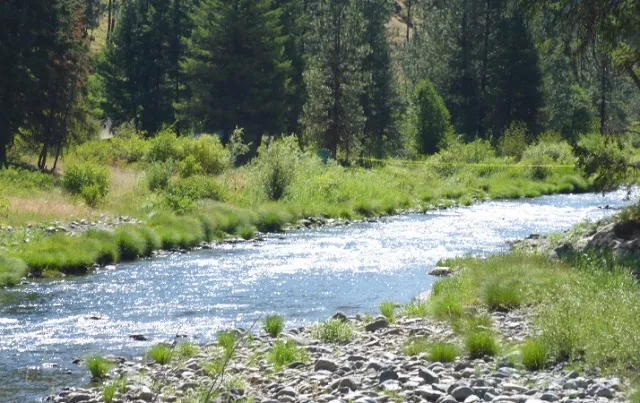
PORTLAND, Ore. ( KOIN ) – The U.S. Forest Service recently released a report detailing a 1982 investigation into a reported sighting of Bigfoot tracks in the Umatilla National Forest.
The report dates back to June 18, 1982, and describes an investigation led by USFS Biologist Rodney Johnson, who conducted an on-site investigation into reported Bigfoot tracks in the Mill Creek Watershed.
According to Johnson, if the tracks were faked, someone went through “a great deal of trouble,” to make the tracks in the forest.
BestReviews is reader-supported and may earn an affiliate commission.
The report investigates tracks at three locations, labeled “Site A,” Site B” and “Site C.”
Two of the “bigfoot” tracks were located near the Low Creek Trail, and another track was found near an unnamed trail at the top of Low Ridge.
The tracks at “Site A” were about 1.5 miles above Mill Creek in the Low Ridge Trail and extended down the trail about 25 feet. In the report, Johnson said plaster casts were made out of two of the tracks along the trail as the other tracks were too faint to copy.
Tracks at “Site B” were found near a bog next to the Low Creek Trail about 2.5 miles above Mill Creek. That site showed about 18 prints over a distance of about 40 feet.
Meanwhile, the team did not visit the third site because of the conclusions made at “Site B,” and because of the time of day they would have reached the site.
“Based on several things, it is my opinion that the tracks observed at Site ‘A’ and Site ‘B’ along Low Creek were made by something other than a 300-pound plus two-footed being,” the Forest Service report says.
In the report, Johnson gave several reasons why he believed the tracks did not belong to the creature.
First, “the stride of the tracks did not change with slope,” the report says, noting the stride of all the tracks was four feet.
“The tracks were on approximately a 2-3 percent grade on Site ‘A’, and approximately 8-25 percent on Site ‘B’. Under this range of slope the stride should have changed somewhat (shorten on uphill grade, lengthen on downhill grade, etc.) This was not the case at both sites,” the report says.
Second, the tracks did not sink to the bottom of the mud. The biologist noted his boots were sinking deeper in mud at the same location as the tracks.
Third, the tracks were “isolated,” or not connected to a trail and had a definite beginning and end. “The numerous bear trails we observed could very easily be followed,” the report stated. “This was not the case with the ‘Bigfoot’ tracks.”
Additionally, at Site B, it appeared that forest litter, such as needles, were brushed aside before the track was made. “It was obvious that the litter had been displaced sideways from the track area in an unnatural manner,” the report says.
Investigators also found that the small toe prints lacked a definite “pad” at the tips, as expected on Bigfoot, and noted there were no signs of heel or toe slippage on steeper areas. Investigators also said it appeared that the prints were made by a foot rocking back and forth on the trail to make the track.
“If the tracks were faked, someone went to a great deal of trouble and detail. The ‘print’ marks on the foot would have to be very hard to duplicate. They appear very natural. I would almost suspect a case made of an actual foot would have had to be used to make the ‘fake’ feet. If this were the case though, the other creases in the foot should have shown,” the report says.
This report was followed by a memo sent to Forest Service District Supervisor Wayne Long, from a U.S. Border Patrol member in Bellingham, Wash.
“My opinion is that the tracks were a very clever attempt to penetrate a hoax, involving your office of agency, in order to lend authenticity or credibility to the general public,” the memo states.
According to the memo, the tracks appeared to have been made by soft plaster or a “rubber-coated foot.”
“Who made the tracks — my opinion, someone with normal access to the area, very knowledgeable and interested in ‘bigfoot’ legends and stories; a person large enough to implant the track device,” the memo said.
The report, and memo were publicly released in October — 44 years after the investigation. Officials explained to KOIN 6 News that the Forest Service releases reports like this to its National Reading Room if requests for the documents are made at least three times.
Officials tell KOIN 6 that the Forest Service “routinely” received reports related to Bigfoot.
In a statement shared with the outlet, a spokesperson for the United States Department of Agriculture — which oversees the Forest Service — said, “Stories of Bigfoot, Sasquatch, and other legendary creatures have long been part of the cultural fabric of the Pacific Northwest and continue to add to the rich tradition of folklore that surrounds our public lands.”
The spokesperson added, “While the Forest Service does not endorse or make any claims regarding the existence of such creatures, we appreciate the public’s enthusiasm for exploring and learning about our public lands.”
Topics in this story
Gathered from external sources. Rights to this text belong to whoever originally published it.