Controlled Iowa munitions detonation better than ‘worst-case scenario,’ acting Army secretary says
Federal officials said scheduling the mitigated blast for Wednesday morning — the day before Thanksgiving and ahead of evening snow — prevents cold temperatures from creating more unstable crystals.
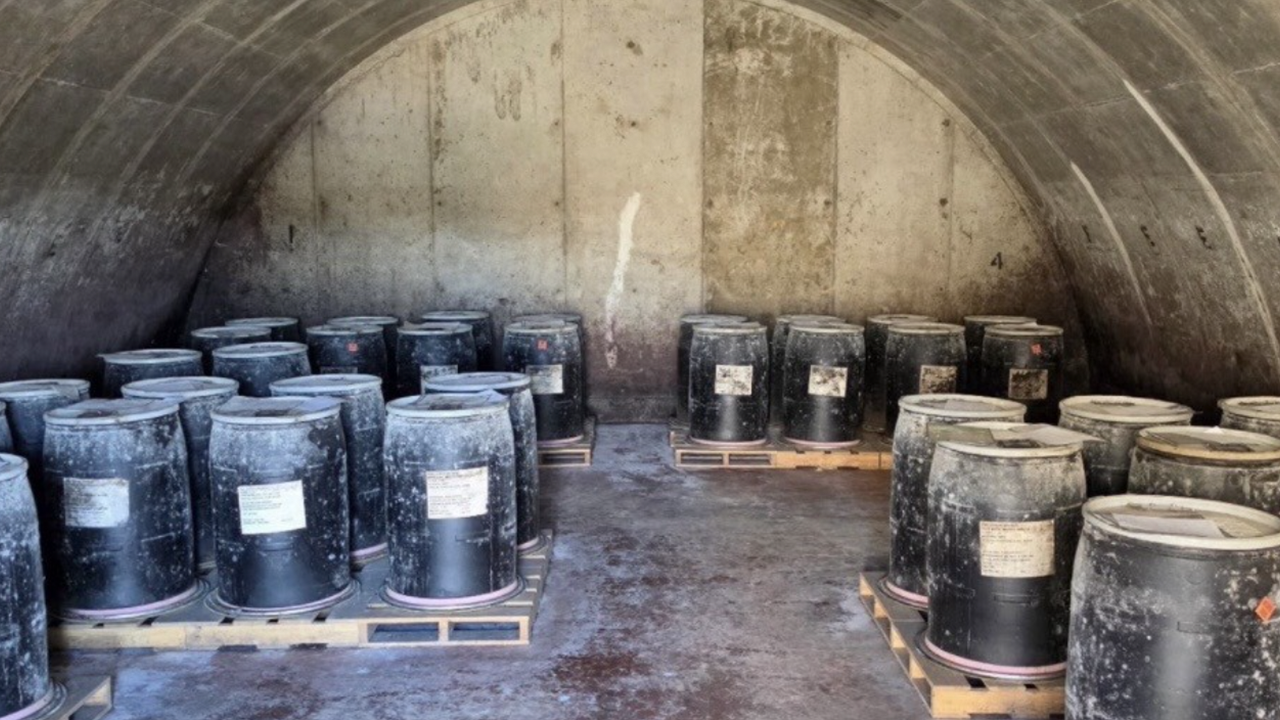
A controlled detonation is the safest way to dispose of the unstable lead azide at the Iowa Army Ammunition Plant and avoids the "worst-case scenario" of a spontaneous blast, Acting U.S. Army Secretary Adam Telle said Tuesday. The Army will detonate the bomb-making materials on Wednesday at 9 a.m. local time — the day before Thanksgiving — after a federal appeals court rejected a legal challenge and allowed the mitigation effort to go forward. "We have talked to every expert within the federal government and every expert we could find outside the federal government," Telle told reporters during a news conference. "A controlled, mitigated detonation of the lead azide here at Iowa Army Ammunition Plant is far preferable to an uncontrolled spontaneous detonation of that substance." Federal officials said they are minimizing the impact of the controlled detonation at the plant in Middletown, Iowa, by using two-story-high sand-filled barriers, water walls made of eight 16,000-gallon tanks and gel blocks to absorb the blast. The Army has also deployed misters and specialized PFAS-free foams to trap lead dust from the 68 barrels of lead azide, which hold more than 9,700 pounds net explosive weight. FEDERAL APPEALS COURT CLEARS ARMY TO DETONATE VOLATILE IOWA EXPLOSIVES AS DEM GOV-ELECT REFUSES TO SIGN OFF According to Ford County, Illinois, one of the neighboring states, lead azide is "a highly sensitive explosive compound commonly used as an initiating explosive in detonators and blasting caps. It is one of the primary materials used to start the detonation sequence in military, mining, demolition, and commercial explosive applications." Officials said they ruled out chemical neutralization because the drums deteriorated rapidly over the past eight months, leaving crystallized lead azide on the outside of the barrels and lids that makes moving or opening them too dangerous. In a release on Tuesday, the Environmental Protection Agency (EPA) said it has mobilized more than 100 personnel and contractors alongside the Army, FEMA, the Department of Health and Human Services (HHS) and other federal partners to protect communities in Iowa, Missouri and Illinois. EPA Associate Administrator for National Security and Operations Coordination Tom Croci said the agency has deployed three mobile labs and an air toxics lab and is "putting the full force of the agency behind this effort to ensure we are doing everything possible to protect human health and the environment." The agency said it has collected over 1,001 pre-detonation air, land and water samples in the communities surrounding Middletown and will continue sampling during and after the blast in coordination with the Centers for Disease Control and Prevention (CDC) to guide any necessary lead remediation. IOWA RESIDENTS NEAR AMMUNITION PLANT TOLD TO VACATE BEFORE ARMY DETONATES 5 TONS OF BOMB-MAKING CHEMICALS Even with those safeguards, current weather models show the plume — which will contain some level of lead particles — may affect about 350 farms, according to Department of Agriculture Undersecretary Richard Fordyce. Local and federal officials are strongly urging all residents inside the evacuation zone — defined by the Army as a 5-mile cone extending southwest of the plant — to leave ahead of the blast. Sean Kaufman, an official with the Department of Health and Human Services, placed particular emphasis on vulnerable residents, saying pregnant women, children and people with chronic illnesses should evacuate the area projected to be affected by the detonation. Those outside the area should "do what you need to do to take care of your family," Kaufman said, adding that it is crucial to stay indoors during the scheduled blast. IOWA'S GOVERNOR-ELECT HAS A MESSAGE FOR DEMOCRATS GEARING UP TO FIGHT TRUMP In a statement Tuesday afternoon, the Centers for Disease Control and Prevention (CDC) provided a list of recommendations for those who live close to the munitions plant, including closing all windows and doors, sealing any gaps to prevent outside air from coming in and setting up furnaces to recirculate air with filters rated MERV 11 or higher. The CDC also said that lead dust can get on clothes and shoes, and be transferred into your home that way. "Wash or remove your shoes before entering a building if you think they may have been exposed to lead. Wash clothes and hands before touching your face or eating," the CDC said. Telle said federal agencies will continue updating the public over the next 24 hours, as shifting weather forecasts could alter the path of any dust kicked up by the blast. The Army has also held town halls in communities where the effects will be the most acute, Telle said. Beginning six hours before the detonation, the Army will disseminate updated impact maps on an hourly basis that will take into account the most recent weather forecasts. Telle and other officials said they scheduled the detonation for Wednesday morning to take advantage of favorable weather patterns before snow is forecast to arrive later that evening. Cold temperatures and temperature fluctuations could cause the lead azide to form additional unstable crystals that can self-detonate from heat, shock or friction. Munitions specialists had warned about this in court filings. The controlled detonation has already been postponed three times amid public concern over toxic lead dust. In a public advisory, the Army said Wednesday's blast will produce two rapid detonations, ground vibrations and a dust plume expected to linger for no more than an hour. For anyone living southwest of the plant who wants to leave, FEMA will provide temporary lodging until Nov. 27 with extensions available upon request. Food, water, emergency transportation and other supplies will also be handed out to relocated populations. Residents can register at DisasterAssistance.gov or call 1-800-621-3362. In Iowa, Republican Gov. Kim Reynolds issued a disaster emergency proclamation on Tuesday for Des Moines, Lee and Van Buren counties, unlocking state response resources and approving up to 100 federally activated Iowa National Guard soldiers to assist about 150 households with evacuation outreach. "Today’s briefing by the U.S. Army highlighted the responsible planning and coordination that have gone into the upcoming detonation. I greatly appreciate their due diligence, responsible approach, and focus on the public health and safety of Iowans in nearby communities," Reynolds said in a statement. State officials also advised residents between five and 20 miles southwest of the plant to shelter indoors with windows closed and issued updated guidance for livestock producers within 20 miles. CLICK HERE TO DOWNLOAD THE FOX NEWS APP To prevent similar incidents at other military installations storing dangerous chemicals, Telle said he ordered the Army on Tuesday to "begin a thorough examination of every such weapons storage facility within the Army's inventory." After the detonation is completed, the CDC said it would "support Iowa with any post-event community health assessment needs." Federal officials said that if any residential property tests above the EPA-approved standard of 200 parts per million, remediation teams will remove affected soil and clean surfaces at full government expense, and the U.S. Army Claims Service will immediately process claims for any vibration damage.
Topics in this story
Gathered from external sources. Rights to this text belong to whoever originally published it.