The Memo: Crisis and chaos hit Ukraine as questions multiply over Trump’s role
The war in Ukraine — and the question of the American role in it — has been thrown into a new moment of chaos and crisis. Wednesday brought a blizzard of developments: revelations that Ukraine had been abruptly restricted in its use of a satellite service which is crucial to its wartime efforts; an accusation…
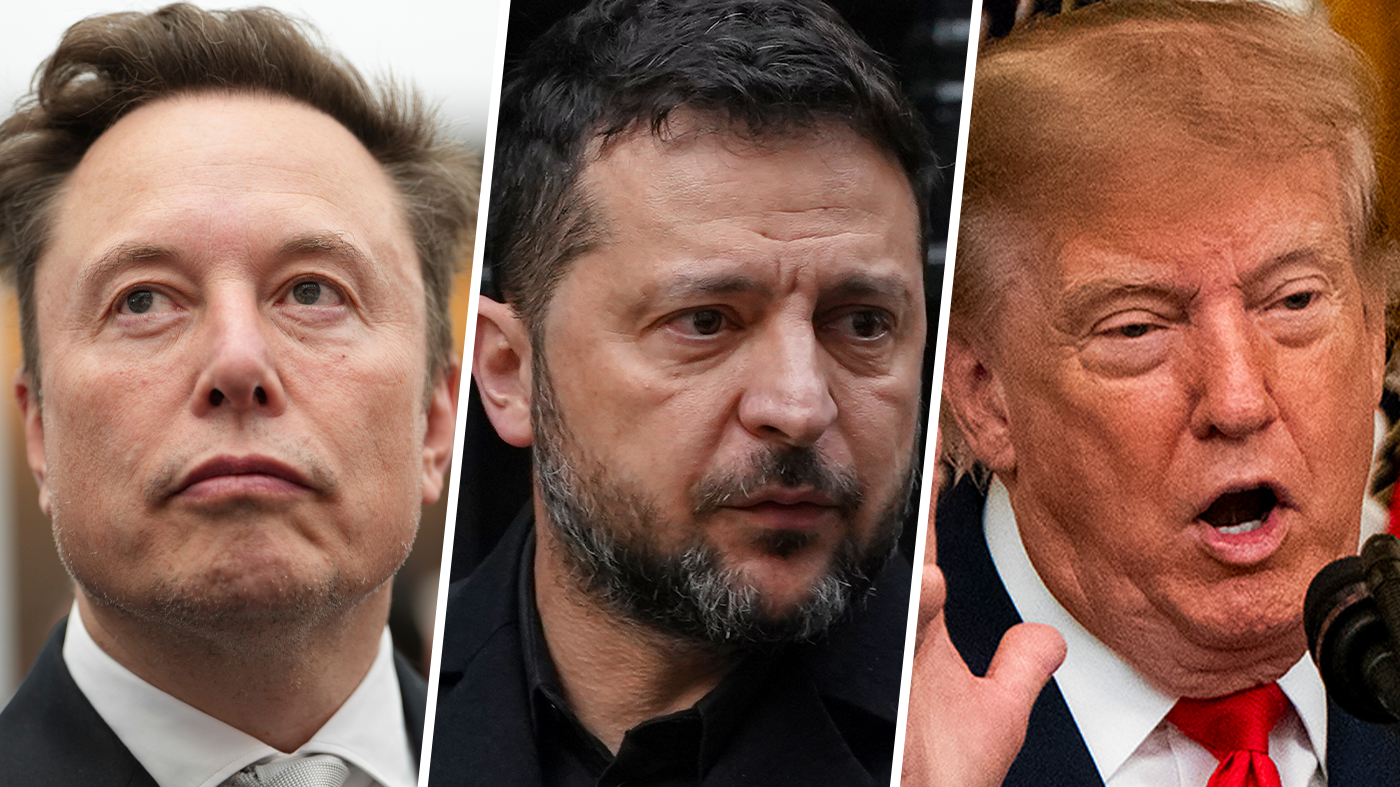
The war in Ukraine — and the question of the American role in it — has been thrown into a new moment of chaos and crisis.
Wednesday brought a blizzard of developments: revelations that Ukraine had been abruptly restricted in its use of a satellite service which is crucial to its wartime efforts; an accusation of American betrayal from Ukrainian President Volodymyr Zelensky; and an intervention by the world’s richest man that sought to minimize his responsibility in the farrago.
Those developments in turn fueled outrage among Democrats, and dismay from some Republicans, at the perception that President Trump was favoring Russia and President Vladimir Putin in the grim conflict sparked by Russia’s invasion of Ukraine more than four years ago.
Trump was largely and uncharacteristically silent on what exactly was going on.
The latest catalyst for turmoil was the news that, as the New York Times characterized it, the Ukrainian military “with no warning, had lost some critical access to a military version of Starlink, a pillar of its battlefield communications.”
Starshield, as the offshoot is known, is used for offensive actions on the battlefield. As soon as Ukraine was restricted from using it, some of its operations were immediately blunted, according to media reports sourced to commanders on the ground.
Ukraine’s increasingly effective use of drones depends in significant part upon Starshield, which is ultimately part of the Elon Musk-owned SpaceX. Kyiv’s success with drones has been vital to maintaining a rough if bloody equilibrium on the battlefield.
But speculation about the latest developments came against a backdrop where Musk had on Saturday written on social media that “Zelensky has gone too far.”
The message was posted on X, the social media behemoth that Musk also owns, in agreement with a video posted to a White House account that showed Trump expressing frustration with Ukrainian attacks on Russian refining facilities.
Amid widespread outrage over the Starshield matter on Wednesday, however, Musk appeared to point the finger back at Trump.
Responding to former Ukrainian Defense Minister Mykhailo Fedorov on X, Musk wrote: “Starshield systems are owned and controlled by the US government. Any limits on speed or usage are decided by the US military and ultimately POTUS.”
The White House did not immediately respond to a request for comment about whether it played a role in the recent events.
“It’s definitely an extremely disturbing development,” Luke Zahner, a senior fellow and Ukraine expert at the liberal Center for American Progress (CAP), told this column. “Elon Musk has said that it it’s the American government that calls the shots on this.”
Russia continues to occupy around one-fifth of Ukraine but Kyiv has been able to ratchet up the pressure on Moscow by hitting deeper into its larger neighbor’s territory, and by hitting refinery plants in particular. Ukraine has also used drones to slow Russian advances within its borders.
Meanwhile, Russia has been ramping up its attacks on Ukraine, despite Trump publicly insisting on Sunday that the two sides had agreed an “energy ceasefire.” Russia has hit several Ukrainian energy sites since then.
On top of all that, Trump has caused consternation within swathes of his own party, and across Europe, by announcing a deal with Russia whereby Moscow would supply millions of tons of diesel to the global market.
The deal, revealed on Friday, is widely seen as an end-run around sanctions that had been imposed on Russia, and as an arrangement certain to ease pressure on Putin — despite the fact that Ukraine’s only real chance of success lies with ramping up such pressure.
Zelensky, asked during a TV interview by British journalist Piers Morgan whether he felt “betrayed” by what had occurred in relation to the diesel deal, the “energy ceasefire” and the Russian attacks that followed, replied, “Really, yes.”
Asked about his initial reaction to news of the diesel deal, Zelensky replied, “It’s a pity that we are losing [a] strong partner” in the U.S.
The Ukrainian president also contended that it was “painful” that Trump had appeared to choose to favor Moscow’s side over Kyiv’s and further asserted that the U.S. president was “not [on the] right side of history.” Clips from the interview were released on Wednesday.
Zahner, the CAP expert, said bluntly that the combination of the Starshield move and the diesel deal “would mean the Trump administration is helping Russia.”
The backdrop to the crisis is one in which high energy prices in the U.S. are causing a significant drag on Trump’s approval ratings and on his party’s chances in the looming midterm elections.
Almost all experts agree that the main driver of those fuel prices is the war on Iran, which has restricted traffic through the crucial Strait of Hormuz, rather than Ukraine’s attacks on Russian refineries.
Moreover, Trump’s maneuvers on Russia and Ukraine have sparked dissent even within his usually loyal party.
Rep. Ashley Hinson (R-Iowa), the GOP nominee for Senate in Iowa, broke with him over the diesel deal in a Tuesday night debate.
“We need to lower diesel prices, but I don’t think we need to be making a deal with Russia to do it,” Hinson said during a debate with Democratic opponent Josh Turek.
On Wednesday, Rep. Don Bacon (R-Neb.) who is retiring at the coming election, complained on social media that reports of reduced intelligence sharing and the Starshield developments “equates to aiding the invader & the war criminal who bombs cities.”
For now, there are numerous questions over what comes next, how desperate the situation could become for Ukraine — and what the political ramifications will be for Trump and his party at home.
The Memo is a reported column by Niall Stanage.
Topics in this story
Gathered from external sources. Rights to this text belong to whoever originally published it.