How I convinced Chris Wallace to interview Dolly Parton
“Should I interview Dolly Parton?” I looked up from my desk to find Chris Wallace standing in my office. This was not a particularly unusual occurrence, since Wallace’s office was next to mine, and we would sometimes pop in on each other to compare notes. I was the managing editor of Fox News’s D.C. bureau…
I looked up from my desk to find Chris Wallace standing in my office.
This was not a particularly unusual occurrence, since Wallace’s office was next to mine, and we would sometimes pop in on each other to compare notes. I was the managing editor of Fox News’s D.C. bureau at the time, while Wallace hosted “Fox News Sunday.”
“Yes,” I replied without knowing further context. “You should absolutely interview her. She is nothing less than a national treasure.”
Wallace expressed surprise at my enthusiasm, saying I didn’t strike him as a country music aficionado.
“I’m not,” I replied. “It’s not about the genre. It’s about her songwriting.”
Wallace was known for hard-hitting interviews on policy and politics, so I worried that he might consider Dolly Parton a bit out of his lane. I decided to put on the full-court press.
“You have to interview her,” I blurted. “I honestly believe she’s one of the greatest songwriters America has ever produced.”
I stipulated that I was not an expert on songwriting or country music or even Dolly Parton. But of the dozen or so country songs I’ve ever downloaded (amid thousands of songs in other genres), all of them are by Dolly Parton.
“Not just made famous by Parton,” I emphasized to Wallace. “Actually written by her. I mean, you just cannot ignore the enormity of her songwriting.”
For starters, it is well known that Parton wrote two of her most monumental songs — “Jolene” and “I Will Always Love You” — in one epic creative burst. (It was long believed she wrote them on the same day, but Parton later clarified the process may have stretched into several days.)
The results of that one burst would have been enough to assure the legacy of any mortal songwriter. But Parton wrote so many more masterpieces during an astonishing career that spanned seven decades.
Poignant songs of sadness, like “Coat of Many Colors” and “To Daddy.” Dark songs of betrayal, like “Little Sparrow” and “Dagger Through the Heart.” Wistful songs of lost love, like “The Grass is Blue” and “Do I Ever Cross Your Mind?”
So much melancholy for an otherwise upbeat icon who seemed to radiate good vibes at all times. Fittingly, amid all those sorrowful songs, there was a thread of hopefulness that became her trademark. Take, for example, the opening lines to yet another Parton classic, “Light of a Clear Blue Morning”:
But everything’s gonna work out just fine
Of course, Wallace didn’t need much convincing. He jumped at the chance to interview Dolly Parton. And given my admiration for her, he invited me to the interview.
As the big day approached, I mentally prepared to thank Parton for the various specific songs that meant so much to me. But when she walked through that door in February 2018, I chickened out and resorted to a vague statement about how I was a big fan.
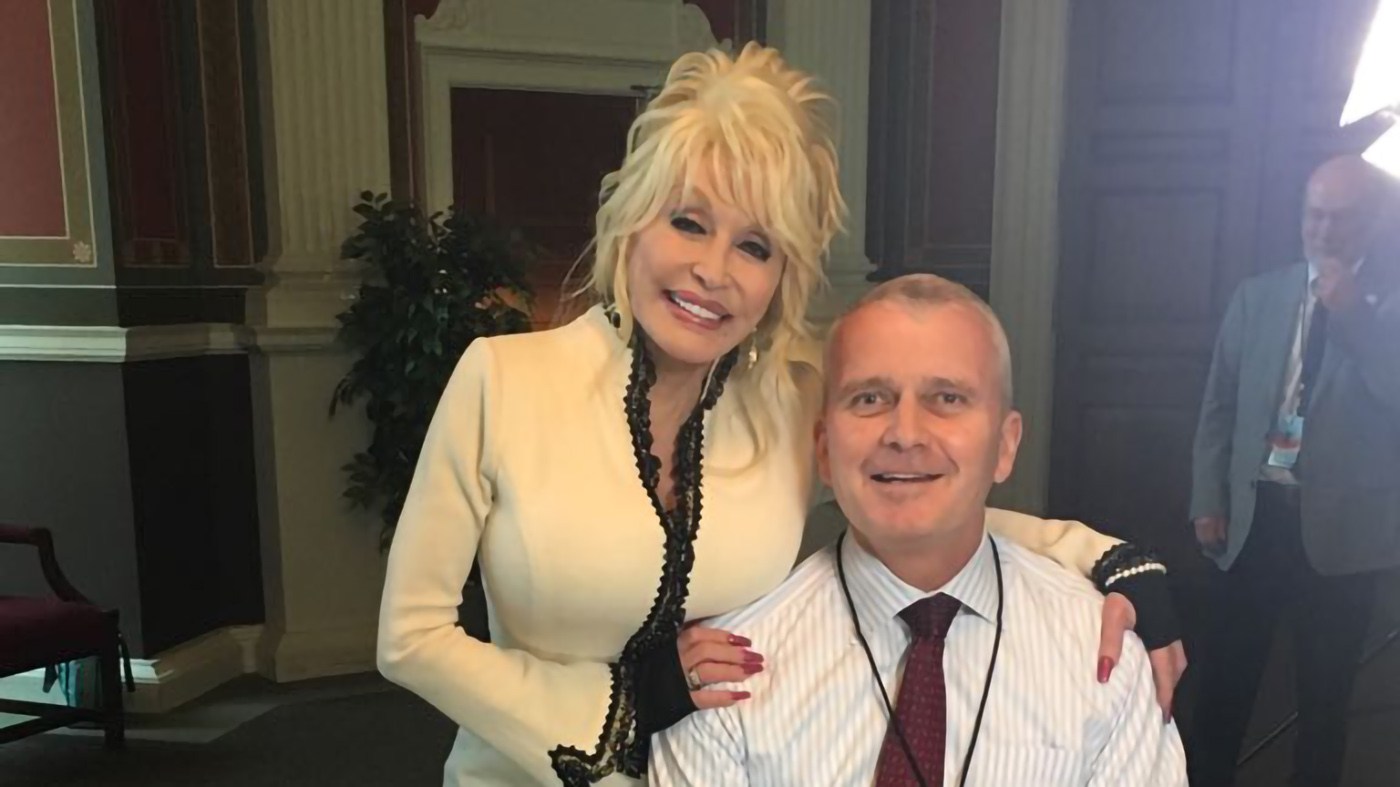
Parton proved just as sweet and down-to-earth as you’d expect. She chatted good-naturedly and posed for a photo. She had me sit down while she remained standing because I’m so tall (6 feet, 7 inches) and she was so short (5 feet). Honestly, she couldn’t have been nicer.
The interview took place at the Library of Congress because Parton was about to present the library with her newest children’s book, “Coat of Many Colors.”
Based on the song of the same name, the book tells the story of Parton’s mother sewing rags into a coat for Dolly, one of 12 children in a family that eked out a hardscrabble existence in the Great Smoky Mountains of east Tennessee.
Of course, Parton would go on to enormous success. Her signature charity, Dolly Parton’s Imagination Library, has given hundreds of millions of books to schoolchildren. Parton herself literally went from rags to riches.
At the end of her interview with Wallace, Parton burst into song, a cappella, reminding us, yet again, of why she will be remembered as one of America’s greatest songwriters:
And my coat of many colors that my mama made for me
Made only from rags, but I wore it so proudly
And although we had no money, I was rich as I could be
In my coat of many colors my mama made for me
Topics in this story
Gathered from external sources. Rights to this text belong to whoever originally published it.