House ‘member day’ hearing airs reform proposals
The House Rules Committee recently held its biennial hearing where 12 members provided recommendations ranging from remote proxy voting for parents to improved legislative time allocation and stricter ethics enforcement.
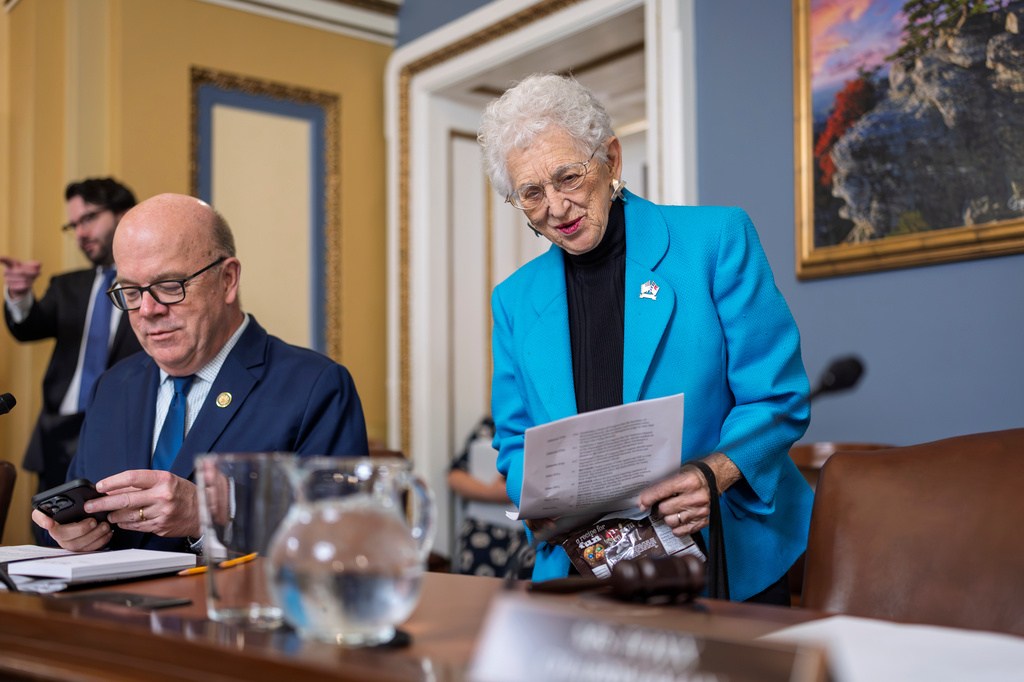
Last Wednesday, the House Rules Committee held its biennial hearing for members to make recommendations for changes in House rules they hope to see adopted in the next Congress.
Twelve members testified — ten Democrats, one Republican, and one independent. Their recommendations ranged from remote proxy voting for parents of newborns, to stricter ethics enforcement rules and better allocations of time for legislating.
The tradition of holding such House reform hearings in every even-numbered year originated in the 104th Congress (1995-96) when Republicans regained majority party status for the first time in 40 years. The Republican “Contract with America” promised not only to pass major policy changes in the first 100-days of the new Congress but also to adopt nine significant House rules changes.
These included such significant alterations as placing term limits on Speakers and committee chairs, abolishing proxy voting in committee, and reducing the number of committees and cutting committee staff by one-third. Also agreed to were 23 minor revisions, including requiring committees to adopt oversight agendas at the beginning of each Congress and limiting members to no more than two full committee and four subcommittee assignments.
The precedent for member day reform hearings was established in the 104th Congress when Rules Committee Chairman Gerald Solomon (R-N.Y.) launched an unprecedented bipartisan process for his committee to take input from members and outside experts to build on changes made in the 104th Congress and preparing for the 105th. It began with a “Members’ Open Day” hearing on July 17, 1996.
In Solomon’s words , “We’re still committed to changing the way Congress does business.” He added that “many members have good ideas on how to conduct the people’s business more efficiently and we’re going to give them a good look.” That initial members’ day hearing heard from 16 members, six Republicans and ten Democrats. Recommendations included ways to improve civility in the House and modifications in ethics rules.
In the 105th Congress (1997-98), the Rules Committee conducted its second ever “Open Day” hearing for members on Sept. 17, 1998. It sought proposals for changes in the House Rules for the 106th Congress. Many of the previous House rules changes were incorporated in a total recodification of House rules on opening day of the106th Congress, while still paring the number of rules from 52 to 28.
Last week’s members’ day hearing elicited an interesting variety of proposals, the main focus of which seemed to be how to better allocate members’ time, both in Washington and in their home districts. Rep. Chrissy Houlahan (D-Pa.) called for “better and longer” district work periods. Rep. Randy Fine (R-Fla.) suggested the House work a full, five-day work week, with one of the five days devoted solely to committee work to allow more time for committee interaction, and that the work weeks alternate with a full district week.
Rep. Marie Gluesenkamp Perez (D-Wash.) urged that daycare be given a higher priority; that rural districts be given greater access and exposure through remote hearings; and that when members are not able to perform their duties, the House be allowed a way to address that situation.
It is difficult to gauge the utility of these member day hearings. They provide an occasion for members to vent frustrations. Perhaps that alone is sufficient justification for their existence. Understandably, the minority party has more reasons to vent and more ideas for how to give it fairer treatment, given the majority’s overwhelming procedural advantages in the House.
Although the Rules Committee does not even exist in a new Congress until the standing rules are adopted on opening day, its members do have significant input in the rules proposed by the majority party caucus. The bipartisan sympathy for parents of newborns, for instance, could result in limited proxy floor voting in such circumstances. The same goes for stricter conflict of interest rules barring insider stock and prediction market trading.
To summarize the general attitude of those members who have bothered to think about and testify on how to make the House a better place in which to serve, there is a feeling that legislators are spread too thinly to give necessary attention to their committee, floor and district responsibilities.
That may sound like a self-serving defense by members asking for greater comfort and convenience. For the most part, though, it is a sincere desire to serve their constituents in a more reliable and conscientious manner. Given the public’s current low-level of regard for Congress, it should appreciate such high-minded endeavors to improve the institution’s behavior and performance.
Don Wolfensberger is a 28-year congressional staff veteran who served as as chief of staff of the House Rules Committee. He is author of “Congress and the People: Deliberative Democracy on Trial,” and, “Changing Cultures in Congress: From Fair Play to Power Plays.”
Topics in this story
Gathered from external sources. Rights to this text belong to whoever originally published it.