Democrats put campus gambling in the crosshairs
Online sportsbooks and prediction markets are expected to enter a new era of scrutiny from Democrats holding House and Senate majorities in January, with college campuses representing a potential ground zero. As betting platforms grow in popularity and profitability, critics — including some Democrats on Capitol Hill — see U.S. colleges and universities as the…
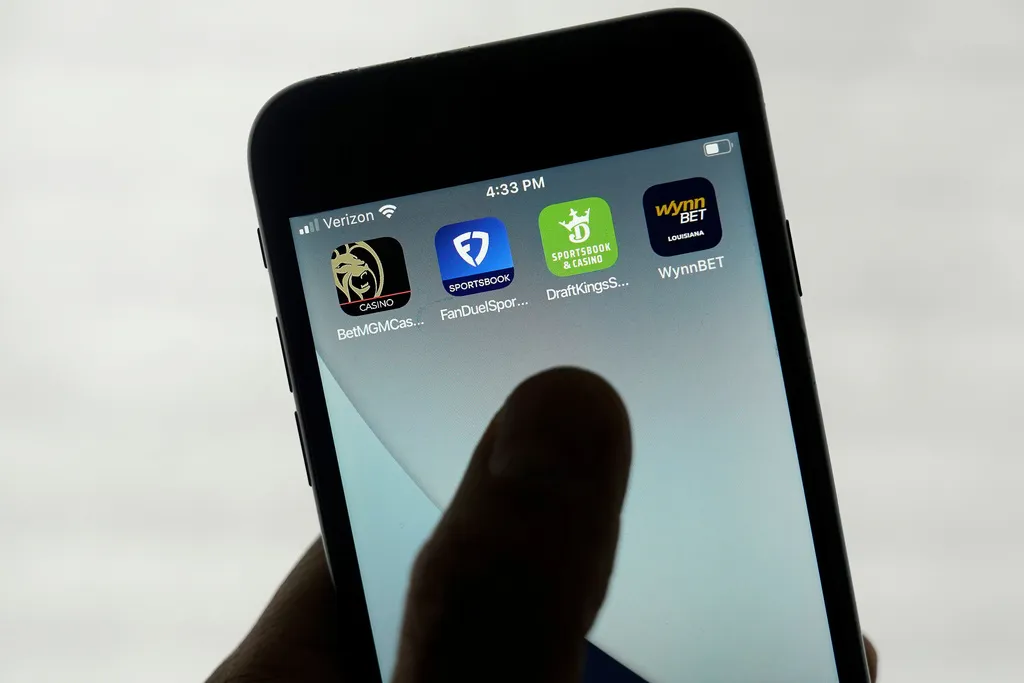
Online sportsbooks and prediction markets are expected to enter a new era of scrutiny from Democrats holding House and Senate majorities in January, with college campuses representing a potential ground zero.
As betting platforms grow in popularity and profitability, critics — including some Democrats on Capitol Hill — see U.S. colleges and universities as the epicenter of growing gambling addiction issues across the country. They see school officials as being responsible for preventing habitual wagering among students.
“This is a public health crisis unfolding on campuses across America. If we’re serious about protecting students, we have to be honest about how we got here,” said Rep. Alma Adams (D-N.C.), the ranking member on the House Committee on Education and the Workforce. “These are predatory products aimed at young people shielded by state law and overseen by a regulatory [body] that’s asleep at the wheel.”
The concern with the speedy growth of gambling in the U.S. stretches across party lines and has intensified with the emergence of prediction markets as an alternative to traditional sportsbooks.
Lawmakers in both parties say they’d like to see prediction market platforms like Kalshi and Polymarket regulated the same way major online sportsbooks like DraftKings and FanDuel are at the state level.
The concern comes as industry experts say young people attending universities and colleges in the handful of states where online sports gambling is illegal are especially susceptible to addiction issues in connection with prediction markets.
“Sports prediction markets are sports betting disguised as financial trading,” Rep. Ro Khanna (D-Calif.) wrote in a social media post this week. “They flout state and tribal gambling laws, siphon state tax revenues, fuel addiction, and expose young Americans to public health risks while evading state consumer safeguards. Congress must ban them.”
Critics of the online gambling industry say most prediction markets have insufficient integrity monitoring processes and weak guardrails against habitual use.
Legal online sportsbooks, many of the same lawmakers say, have relied on aggressive advertising campaigns to market themselves to young people and use enticing promotions targeting habitual users to feed a growing vice.
“It’s clear there’s way too much gambling going on in this country, the question is what can we legally do to stop it,” Rep. Glenn Grothman (R-Wis.), another member of the Education and Workforce Committee. “Particularly at a time when young people don’t have money for a down payment on a house, the idea that they’re spending money on sports betting is kind of ridiculous.”
As is the case with online sportsbooks, studies have shown men younger than 35 years are more likely than any other demographic to use prediction market platforms and experience addiction issues related to excessive wagering.
During a recent hearing, a panel of experts told the House Education and Workforce Committee more students than ever are using financial aid money to wager on sports and current event “contracts.”
Addressing public health concerns related to gambling, and among young people specifically, is a key aim of the Supporting Affordability and Fairness with Every (SAFE) Bet Act, the most significant piece of legislation proposed by Congress on gambling in the past year.
The bill, introduced by Sen. Richard Blumenthal (D-Conn.) in the Senate and Rep. Paul Tonko (D-N.Y.) in the House, would set a minimum federal standard to curb predatory practices in the online sports betting industry and implement safeguards for consumers.
But the proposal has gained little traction in the Senate and House under GOP control.
Millions of dollars have poured into lobbying by prediction market platforms and sportsbooks pose a “huge problem” stopping efforts to get legislation like the SAFE Bet Act to a floor vote in either chamber, one lawmaker told The Hill.
“I’m very hopeful it will have some legs in the new Congress because the problems are mounting, and there has to be a much stronger effort to stop gambling among people who are most vulnerable,” Blumenthal said during an interview this week. “Focusing on some [college students] may make sense, but the problem really affects people across the board.”
Some lawmakers have said they would like to see the NCAA do more to work with major colleges and universities to ensure students do not develop gambling problems.
Several members said they were disappointed to see the Protect College Sports Act — a sweeping bill passed by the Senate this year that set regulations on issues like name, image and likeness compensation and the transfer portal — included virtually no language pertaining to sports gambling and athlete harassment.
“We are entering a new frontier with sports betting, I mean … it’s getting into the hands of teenagers,” Rep. Jimmy Patronis (R-Fla.) said. “We’ve not yet passed the college sports bill, and when it comes to amateur sports, you have to have a code of ethics and a death penalty if you get caught with anything related to gambling. If Congress has to get involved, I’m fine with that.”
Republicans like Patronis are telegraphing a willingness to work with Democrats to address gambling’s potentially harmful growth on college campuses once the GOP cedes control of both chambers come the new year.
“We need to see plans from universities on how they’re going to look at problematic gaming and build an expectation that they are educating their students about substance abuse like they do alcohol, drugs and sexual assault,” said Rep. Michael Baumgartner (R-Wash.), who led the recent House hearing examining gambling on college campuses.
“After the election cycle and everything being so partisan around here, I thought that hearing was really cathartic in the sense like this is what Congress is actually supposed to be doing.”
Don’t ask Rep.-elect Mark Teixeira (R-Texas) about the Congressional Baseball Game next spring because he’s done talking about it. The former New York Yankees slugger was on Capitol Hill this week for new member orientation and got short with Fox News host Stuart Varney when the anchor asked him about his excitement level ahead of the annual charity baseball game pitting Republicans against Democrats. “I’m sure we will win again, but quite frankly, I’m tired of talking about this game,” Teixeira said. “I didn’t come here to play baseball. I came here to deliver for the American people.”
It has been a bizarre few days at East Potomac Golf Links, where the public park remains open because of a federal judge’s order but no operator for the golf courses is present. Golfers continued to show up at East Potomac last week despite a lack of flag sticks, tee markers and grass growing increasingly long on the Hains Point property. Judge Ana Reyes is expected to rule in the coming weeks on President Trump’s bid to take over and redevelop the property, while the Justice Department says it will appeal her recent ruling halting further work by the administration there.
President Trump awarded a posthumous pardon to legendary MLB player Pete Rose on Thursday. In a Truth Social post, the president said Rose had been “treated terribly by Major League Baseball in not allowing him to go into the Baseball Hall of Fame.” Rose was infamously banned from MLB for life for betting on baseball and later served five months in federal prison for tax evasion. He was later reinstated by MLB after lobbying from Trump and died in 2024.
Jocks on the Hill: Rep. Scott Fitzgerald (R-Wis.)
Rep. Scott Fitzgerald (R-Wis.), a former local newspaper publisher in Wisconsin, answered some sports questions for The Hill.
“I love football, both playing in high school and watching now. I love it.”
“Green Bay Packers. They looked great the other night!”
Is there an athlete you really admired growing up?
“The guy that I always followed and was interesting to watch was Michael Jordan because he was such an international celebrity and dominated for so many years. Nothing original, he has many fans, but it’s definitely Michael Jordan.”
Hate is a strong word, but is there a team you love to root against?
“Well, when you represent Wisconsin in Congress, it’s gotta be the Chicago Bears, although the further to the west you get, it’s the Vikings.”
Sports and politics are both full of cliches, is there one that resonates with you?
“You gotta be good at a sport to be one.”
The Athletic’s Dan Robson has a harrowing profile of former NHL goalie Jack Campbell, who has spoken openly about his struggles with mental health and self-image.
If you can believe it, college basketball is back. And Sports Illustrated examined a growing trend during the regular season: neutral site games that come with high-dollar ticket prices.
Tech giant Anthropic went public last week, which means some of the company’s top employees are set to receive major paydays. Sportico’s Jacob Feldman predicts some of them could be part of the next generation’s sports billionaire class.
Topics in this story
Gathered from external sources. Rights to this text belong to whoever originally published it.