Why the Peltola ‘spoiler’ controversy may be too late to shake up Alaska
Allegations that Mary Peltola’s campaign was involved in recruiting “spoiler” candidates to siphon votes from incumbent Sen. Dan Sullivan shook up the Alaska Senate race on Wednesday. Peltola’s campaign and national Democrats denied any involvement, but Republicans responded sharply, accusing her of deliberately lying to Alaskans. President Trump accused Peltola of election interference and said…
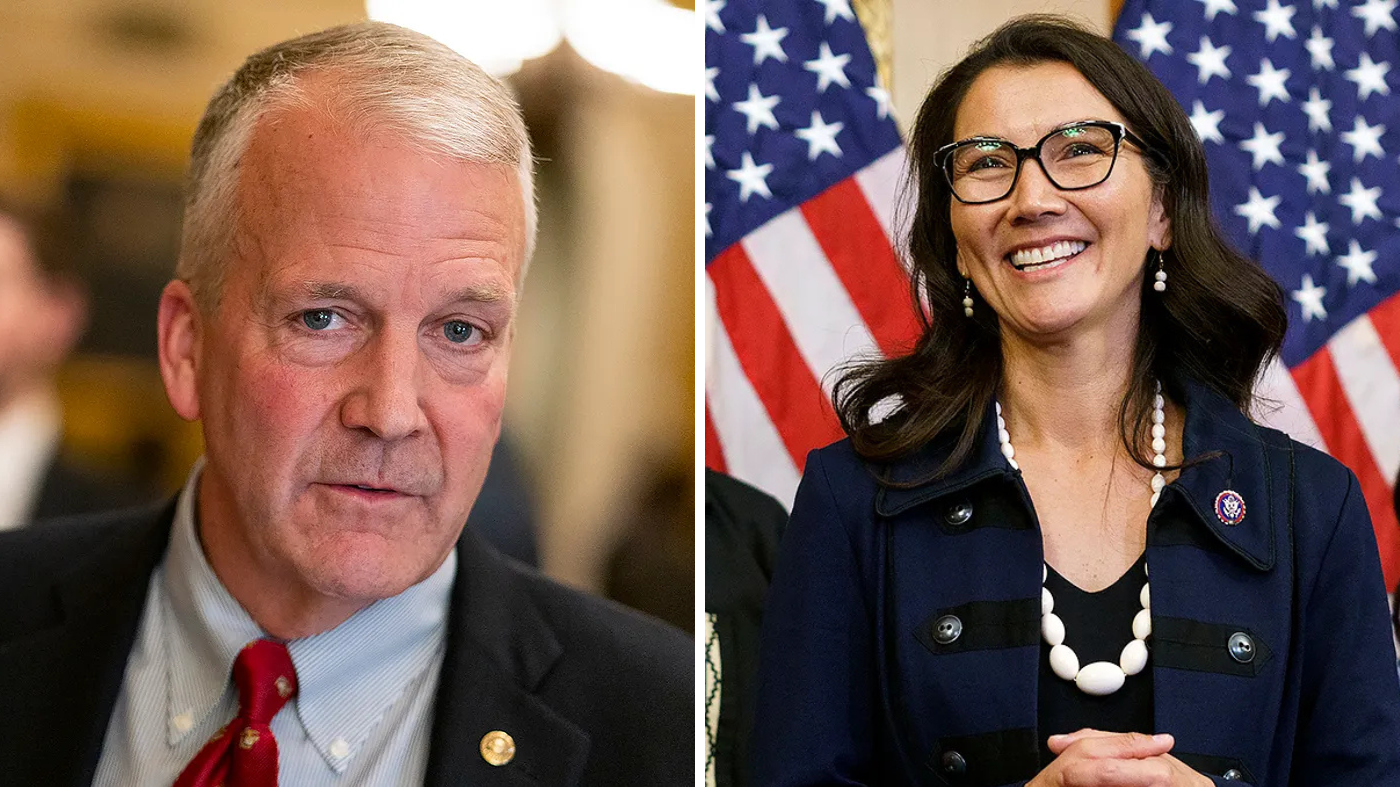
Allegations that Mary Peltola’s campaign was involved in recruiting “spoiler” candidates to siphon votes from incumbent Sen. Dan Sullivan shook up the Alaska Senate race on Wednesday.
Peltola’s campaign and national Democrats denied any involvement, but Republicans responded sharply, accusing her of deliberately lying to Alaskans. President Trump accused Peltola of election interference and said she should be prosecuted.
But the strong partisan reactions may mean little to voters, many of whom have already cast their ballots, or at least made up their minds less than a week before Election Day.
The claims surfaced in a report from the New York Times on Wednesday, which found Peltola’s campaign recruited someone with the same name as her GOP opponent to also run for Senate in an effort to dilute the GOP vote.
Republicans immediately jumped on the report, hoping to make it stick as they defend Sullivan with six days to go.
“Mary Peltola and her campaign have spent months gaslighting Alaskans, denying a scheme they were running all along,” said Nate Adams, a spokesperson for the Sullivan campaign, in a statement.
But according to some political experts and local strategists, six days is not long enough for a story like this to make an impact, and a news report from a national outlet might be less of a bombshell in the race as Republicans hope.
Aubrey Weiber, founder of the 907 Initiative, a Democratic-leaning government watchdog group in Anchorage, said he doesn’t expect voters to be moved much by the new allegations, because early voting is already underway and most voters he’s surveyed have already decided on their Senate picks.
“What we are seeing when we’re testing advertising, you know, like message testing, and just in polling for quite a while now, there are very few people that have not made up their minds,” Weiber said.
He added that he had just come out of casting his own vote at a polling place, where even a busy morning was the slowest workers had apparently seen all week.
More than 50,000 ballots have already been cast in the state, according to the Department of Elections.
Some Republicans have suggested the Peltola campaign’s moves are illegal. Trump said Peltola should be dropped from the ballot over the “election fraud.”
Scott Kendall, a longtime Republican staffer who now works as a lawyer and is unaffiliated with either campaign, called the ballot stacking scheme “a dirty trick” but clarified that it is not illegal.
State law does not have a motive qualifier for candidates, he said, meaning candidates can run regardless of their reasons for doing so.
The Peltola campaign and national Democrats noted that Republicans have also propped up “spoiler” Democratic and Green Party candidates in this cycle and in previous years, according to the Anchorage Daily News . The practice of recruiting fringe candidates to shape a ballot in favor of a frontrunner is also common in states beyond Alaska.
Steve Jarding, a Democratic consultant and former communications director for the Democratic Senatorial Campaign Committee (DSCC), said it wasn’t unusual for both he and his GOP counterparts to look for spoiler candidates to put on ballots.
“When I was at the Senate committee in Washington for four years, you did stuff like that because you look for an advantage,” Jarding said. “We never would have done anything to break the law because none of us wanted to go to jail for doing something stupid. But committees recruiting candidates, they do it all the time.”
Weiber also said that a previous report from the Times about Peltola’s staff culture, which included claims that she had used slurs and otherwise mistreated staffers, had little ripple into voters’ minds.
“There was a lot of memes online for a couple days. That was about it,” Weiber said. “And really, like I haven’t heard about that in weeks.”
Polls taken both before after the staffers story broke in late September showed Peltola ahead of Sullivan.
Glenn Wright, professor of political science at the University of Alaska Southeast, similarly said he doesn’t expect character stories to substantially alter the election outcome.
Not only have gobs of money already been spent trying to characterize both candidates, but Alaska politics are personal and many voters have connections to one candidate or the other already, Wright said.
“I suspect that there are a very small number of people in Alaska who haven’t made up their mind yet,” Wright said. “I think most Alaskans have a pretty clear view at this point of who Mary Peltola is and who Dan Sullivan is.”
Kendall, the GOP lawyer, also acknowledged that voters are probably already entrenched. The governor’s race and ballot measure about ranked-choice voting are more consequential for Alaska politics than the Senate race, he noted.
“On this race, there’s a very calcified electorate,” Kendall said. “There’s numbers in the high 40s on both sides that are just sort of, they know who they’re supporting, and they are not persuaded.”
Kendall also pointed out that the state’s ranked-choice, nonpartisan electoral system, which he helped design, should mitigate any issues with voter confusion, because voters who don’t know which Dan Sullivan is the incumbent can rank both.
“If every person who doesn’t want Mary Peltola to win ranks the other three candidates, ranks all of them in any order, there’s no question; those votes will eventually go to [Sen.] Dan Sullivan,” Kendall said. “So, I mean, that’s the good news. What this whole sordid affair shows is that a system like Alaska’s is vital to protecting us from this outside meddling.”
Wright said the Peltola campaign’s alleged attempts to shape the race showed they misunderstand how ranked-choice voting works.
“I think a lot of Alaskans kind of chuckle and roll their eyes at the whole Dan Sullivan thing,” Wright said. “There’s no small number of Alaskan voters who are a little bit insulted by the implication that they can’t figure out which Dan Sullivan to vote for on the ballot.”
Caroline Vakil and Ford McCracken contributed
Topics in this story
Gathered from external sources. Rights to this text belong to whoever originally published it.